













Hydropower Flood Damage in Nepal: Insurance Claims, PPA Relief and Repair Approvals
A practical walkthrough of what happens after flood damage hits a hydropower project in Nepal: how to split the loss by asset, how insurance layers and business interruption respond, why PPA force majeure is relief rather than compensation, and how the licence file, the regulator and the grid operator each play a different role when you repair and re-commission. Written without figures or dated claims, with a checklist for the first days after an event.


Most writing about Nepali hydropower stops at financial close. The interesting part starts the morning after a flood. A debris flow has buried the desilting basin, a slope has come down across the access road, or a swollen river has put the powerhouse under water. From there the engineering is only half the problem. The other half is paperwork, and the order you do things in has a lot to do with how much of the loss you ever see again.
What follows is about how that sequence works, what usually needs deciding and when, and where projects lose money to their own filing discipline. It deliberately carries no numbers. Repair costs, settlement timelines and loss totals from past monsoons get recycled for years and are usually wrong for the flood in front of you. Your own policy, your own PPA and your lender's conditions are the only documents that bind you.
Sort the loss before anyone argues about it
Adjusters and engineers both work better when the damage is broken into parts. Each part carries its own sub-limit, its own repair method and its own approval question.
- Intake and desilting basin. Sediment, boulders, wrecked trash racks and gates. Rarely the biggest bill, but it blocks everything downstream until it is cleared.
- Headrace tunnel or penstock. Silt ingress, scour, possible lining damage. Dewatering and inspection come first, because no repair estimate is credible before someone has been inside.
- Powerhouse and electro-mechanical plant. Inundated turbines, generators, control and protection panels, transformers. Normally the heaviest cost and the slowest to resolve, because replacement plant takes time to build and ship.
- Access road and transmission line. Cut slopes, tower foundations, conductors. These often sit on a separate policy schedule or with a different insurer, which is an unpleasant surprise if you assumed one claim covered everything.
- Slope instability above the project. If the trigger was gradual rather than sudden, expect a genuine argument over whether the peril is covered at all.
Get this split onto paper early, with the adjuster's agreement if you can. A loss presented asset by asset moves. A single lump sum invites months of correspondence.
Who actually pays
Think in layers, and do not assume every layer responds.
The project company's own operational all-risks or industrial all-risks policy sits first. Contractor's cover or a contractor's liability policy may respond if the damage happened during construction, or under an operation and maintenance arrangement with a contractor on site. Whatever is left lands on the project's own balance sheet: deductibles, uninsured perils, gradual deterioration, and betterment.
Betterment is the quiet one. Replacing an old machine with a new one is not the same loss as the machine that was destroyed, and the adjuster will say so. Argue the depreciation rate if you think it is unfair, but do not pretend the argument does not exist.
How a claim actually moves
Notify the insurer and the lender in writing, promptly, inside whatever window the policy sets. Missing that window is the most common self-inflicted wound in a large loss, and it is not always curable. The insurer then appoints a loss adjuster or surveyor, and the lender may appoint its own independent engineer to walk over the same ground.
Expect a reservation of rights letter before any money moves. That is normal, not hostile. It means the insurer is keeping its options open while it investigates, not that it has decided against you.
An interim or on-account payment is often negotiable if cash flow is tight and the adjuster is comfortable with the broad shape of the loss. Ask for it. Do not assume you have to wait for a final figure before you see anything.
Evidence is where the argument is won
Hydrology sits at the heart of a flood claim. What matters is how unusual the event was measured against the design assumptions your project was built on, because that shapes both coverage and quantum.
Rainfall and river level records, your own gauge readings, gate logs and SCADA history all feed the same file. So do timestamped photographs of the damage as found, generation data before and after the outage, and a written chronology saying what happened and when. Contractor and supplier repair estimates matter too, ideally more than one, so the adjuster can see you shopped around.
The claim that settles quickly is the one where an adjuster can trace every rupee back to a document. The one that drags is where the numbers arrive first and the evidence arrives later.
The paperwork that takes longest
Confirm the current list with your own insurer, because requirements differ by company and by policy wording. In practice, though, the documents that hold claims up tend to be the ones a project cannot produce quickly.
- The local calamity report. Damage reports issued by ward and municipal offices after a monsoon event, countersigned up through the palika, are commonly wanted. They are not issued same-day. Start the morning after the flood, not the week after.
- Official rainfall evidence. Claims built on exceptional rainfall usually need supporting records from the government hydrology service covering your basin, requested in writing. Ask what form of certificate or data extract your insurer will accept before you queue for it.
- A police report, where it applies. Theft of plant or conductors, injury, a fatality or third-party damage usually needs one. A straightforward flood claim often does not.
Add the policy schedule, the premium receipt and the joint inspection report once the surveyor visits. Keep it all in one folder that both the insurer and the lender can be pointed at, because two institutions asking the same question twice is how weeks disappear.
PPA force majeure is relief, not compensation
This is the point most developers get wrong. A natural force majeure clause in a power purchase agreement generally suspends performance obligations. It normally requires prompt notice and a duty to mitigate, and it may extend the commercial operation date, or after a prolonged event open a route to termination.
What it does not ordinarily do is move repair costs onto the offtaker. You are not claiming the loss from the utility. You are protecting yourself from being in breach of the agreement while you cannot generate, and preserving your position on the timetable.
Clause wording varies by project and by vintage, so read your own agreement rather than relying on what a neighbouring developer says theirs says. Put the notice deadline and the named recipient in a calendar for every contract you hold, not just the PPA. Mitigation duties are easy to breach without noticing, and your insurer will be reading the same clause.
Business interruption is a different policy
Physical damage cover and business interruption cover are separate things, and having one does not get you the other. Business interruption responds to revenue lost while the plant is down, and often includes debt service. It normally needs a defined indemnity period and demonstrated assumptions about generation and tariff.
Contingent business interruption, which covers loss caused by failure elsewhere such as the grid or a transmission line, usually needs a specific extension. It is rarely automatic. If your project can be taken offline by something that is not damaged on your own site, check that now rather than after it happens.
Repair and re-commissioning: who has to agree
There is no single approval path, and any description of one should be read as the practical shape of the process rather than a published procedure. Project structures differ, filing requirements change, and the bodies below get conflated constantly. They are not doing the same job.
- The department that holds your licence file. This is where a technical change gets recorded. If your repair alters the approved design, the installed capacity or the layout of the plant, start here and expect it to be an application rather than a formality. Restoring exactly what was already approved is closer to a notification, but you still want the file updated so the asset on the ground matches the asset on paper.
- The electricity regulator. Licensing, tariff and the commercial terms of your PPA sit here, and this is the part developers trip over. The regulator does not dispatch your machine and does not sign off a repaired penstock. The question it answers is commercial. If the outage has disturbed your commercial operation date, or if you want to use the opportunity to change capacity or tariff terms, this is the conversation you have. Restore the approved design at the approved capacity in the approved location and most projects have nothing to file here at all. Change the deal, and you do.
- The offtaker and grid operator. This is where the unit physically goes back on bars. Its engineers care about protection settings, commissioning tests, outage scheduling and re-synchronisation, and they will want to be present before the machine is energised. Expect a fresh protection and commissioning protocol after plant replacement, even when the new unit matches the old nameplate, because what gets signed off is the settings and the tests, not the specification sheet. Agree the outage and re-synchronisation schedule in writing early. Nothing you repair earns anything until the grid lets it connect.
Laid out in order: technical change first, commercial terms next only if they have moved, grid reconnection last, because the grid will not take the unit until the other files are settled. A straight like-for-like restoration may only ever touch the licence file and the grid. Move the powerhouse, change the capacity or renegotiate the tariff, and you walk through all of them.
The environmental track runs alongside
Your project needed an environmental assessment before it was built, and reinstatement is not automatically exempt from that regime. What tends to trigger a fresh or amended study is a change in installed capacity, a shift in the diversion, headrace or powerhouse location, works that push the footprint beyond what the approved report described, or a change in the project's category. A repair that restores the approved design, in the same place at the same capacity, usually does not.
I am not going to quote capacity thresholds, because those live in schedules that get revised, and because which authority you file with depends on the level of assessment your project falls under. Look up the current schedule and confirm with whoever cleared you originally.
Then the rest of it: forest land consent if you are rebuilding across forest land, local government consent, and lender or independent engineer sign-off if you sit under a development finance facility. None of it is difficult. All of it takes time you will not have if you start it late.
Why settlement takes longer than it should
Ask your insurer how your risk is placed. How much is retained domestically, how much is ceded under a treaty arrangement, and whether any slice of it went out on a facultative basis. That answer tells you who actually signs off on a large loss, and whose queue the surveyor's report is sitting in.
This is context, not an excuse. It is also a reason a well-documented file moves faster than a thin one: the further up the chain a claim travels, the less patience there is for gaps.
Flood risk changes over decades, not seasons
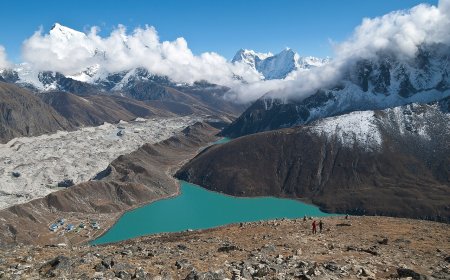
Retreating glaciers change hazard profiles slowly. Newly formed and growing glacial lakes upstream of a project change what the design flood actually means, and they can change it without anyone rebuilding anything. That is a planning problem rather than a claims problem, but it belongs in the same conversation as your policy renewal and your design assumptions.
What you cannot do is project a specific future loss at a specific plant without a study that says so. Anyone quoting you a figure for the next event is guessing.
Relief money is not your claim
Keep disaster relief and insurance separate in your head before you pick up the phone. National disaster response frameworks and local relief arrangements exist to help communities and infrastructure recover. They are a different channel from your policy. Receiving relief does not reduce what your insurer owes you, and it does not substitute for the evidence file you need to build anyway.
A working checklist
- Read the policy before the monsoon, not after. Sub-limits, deductibles, indemnity period, and whether transmission assets are on the schedule at all.
- Keep a force majeure notice calendar for every contract, with the deadline and the named recipient.
- Build the evidence pack while the site is still wet. Timestamped photos, gate logs, gauge and generation data, a written chronology.
- Start the slow paperwork the same week: local calamity report, rainfall records, police report where it applies.
- Sequence notifications deliberately. Insurer and lender together, then the licence file, then the regulator if the commercial terms move, then the grid.
- Engage repair contractors with the adjuster's knowledge and keep competing estimates on file.
- Ask the insurer, in writing, who holds settlement authority for a loss of this size.
- Check the date on any figure you see quoted about flood damage costs. If it has no date, it has no value.
The engineering after a flood is hard. The paperwork is only tedious, and it is the part you can actually control.
What's Your Reaction?