




Sunsari District Travel Guide: Koshi Tappu, Dharan, Barahakshetra & Where to Base Yourself
A practical Sunsari district guide covering Koshi Tappu Wildlife Reserve, Dharan's temples, Barahakshetra and Ramdhuni pilgrimage sites, plus honest advice on where to base yourself — Dharan, Itahari, or Kusaha — with current permit processes, seasonal timing, and what to verify before you go.

Sunsari rarely gets its own chapter. Most travellers treat it as the strip of eastern Terai they cross on the way to somewhere else, and in fairness, that is often exactly what it is. Itahari is where the East–West Highway meets the Koshi Highway, and Dharan is the last big town before the hills. But the district also holds a Ramsar wetland, one of eastern Nepal's busiest pilgrimage sites, and a workable base for exploring Koshi Province without committing to a trek.
Getting there and around
The district's spine is the East–West (Mahendra) Highway, which runs through Itahari, and the Koshi Highway, which branches north from Itahari up to Dharan and on toward Dhankuta. Most visitors arrive by road. The nearest airport is Biratnagar, and note that Biratnagar is in Morang district, not Sunsari, so you cross a district boundary on the way in.
As planning guidance rather than measured fact: Biratnagar to Itahari is a short highway run, usually under an hour in normal traffic, and Itahari to Dharan is a shorter hop again. Allow more in the evening or during festival season. Buses and micros run frequently along both roads; shared jeeps fill the gaps on smaller routes.
The Koshi Barrage crossing is the one piece of this section I will not describe as open. Access and security arrangements there have changed before, so ask locally, or at the reserve office, on the day.
Where to base yourself: Dharan, Itahari, or Kusaha
Dharan is where most people sleep. The town spreads up from the highway, with most guesthouses and hotels clustered around Bhanu Chowk and the market streets below it, and a second belt along the road as you enter. Eating is easy and cheap: momo, sekuwa, thali kitchens, and plenty of tea shops.
Itahari makes sense if you want highway convenience. It sits at the junction of the two main roads, so you can reach Koshi Tappu (south) and Dharan (north) without backtracking. Lodges range from basic rooms near the bus park to a few mid-range options along the Koshi Highway stretch.
Kusaha and Jhumka put you at the reserve gate. If your plan is early-morning birding at Koshi Tappu, this is the only place that lets you roll out of bed and onto a boat. A handful of community lodges and homestays operate near the reserve office; book ahead and confirm they'll arrange a boat for dawn.
Dharan's religious sites: a walking half-day
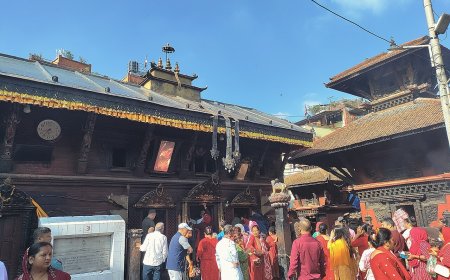
The religious sites stack up nicely for a walking half-day. Budha Subba, with its clump of tip-less bamboo, Dantakali and Pindeshwor are all close enough to link on foot, and the walk between them is half the point. Bishnupaduka sits further out, so you would want a vehicle for that one. As a rough planning estimate, a half-day covers two or three of the central sites at an unhurried pace, and a full day lets you add Bishnupaduka and still eat lunch properly. Treat those timings as guidance, not measured fact.
Inaruwa and Ramdhuni: the district headquarters and a major pilgrimage site
Inaruwa, the district headquarters, sits on the East–West Highway between Itahari and the Koshi Barrage. It is not a tourist town, but you will pass through it, and it has fuel, ATMs, and a few decent lunch stops if the highway restaurants in Itahari are full.
Ramdhuni, a short drive north of Inaruwa off the highway, is a major pilgrimage site with its own annual fair. The temple complex sits in sal forest and draws large crowds during the festival period. As with Barahakshetra, the fair dates shift each year — check with Ramdhuni Municipality or the temple committee before you plan around it.
Koshi Tappu Wildlife Reserve: what a visit involves
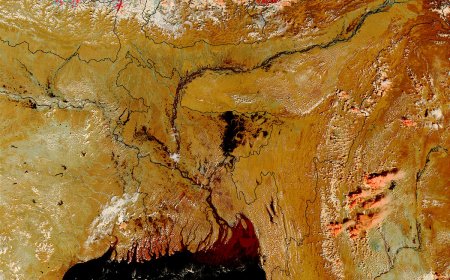
One correction to a common assumption: the reserve does not sit wholly inside Sunsari. Its core area spreads across more than one district, taking in Saptari as well, so think of it as a Koshi corridor wetland rather than a Sunsari park. The administrative and visitor entry point is at Kusaha.
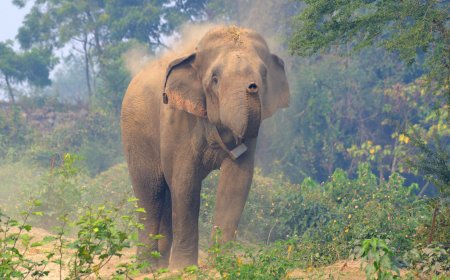
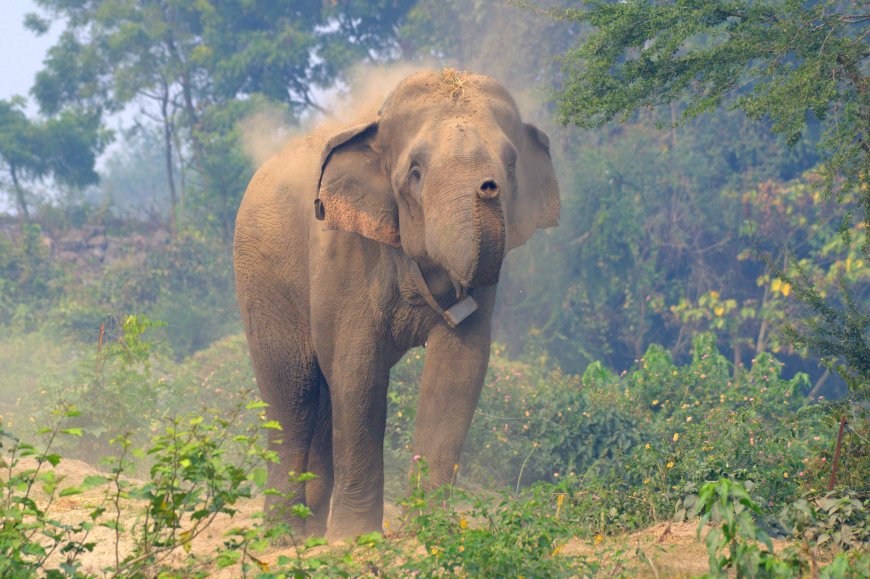
What a visit actually is: a flat, open wetland and riverine trip built around birding. The dry months bring waterbirds and easier tracks. Wild water buffalo are the reserve's signature animal, and Gangetic dolphins and elephants are possibilities rather than promises. Nobody can guarantee a sighting, and any guide who offers one is selling you weather. Species and numbers shift with water levels, so ask the reserve office what is being seen before you commit a day.
Barahakshetra, Chatara and the Tribeni confluence
Barahakshetra is as much a religion-and-culture stop as a travel one. It is associated with the boar avatar of Vishnu and sits close to the Koshi, which gives the whole place a river-crossing, edge-of-the-world feel. A large fair is held here every year, commonly cited as falling in the winter months (Magh, roughly January–February), but the exact dates shift annually. Confirm with Barahakshetra Municipality or the temple office before you book — during the fair, accommodation in the area fills up fast.
Chatara and the Tribeni confluence sit within Barahakshetra Municipality, Sunsari district. Chatara has a small market and a few basic lodges; Tribeni is the meeting point of the Koshi, Arun and Tamor rivers. Both are comfortable day trips from Dharan or Itahari.
Best time to visit Koshi Tappu and Sunsari
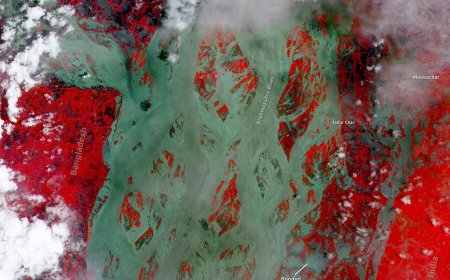
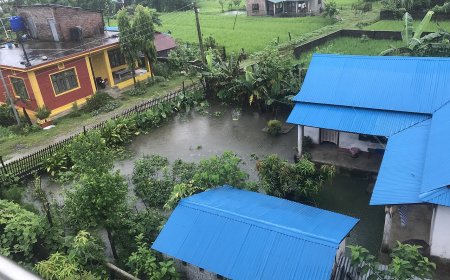
The comfortable window runs broadly October through June. Lower Koshi water levels mean easier access and better birding. Pre-monsoon (April–June) brings heat and dust. Monsoon brings leeches, mud and the genuine possibility of flooding in the Koshi corridor, which is why the reserve's own opening arrangements are worth checking with the reserve office before you build a trip around them. Monsoon conditions in this corridor are not theoretical: the embankment breach at Kusaha on 18 August 2008 flooded large parts of Sunsari and Saptari, a well-documented event that shaped a lot of local planning.
Koshi Tappu permits and fees: how the process works
Rather than print numbers that will age badly, here is the process. Nepal's protected areas are administered centrally by the Department of National Parks and Wildlife Conservation, and entry fees are set and revised by government. Permits for Koshi Tappu are issued through the reserve office at Kusaha. Boat trips and guiding are arranged locally, often through the reserve office or nearby community groups, and lodges quote their own rates. So the order is: check DNPWC and the reserve office for the current permit position, then arrange transport and guiding, then confirm your accommodation directly. Prices and availability change.
Know before you go
- Fees, permits and schedules in Nepal move, sometimes without any notice on any website. This was written on 7 October 2026, and where I could not confirm a detail against a dated source I say so rather than guess.
- Koshi Barrage crossing status — ask locally or at the reserve office on the day.
- Koshi Tappu 2026 opening arrangements and monsoon-season access — confirm with the reserve office at Kusaha.
- Barahakshetra fair dates — check with Barahakshetra Municipality or the temple office.
- Ramdhuni fair dates — check with Ramdhuni Municipality or the temple committee.
- Reserve entry, vehicle and boat fees, safari or guide rates, lodge and hotel tariffs, bus fares, and offering prices at Barahakshetra — all subject to change; verify with the relevant office before you travel.
Sunsari plus its neighbours
Bhedetar and Namaste Jharana are often sold as Dharan side trips. Both are in Dhankuta district, up the Koshi Highway and clearly outside Sunsari, which is fine as long as you know. From Bhedetar you can catch hill views on a clear day — not high Himalaya, but a pleasant ridge panorama. Saptari gives you the reserve's other flank and Rajbiraj. Udayapur opens up the hills to the west. Morang, via Biratnagar, is where you land.
What this trip will not give you
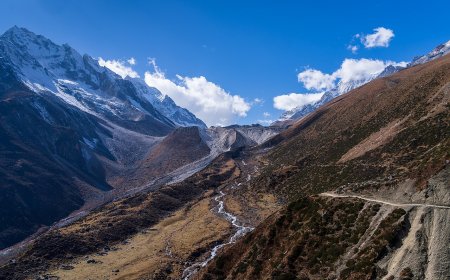
No mountain views from the plains. No trekking. No cold weather to escape into, unless you count the climb to Bhedetar. Pre-monsoon Sunsari is hot and dusty, and the reserve is flat, exposed and slow-paced. If you want big scenery, this is a stop on the way to it, not the destination.
What we could not verify
- Koshi Tappu 2026 opening arrangements — confirm with reserve office at Kusaha
- Barahakshetra fair exact dates for 2026 — confirm with Barahakshetra Municipality
- Ramdhuni fair exact dates for 2026 — confirm with Ramdhuni Municipality
- Koshi Barrage crossing status — confirm locally on the day
What's Your Reaction?