



When to Descend: Altitude Sickness on Nepal Treks (2026)
The descent decision is the one that saves lives on Nepal treks. How to judge when to turn around, how helicopter evacuation and insurance actually work, and what we could not verify.

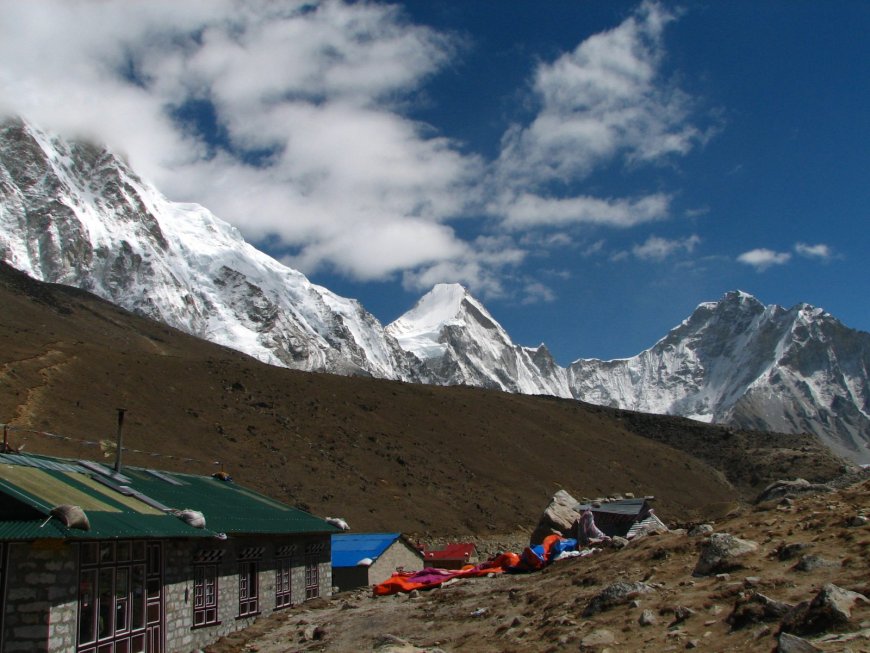
Most problems on a Nepal trek are uncomfortable rather than dangerous. Altitude illness is the exception. And the treatment that actually works is not a pill or a cylinder of oxygen. It is losing height. So the most useful thing you can carry is a clear answer to one question: at what point do I stop climbing and start walking down?
That decision, and what happens if you have to call for help, is what this page is about.
AMS, HACE and HAPE in plain terms
Acute mountain sickness (AMS) is the common one. You feel rough: headache, poor appetite, broken sleep, nausea. It usually shows up in the first day or two at a new height. On its own it is not dangerous, but it is a message that you have gone up faster than your body can adjust. Push on and it can get worse.
HACE is the brain form (high-altitude cerebral oedema). HAPE is the lungs form (high-altitude pulmonary oedema), where fluid builds up in the lungs and you end up breathless while sitting still. Both are emergencies, and both are treated by descent, not by rest, tablets or waiting for morning.
You will see decompression sickness compared to these on some websites. It is a different condition with different causes, and it is not a trekking problem in Nepal.
The detailed symptom checklist lives on our altitude sickness basics page. Read it at home, not at 4,000 m.
Acclimatisation that survives a real itinerary
Acclimatisation is less about talent than about schedule. Three habits do most of the work.
- Sleep low, walk high. A daytime walk to a higher point and back down to a bed at a height you have already slept at is worth more than an extra hour lying down.
- Never gain sleeping altitude while you feel unwell. If you have symptoms, that night goes at the same height, or lower.
- A headache that responds to paracetamol is not permission to climb. If it returns when the tablet wears off, your body is still objecting.
Eating and drinking properly matters more than most people expect, and a heavy night plus a short sleep will make the next day's altitude feel much worse than it is.
Itinerary design does a lot of the heavy lifting here. Our Everest Base Camp trek page sets out how the standard Khumbu pattern handles rest days, and the Annapurna pages show how the circuit and the base camp routes differ. Read those before you compare prices.
The descent decision
Descent is the treatment. These are the triggers that matter:
- Symptoms clearly worse than yesterday, or no better after a rest day at the same altitude.
- Anyone stumbling, confused or drowsy. That is HACE until proven otherwise. They go down now, with someone helping them.
- Breathlessness at rest, or a wet cough. That is HAPE, and the answer is the same.
Two things complicate this in practice. The first is that the person who most needs to descend is often the least able to judge it, so the decision should not rest on how they feel about it. The second is summit fever. On a fixed itinerary with a group, "just one more lodge" is an easy sentence and a bad decision. The trekker owns this call. Guides advise, and a good one will push, but nobody can consent to your HACE for you.
If you can choose, descend in daylight and with a companion. If it is HACE or HAPE, it goes down at whatever hour it happens. How far is far enough? Far enough that you feel better, then a little further, and you do not climb back up the next day.
What happens when you call for help
Helicopter evacuation in Nepal is a chain, not a single phone call. It usually starts with your guide, lodge owner or trekking agency, who contact a rescue operator. That operator then needs your insurer's assistance line to authorise the flight, and most policies require authorisation before the aircraft lifts. This is why the numbers you carry matter as much as the phone you carry them on.
Flights are never guaranteed. Weather, cloud, daylight and landing altitude all constrain what a pilot will attempt, and high, tight valleys are where that bites. Ground options are often faster anyway: walking down with a companion or porter, a horse or mule, a jeep on the road sections.
Carry a paper copy of your policy number and the 24-hour assistance number, a charged phone and power bank, cash, ID, and a list of your medications and allergies. In remote valleys, assume no signal and plan for it. Ask your insurer, before you buy, what maximum altitude the policy covers, whether helicopter evacuation needs prior authorisation and from whom, whether hospital admission or descent is a condition of the claim, whether medical repatriation is included, whether trekking is a named activity, and how the emergency contact process runs. We cannot tell you what any policy will pay.
Route notes and open questions
The Himalayan Rescue Association is the name most trekkers are pointed to for altitude advice in Nepal, alongside the CIWEC Clinic in Kathmandu. We have not been able to confirm on the record, as of 7 October 2026, whether the seasonal HRA-linked aid posts are operating this season, on what dates, or whether any fee applies, so we are not publishing a clinic list. Check with HRA directly before you rely on one. Likewise, trekking permits and park entry fees carry official rates that change: we have deliberately published no figures here. Confirm current amounts with DNPWC or the Nepal Tourism Board.
Verification note
This article is not medical advice. Speak to a travel-medicine clinician before you leave, and in Nepal to HRA or CIWEC. Everything above is deliberately limited to what we could verify as of 7 October 2026, and specific altitude thresholds, named medications and doses are withheld pending dated sources rather than guessed at.
What's Your Reaction?