




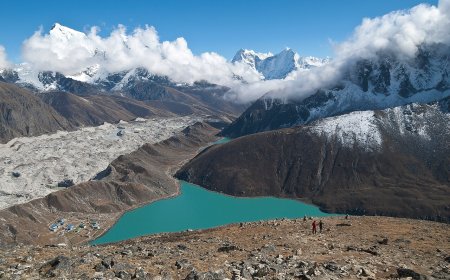

Lhotse Expedition 2027: Permits, Royalties and Operator Planning Explained
A plain guide to Lhotse climbing permits, Nepal mountaineering royalty and operator bundles for spring 2027, plus the questions to ask before paying a deposit and the figures no public source can confirm.

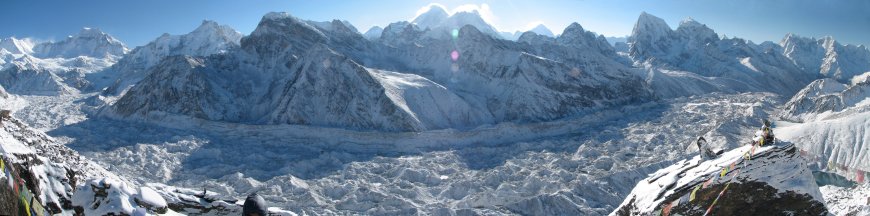
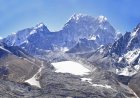
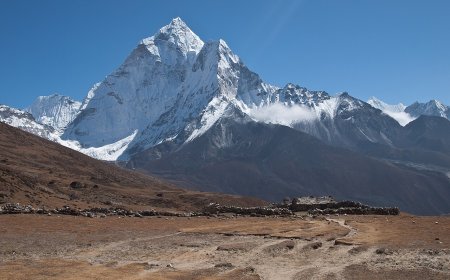
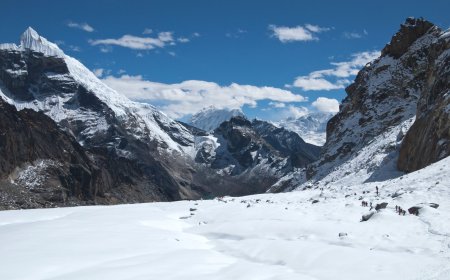
Lhotse stands a few kilometres south of Everest and shares the same approach through the Khumbu, so it is no surprise that climbers planning a Lhotse expedition in spring 2027 end up reading Everest material and assuming the numbers carry across. Some of it does. A fair amount does not. Here is what a Lhotse climbing permit is, where Nepal mountaineering royalty sits apart from an operator's quote, and what to ask before you commit any money.
The permit is a government document, not an operator product
Nepal requires a climbing permit for Lhotse. In practice almost nobody applies alone. The permit is normally arranged through a licensed operator as part of the expedition package, and that is how nearly every spring 2027 team will handle it.
The sequence of steps, the forms, and the royalty attached to the peak are a different matter. Those details shift, and they should be confirmed against an official source rather than a blog. What is worth holding onto now is the distinction itself. The permit is a government document. The guiding, the oxygen, the tents and the flights to Lukla are not, and the two are not the same thing even when they arrive on one invoice.
Royalty and operator bundle are two separate layers
Nepal mountaineering royalty is the fee the government charges for the climbing permit. An operator bundle is everything the expedition company wraps around that permit to get you up the mountain and back: base camp services, food, climbing Sherpa support, fixed ropes, sometimes oxygen and masks, sometimes helicopter transfers, insurance arrangements, staff bonuses, waste management.
When a quote arrives as one lump sum, those layers disappear. That is why two teams quoting for the same season can look wildly different without either being dishonest. One may build in a full personal Sherpa ratio and a high-flow oxygen system. Another may price those as add-ons later. Neither quote tells you what the royalty was.
That Everest figure is Everest-specific
The US$15,000 Everest royalty reported in January 2025, when Nepal raised the fee for Everest, turns up constantly in Lhotse discussions. It is an Everest number. It does not establish a Lhotse royalty, does not scale to Lhotse by altitude or by any other measure, and should not be inferred as one.
Demand in 2026 is not a forecast for 2027
Reporting in May 2026 described demand during the 2026 season. Read that as a report on a season already in progress, not as evidence about spring 2027. Whether next spring is busy depends on things nobody can measure yet, including how many teams commit deposits over the northern winter.
So if you see a 2026 season figure dressed up as a 2027 expectation, ask what the number rests on. Everest region climbing permits, weather windows and team commitments all move. A crowded season does not guarantee a repeat.
Questions worth asking before you pay
At this stage, questions do more work than price comparison. Ask each operator the same set:
- What does the quote include, and what gets invoiced separately once I am in Nepal?
- Ask what staff insurance and bonus arrangements are included.
- Ask what waste-management arrangements are included.
- How many clients per climbing Sherpa, and how much oxygen is budgeted per person?
- What happens if the permit is not issued, or if the season is cut short?
Those answers, read side by side, tell you more about a spring 2027 Lhotse expedition than a headline number ever will. They also expose gaps. An operator who cannot describe their staffing or waste arrangements in plain language is telling you something useful.
What no public source currently proves
As of 16 November 2026, we could not tie a Lhotse royalty figure, or a typical all-in expedition price, to a citable official source. So none is published here, and that is deliberate. Climbing magazines and news outlets have run cost breakdowns and first-person accounts that make genuinely useful background reading, but they are not official documents, and a figure copied from one article into another does not become verified along the way.
Plan on this basis instead: the permit is real and required, the royalty exists, the operator bundle is where most of your money goes, and the exact split is something you get in writing from the company you hire, before the deposit leaves your account.
What's Your Reaction?