











Birupakshya Idol in Patan, Nepal: Record vs Local Tradition
Birupakshya idol in Patan: separate documented record from local tradition at Kumbheshwar temple. What to see, what stories to trust.

Where the Birupakshya idol is in Patan
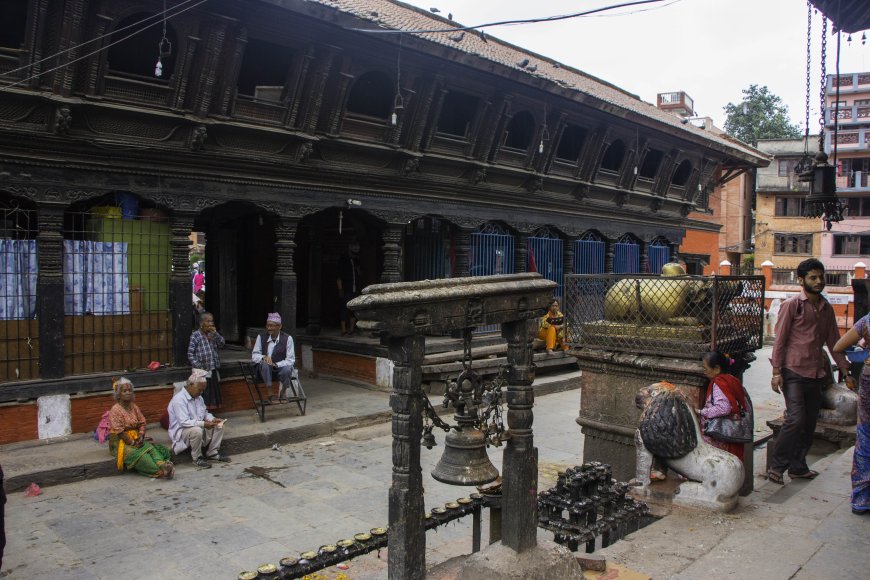
The stone image known locally as Birupakshya sits in the Kumbheshwar temple area of Patan, Lalitpur, inside the Kathmandu Valley. From Patan Durbar Square you walk north past the golden gate, through lanes that still smell of incense and frying sel roti, and arrive at a courtyard dominated by a large rectangular pond — Kumbheshwar Kunda — fed by a natural spring. The idol itself is set into the ground near the pond's edge, only its upper portion visible above the flagstones. No signage explains it; the site is administered by a local trust whose opening hours and photography rules change without notice. Confirm details on the ground before you go.
The figure itself
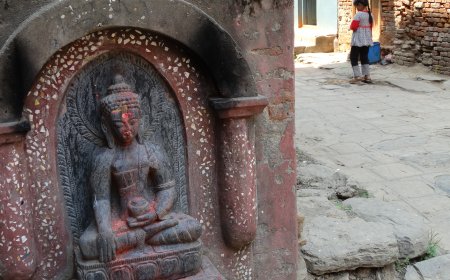
Standing there, you see a weathered stone torso and head, the features softened by centuries of ritual touch and monsoon rain. The lower half disappears into the floor, as if the earth swallowed it slowly. Whether it was originally carved that way or settled over time, no inscribed record or dated inventory consulted for this article settles. The impression is of something ancient half-emerged, the stone cool under fingertips, the air thick with the murmur of devotees circling the pond.
Which claims are tradition
Growing idol story
Local accounts hold that the image is slowly rising out of the ground, and that it has not fully emerged because its time has not come. This is devotional tradition — told by priests, repeated in pilgrim diaries, and usually the first thing a visitor hears. No heritage listing, trust ledger, or named academic work supporting the claim was produced for this article. If you repeat it, attribute it: local accounts hold that the image is growing.
Kirat king connection
A second widely shared story ties the idol to a Kirat king, often named Yalamber. Like the growing-idol account, it circulates through retellings rather than a traceable document. It is presented here as an attributed belief, not an established historical identification, and should be read that way until a qualifying source appears alongside it.
Birupakshya, Virupaksha, and a different temple in India
Birupakshya is the Nepali form of Virupaksha, a name of Shiva appearing in temple names and texts across South Asia. The Virupaksha temple at Hampi in Karnataka, India, is a separate monument with its own history and has nothing to do with the Patan idol. Searches for "Virupaksha Nepal" often surface Hampi material because the names are identical. Check the first two lines of any page: if it isn't about Patan and the Kathmandu Valley, it's about somewhere else.
How to read the story when you meet it
Two labels are enough. If a sentence rests on a heritage listing, municipal inventory, trust record, or cited academic work, it belongs to the record. If it rests on what people say, what pilgrims believe, or what gets repeated without an author, it belongs to tradition. The growing image and the Kirat king identification both sit in the second group. That doesn't make them worthless — tradition is how most people actually relate to a place like this — but it shouldn't be dressed up as documented history.
Related: Patan Durbar Square visitor guide | Kathmandu Valley temple legends | Nepal heritage sites overview
What's Your Reaction?