

Everest Base Camp Trek Costs: Where the Money Actually Goes
Everest Base Camp trek costs come down to five things: permits, transport to the trailhead, teahouse food and lodging, guides and porters, and insurance. This guide breaks down each line, explains why permit rules and Lukla flight arrangements keep shifting, flags the on-trail costs that never make it into a quote, and shows how to compare two operator quotes fairly. No price table, because those figures move faster than any article can keep up with.

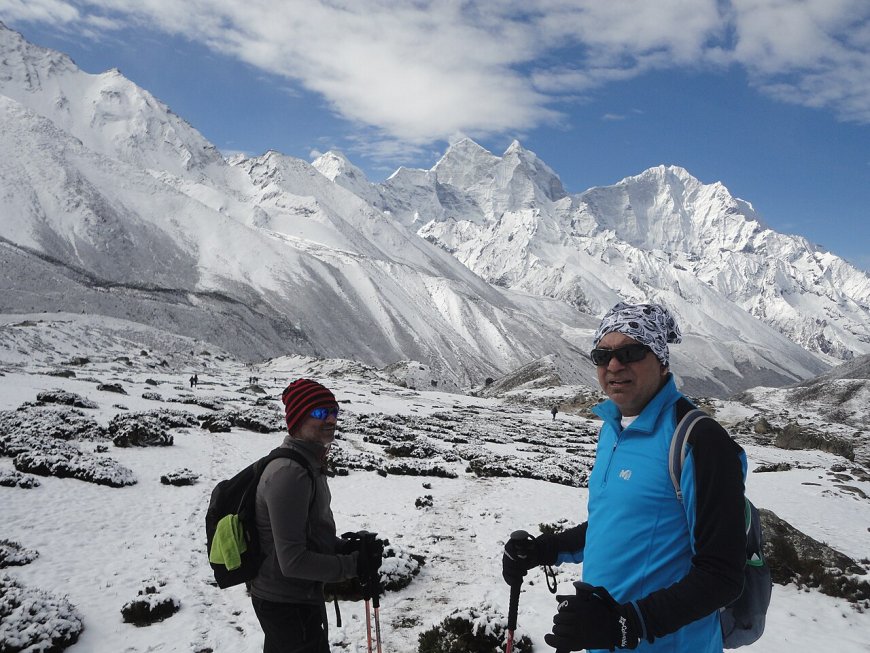
Two people reach Gorak Shep on the same afternoon, having walked the same twelve days up the same valley, and one of them has spent something like three times what the other has. Neither of them did anything obviously stupid. That gap is the whole story of Everest Base Camp trek costs, and it is why a single "average price" figure tells you almost nothing useful.
What follows is the structure of the bill: what you are actually paying for, which parts you control, and which parts will hurt badly if you get them wrong.
The five things you're paying for
Strip away the marketing and every EBC quote comes down to the same handful of line items.
Paperwork. National park entry, any local fee, and whatever trekking registration applies to your route. Small in absolute terms, but a fixed cost you cannot negotiate.
Getting to the trailhead. The Lukla flight, and increasingly the question of how you get to the airport you're flying from.
Food and lodging on the trail. Beds are cheap. Meals are not.
People. A guide, possibly a porter, and their wages, insurance and equipment. This is the biggest chunk of an organised trek price, and the first thing cut-rate operators shave.
You. Travel insurance, gear, and the cost of the things that go wrong: cancelled flights, an extra night in Namche, a helicopter you didn't plan on.
Add your Kathmandu nights either side and you have the full picture. Almost every surprise on an EBC budget comes from the last category.
Permits: the part that keeps changing
Sagarmatha National Park charges an entry fee. A local fee collected by the Khumbu Pasanglhamu Rural Municipality has been part of the picture since 2018. TIMS cards, issued through the Nepal Tourism Board and TAAN, cover other trekking areas and have at points overlapped with, or been replaced by, the Khumbu municipal arrangement.
Which of these applies to your trek, in what combination, and at what rate has changed more than once in recent years. Do not build a budget on a blog post from three seasons ago, including this one. Confirm the current position with the Nepal Tourism Board or with the agency handling your permits, and ask them to put the fee breakdown in writing.
The same caution applies to rules on trekking without a guide. Nepal announced tighter restrictions on solo trekking in protected areas in 2023. Whether and how those apply to your route and your nationality is worth confirming rather than assuming, because turning up at Lukla with the wrong paperwork is an expensive way to find out.
Getting to Lukla is its own budget line
Lukla flights are short, weather-dependent and prone to cancellation. The knock-on cost is real: an extra night in Lukla or Kathmandu, a reshuffled itinerary, sometimes a helicopter seat to protect a tight schedule.
There is a second wrinkle. In recent years, peak-season flights have at times been shifted from Kathmandu to Manthali, near Ramechhap, which means a long pre-dawn road transfer before you even board. If you're travelling in the busy spring or autumn windows, ask your operator which airport you are actually departing from, and whether the transfer is included or billed separately. This is exactly the kind of detail that quietly adds a day and a hotel night to a budget.
Helicopter returns from the upper valley exist and cost multiples of a plane ticket. Useful if you're short on time or a flight backlog strands you. Not a line to build into a tight budget.
Teahouses: cheap beds, expensive eggs
The economics of a Khumbu teahouse are simple. Rooms are cheap, sometimes effectively free, on the understanding that you eat your meals there. The food carries the margin, because every sack of rice and every gas cylinder came up the valley on someone's back or on a yak.
Practically, that means your daily on-trail spend is driven by what you order, not where you sleep. It also means eating somewhere other than where you're staying is a genuine faux pas, and sometimes a charge. Prices climb with altitude, at every lodge, for the same plate of dal bhat. That's not gouging: it's transport.
Guides, porters and tips
A licensed guide and, if you want one, a porter are the difference between a good trek and a brutal one. Porter loads are regulated and there are real limits on what a person should be carrying. If a quote is unusually cheap, look at what it assumes about porter weight, group size and insurance. Cutting there doesn't save you money, it transfers risk to someone who can't refuse it.
Tipping is expected, and it isn't a token. Budget for it separately, in cash, at the end of the trek. Crews pool tips, and the amounts that feel generous in Kathmandu can feel thin after two weeks above 4,000 metres.
Insurance is the last place to save
This is where the real money is, and it's the line item people trim first because nothing about it feels like part of the trip.
Read the evacuation clause, not the brochure. Many standard travel policies cap the altitude they'll cover, and Base Camp sits above several of those caps. Check whether helicopter evacuation is included, whether it's covered for altitude illness specifically, whether it will fly you out from the upper villages, and whether repatriation is included. A policy that looks cheap until it declines a helicopter from Pheriche is not cheap.
Ask your trekking agency what cover they expect clients to hold. Good ones will tell you.
Gear: what to bring, what to buy there
You don't need to arrive fully kitted out. Kathmandu's Thamel district sells or rents down jackets, sleeping bags, trekking poles and duffels at a fraction of home prices, with quality to match the price. Rent the big-ticket items you'll never use again, buy the boots and layers you'll live in at home, where you can test them.
The exception is anything your safety depends on: boots, and a sleeping bag rated honestly for the altitude.
The costs nobody puts in the quote
Charging a phone or camera, wifi, and hot showers are all metered separately at higher lodges, and the rates rise as you climb. Bottled water is expensive and environmentally grim; a filter or purification tablets are cheaper across two weeks and lighter in every sense.
Cash is its own problem. There is an ATM in Namche Bazaar, and it is unreliable: it runs dry, goes offline, or both. Carry more rupees than you think you need, in reasonably small notes, and treat the ATM as a bonus rather than a plan.
Then there's the buffer. Weather, flight cancellations and altitude all cost money in unplanned nights. Budget a couple of spare days' worth of cash and consider it part of the trip price, not a contingency you hope to avoid.
Organised or independent
Independent trekking in the Khumbu is possible, but it moves the work onto you: permits, logistics, route decisions, and judgement calls about altitude that are much harder to make when you're the one with a headache at 4,500 metres. An organised trek buys you someone else's experience and, importantly, someone else's liability.
The honest trade is this. Independent travel saves money on the guide and porter line and costs you in decisions, flexibility and risk. It is not automatically cheaper once you price in the mistakes and the extra nights.
How to compare two quotes fairly
Quotes are not comparable until you know what's inside them. Ask every operator the same questions, in writing:
Are park and municipal permits included, and are the fees listed separately? Is the Lukla flight included, and what happens to the cost if it's cancelled or rerouted through Manthali? How many trekkers per guide, and how much does a porter carry? Are guide and porter insurance, wages, food and lodging covered? How many nights in Kathmandu are included, and in what class of hotel? What's the evacuation protocol and who pays up front? What is not included?
The last question is the one that separates a professional operation from a cheap one. A good operator answers it at length, because they've thought about it.
Why there's no price table in this article
Permit rates, airfares, teahouse menus and insurance premiums in Nepal all move, and they move at different times and for different reasons. A table of figures here would be out of date before the end of the season, and you'd have no way of knowing which line to trust.
So use this piece for the structure, then get current numbers from three places: the Nepal Tourism Board or your agency for permit fees, the airline or your operator for the Lukla leg, and your insurer for the policy. Compare three quotes line by line. If an operator won't break the price down, that's your answer.
The trek is worth the money. Just make sure you know what you're paying for before you pay it.
What's Your Reaction?