


Passport for a Minor in Nepal: A Parent's Practical Checklist
A practical, reader-facing guide to applying for a Nepali passport for a child: who signs the form, why both parents' consent matters, which documents families usually need, how to fix name mismatches before applying, and why you should check current fees and processing times with the Department of Passports rather than relying on hearsay.

A child's passport application looks like a small errand until you are at the counter with a folder of photocopies and one document turns out to be missing. In Nepal there is an extra layer to it as well: the state wants evidence that the people legally responsible for the child actually agree to the application. Get that part right and the rest is mostly paperwork and patience.
Who applies, and who has to agree
For an applicant under 18, the form is completed by a parent or legal guardian. The child does not sign it. What the office is checking is the chain of responsibility: that you are who you say you are, that this child is yours or in your care, and that nobody with parental rights is being cut out of the decision.
In practice that usually means consent from both parents where both are living and both appear on the child's documents. Families run into trouble when that is not straightforward. A parent working in the Gulf, a parent who has died, parents who are separated, a father who was never registered on the birth certificate. Each of those situations has a way through it, but each one adds a document, and the counter will want that document before anything moves. Call or check the Department of Passports guidance for your specific case before you queue.
The papers most families end up needing
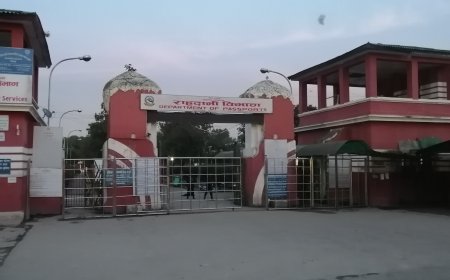
Treat this as a checklist for gathering, not as the official list. The Department of Passports (Rahadani Vibhag), which sits under the Ministry of Foreign Affairs, publishes the current requirements, and that published list is the one that counts on the day you apply. What follows is what commonly comes up:
- The child's birth registration certificate
- Citizenship certificates for the parents, and copies of their passports if they hold them
- The parents' marriage registration certificate, where the parents are married
- Evidence of consent from the parent who is not present at the counter, in whatever form the Department currently accepts
- A death certificate, court order or similar document where the family situation calls for it
- Photographs to the specification in force at the time, and the old passport if this is a renewal
Bring originals plus copies. Counters keep copies and hand originals back, and arguing about that slows down everyone in the queue.
Bring the child
Plan for the child to be present. Somebody has to take the photograph, and for older children fingerprints are recorded as well. Infants are handled differently because there is nothing useful to capture, and the office will tell you how they want it done. If the child genuinely cannot attend, ask before you apply rather than after, because turning up without them is one of the more common wasted trips.
The mismatch that sinks more applications than anything else
Names. A child's name on the birth certificate spelled one way, the father's name spelled another way on his citizenship certificate, a mother's name that changed after marriage. Nepali documents are full of these small variations and a passport office cannot simply decide they refer to the same person.
Before you apply, lay every document side by side and read the names letter by letter. If they do not line up, fix the underlying record first. Correcting a birth certificate or a citizenship certificate takes time, but it takes less time than a rejected application and a rebooked appointment.
What it costs, and how long it takes
Fees are set by the government and are revised from time to time, and there are usually different rates for ordinary and faster service. Rather than trust a figure you heard from a neighbour two years ago, check the Department of Passports website or ask at the counter on the day. The same goes for processing time. Passports are printed centrally and sent out to issuing offices, so how fast you get yours depends on application volumes at that moment, not just on which service tier you paid for.
Which leads to the practical advice: do not book an international flight on the assumption that the passport will arrive by a particular week. Apply early, keep the receipt, and book travel once the document is in your hand.
Agents, touts and the queue outside
You will meet people outside passport offices who offer to speed things up. Some of them are simply filling in a form you could fill in yourself. Pay fees at the official counter or bank, insist on a government receipt, and be suspicious of anyone who wants money with no paper trail. A passport application is a bureaucratic process, not a negotiation.
If the child is abroad
Nepali missions issue passports to citizens overseas, including children. If a child was born outside Nepal, the birth usually has to be registered with the nearest embassy or consulate before a passport application can proceed there. The mission's own guidance governs, and it can differ from what a district office in Nepal asks for.
One last thing
Rules for minors' passports are exactly the kind of thing that gets amended quietly, and the only version that matters is the one in force on your appointment date. Read the Department of Passports instructions the week you apply, not the week you start planning. It is a boring hour of reading that saves a lot of standing in line.
What's Your Reaction?