




















Rooftop Solar in Nepal: How to Size a System, Read a Quote and Work Out Payback Yourself
A householder's guide to rooftop solar in Nepal that avoids the rules it can't verify and focuses on what you can do yourself: build a load sheet from your own bills, read an installer's quote line by line, and work out payback using two lines of arithmetic. It also covers what that arithmetic leaves out and what to re-check before you commit.


Search for rooftop solar in Nepal and you'll find plenty of payback promises attached to almost no paperwork. This piece does the part that doesn't need paperwork: building a load sheet from your own bills, reading an installer's quote line by line, and running the payback arithmetic yourself once you have real numbers in front of you.
What I'm deliberately not covering. Net metering rules, subsidy amounts, tariff rates, who is eligible, how much capacity you're allowed. I can't stand behind a current version of any of those, and describing them from memory would be worse than leaving them out. That is not me saying the rules don't exist or that nothing applies to you. It's me saying I couldn't verify them, which makes them a bad foundation for a purchase you'll live with for years. If you came looking for an application walkthrough or a subsidy figure, this isn't that article.
What's left is still the useful half. It's also the half you need to do before you talk to any installer, because it's the half that tells you whether their numbers make sense.
Who this is for
Households. Sized against your own bill and your own roof, on your own connection. If you run a shop, workshop or guesthouse on a commercial connection, your load sheet, sanctioned load and tariff work differently, and this won't transfer cleanly.
The questions to get answered in writing
These are the things that decide whether the project is even possible for you, and they're the things people most often get told verbally at a counter and only later discover were wrong.
- Whether you're eligible to apply at all
- How much capacity you're permitted relative to your sanctioned load
- Any restriction tied to your phase connection
- Who supplies the bidirectional meter, and who pays for it
- Whether exported units are credited against what you consume, or settled in cash
- Whether credit can be banked and carried forward, and any limit on that
- The application steps, the documents, and who signs off at each stage
- Inspection and commissioning, and the realistic wait between applying and switching on
Then go and get them. Start at the distribution centre that issues your bill, and go in person rather than by phone, because the counter that issues your bill is the counter that knows your connection. Ask for the current published procedure on net metering or bidirectional metering, and ask for its date and reference number. Then walk down the list above with them. If someone tells you something and can't point to the paragraph it comes from, write it down as unconfirmed.
The electricity regulator is worth a separate visit for the directives in force on distributed generation. The agency that runs renewable energy subsidy programmes is where you ask for the notice covering the current fiscal year, with the date printed on it. Subsidy terms get revised between fiscal years, so an older document tells you what used to be true. Ask at the office, ask for the document itself, and don't accept a verbal answer as policy.
Do the same with any installer. When a salesperson recites a rule, ask to see the paragraph. Most can't show you one. Note the answer, then check it yourself before you sign anything.
Sizing starts with your bill, not a catalogue
Build a load sheet first. List what you actually run, roughly what each item draws in watts, and how many hours a day it really runs. Lighting, fridge, fans, pump, router, television, phone chargers, whatever your house uses. Be honest about the hours, because people overestimate how long the heavy things run and underestimate the always-on stuff.
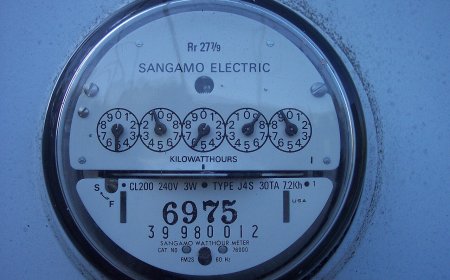
Then pull your last several bills and look at the units you consume. That number is the reality check on every claim about what a system will offset. A system can't save you more than you use, and it certainly can't save you more than you use while the sun is up.
From there, a couple of decisions are yours to make and nobody else's. How much of your consumption you want the array to cover, and how much of its generation you expect to use as it's made rather than send out to the grid. Everything downstream depends on those two answers.
If an installer quotes you a yield figure, in units per kilowatt per year or per day, ask what's behind it: where it was measured, at what tilt, with what shading, in which month. Yield moves with all of those, which is exactly why I'm not printing a number for the country.
Reading a quote line by line
What you want in writing, itemised rather than bundled into one lump sum:
- Make, model and wattage of each panel
- Inverter type and capacity, whether it matches your phase, and the protection features listed in the manufacturer's own datasheet
- Mounting structure and what it's made of
- DC and AC cabling
- Earthing and lightning protection
- Who handles the paperwork, and whether that's inside the price
- Labour
- Warranty terms, with the duration stated separately for panels, inverter, battery and workmanship
Ask for the panel and inverter datasheets as attachments. A photo of a box isn't a specification.
Keep one distinction sharp while you read. What the utility requires comes from a named utility or regulator document. What the equipment can do comes from the manufacturer. Those are two different sentences, and a quote worth trusting keeps them apart. When a quote blurs them, it's usually because the installer is filling a gap with confidence.
A couple of things are often missing from quotes and will cost you later. One is whether the price includes the meter and the utility's own charges. The other is the roof: if the mounting has to penetrate your waterproofing, who repairs it if it leaks?
The roof matters as much as the equipment
Orientation, tilt and shading decide how much of a panel's rating you ever actually see. Shade from a tree, a water tank or the building next door does more damage than most people expect, and shade that isn't there today may be there in a few years, so think about what's likely to get built beside you.
Think about access too. Panels need cleaning, and in much of the country that means dust and monsoon grime rather than a light rinse. If nobody can safely reach the array, it won't get cleaned.
And check the roof itself before you cover it. If the sheets are near the end of their life, or you're planning to add a floor, sort that out before the array goes up rather than after. Moving an existing array later is expensive and nobody enjoys it.
Batteries are a reliability decision, not a bill decision
An on-grid system and a hybrid system with battery backup are different purchases doing different jobs. The battery is there to keep selected circuits alive when the grid isn't. It does essentially nothing for your bill beyond what your consumption pattern already does, and it usually won't carry the heavy loads people assume it will, like a pump or an air conditioner, for any useful length of time.
One thing worth knowing before you choose: most grid-tied inverters are designed to shut down when the grid goes down. An on-grid system with no battery therefore typically gives you no power during an outage, even in bright sunshine. If backup is your main reason for doing this, that's a hybrid system, and you should price it as one from the start.
Whether you want backup at all depends on your own household's experience of supply. I'm not going to tell you how often the power goes out.
Running the payback yourself
The method fits in two lines.
Monthly value = (units the array generates in a month x the share you use at home as it's generated) x the rate you pay per unit, plus (units you export x whatever an exported unit is worth to you).
Payback in months = what the system costs you, interest included, divided by that monthly value.
That's the whole calculation. The work is in the inputs, so here's where each one trips people up.
The rate you pay per unit. Household tariffs are usually built in slabs, and where that's the case, what you avoid isn't your average rate. It's the rate on the units you're no longer buying at the top of your usage. Take that figure off your own bill. It's the number that matters, and it's the one people most often get wrong, because the average looks friendlier.
The share you use at home. This is the input nobody talks about and the one that swings the answer hardest. Walk through a day. Which loads run while the sun is up and would otherwise be drawing from the grid? A fridge, a router, standby loads, daytime fans, a pump if you run it in the afternoon. Then notice how much of your consumption happens in the evening, because that's generation you can't use without a battery.
Generation. Use a conservative figure rather than a sales figure, and be sceptical of anything that assumes clear skies every day of the year.
Exports. Until your utility confirms in writing how exported units are treated and at what value, put zero. That gives you the pessimistic version of your own numbers, which is the version you want when you're deciding whether to buy at all.
Once the two lines are written out with your own figures, the sensitivity check takes a minute. Halve the share you use at home and, provided exports are worth nothing to you, payback roughly doubles. Lower the generation assumption and payback stretches. Lower the rate you pay per unit and it stretches again. Put a real value on exported units and it shortens. None of this needs a spreadsheet, just the patience to run it more than once.
Two inputs surprise people. Self-consumption beats equipment on the way in, which is odd when every sales conversation is about panels and inverters. And the rate your utility charges you, which feels like a fact rather than a decision, moves the result just as hard as anything about your roof.
What the arithmetic leaves out
Run those two lines and you've got a frame, not a forecast. It ignores panel output declining over the years, the inverter needing replacement at some point, cleaning and occasional repairs, tariff changes in either direction, and the cost of borrowing if you finance the purchase. Each of those lengthens the period. It also assumes your household's consumption stays roughly as it is, and households rarely do. Children arrive, appliances get added, someone starts working from home.
So treat a payback figure as a way to compare options, not as a promise about the future. The interesting question isn't how many years. It's which assumption would have to hold for this to be worth it, and whether you believe it.
What to re-check before you commit
Rules, subsidy terms, tariff structures and technical requirements all get revised. Anything you read, this page included, is worth less than a current document from the utility, the regulator or the subsidy agency, and you should ask for that document at the time you actually apply. No installer is named, ranked or linked here and there's no affiliate arrangement behind this. If a future version ever does name one, a disclosure will sit right at the mention.
So what you're left with is a load sheet built from your own bills, a quote you can break down line by line, and two lines of arithmetic you drive yourself. That won't hand you a fixed number of years. It will tell you which assumptions you'd have to believe for the purchase to make sense, and that's the more useful thing to carry into the conversation.
What's Your Reaction?