






Nepal's 2026 Renewable Energy Investment Landscape: What's Moving and What's Still on Paper
Nepal's renewable energy sector in late 2026 shows a widening gap between ambitious government targets and on-the-ground progress. Hydropower commissioning lags due to clearance and PPA bottlenecks, rooftop solar uptake is rising but lacks updated data, foreign investment remains minimal pending PPA finalization and credit guarantees, domestic debt terms are tight, and green hydrogen is still at pilot stage.


Kathmandu — Nepal's renewable energy sector enters the last quarter of 2026 with a familiar tension: ambitious targets on paper, capital waiting on the sidelines, and a pipeline of projects that keeps growing faster than the institutional capacity to process them. The government's budget speech in May reiterated a trio of headline goals for the fiscal year ending mid‑July 2027 — an additional 1,200 MW of hydropower, 70 MW of solar, and a 5 MW green‑hydrogen electrolyzer hub — but the official Ministry of Energy, Water Resources and Irrigation annual report for FY 2025/26 has not yet been published as of early September, leaving the actual capacity additions for the just‑closed year unverified in public sources.
Hydropower: pipeline swelling, commissioning lagging
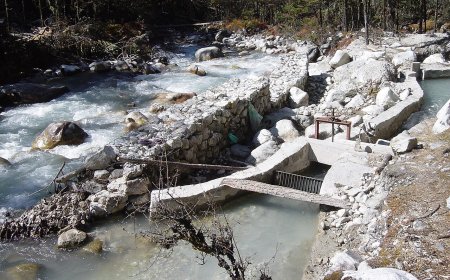
Industry trackers estimate that roughly 2,800 MW of hydro projects held construction licences at the start of FY 2025/26, yet only a fraction typically reaches commercial operation in any given twelve‑month window. The last fully audited figure — 2,200 MW total installed capacity as of mid‑July 2025 — came from the Ministry's 2025 annual report. Developers cite three persistent bottlenecks: delayed forest‑clearance approvals, transmission‑line right‑of‑way disputes, and the NEA's backlog in signing power‑purchase agreements (PPAs). A senior official at the Department of Electricity Development, speaking on background in August, acknowledged that the 1,200 MW target for the current fiscal year is "aspirational" and that a more realistic commissioning range might be 600–800 MW unless clearance procedures are streamlined.
Rooftop solar: subsidy uptake accelerating but data gap remains
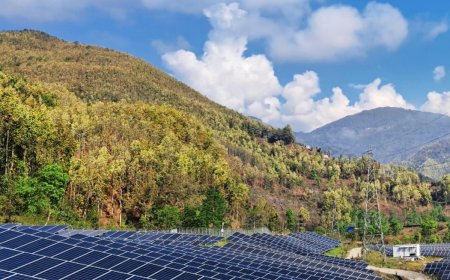
The Alternative Energy Promotion Centre (AEPC) last published a cumulative rooftop‑solar figure of 52 MW (grid‑tied net‑metering installations) in its December 2025 progress bulletin. Since then, the centre has run two additional subsidy tranches — one in January 2026 targeting commercial and industrial rooftops above 50 kW, and a second in June for residential systems up to 10 kW. Installers in Kathmandu and Pokhara report order books 30–40% fuller than a year ago, driven partly by the revised net‑metering regulation that took effect in October 2025 and allows banking of excess generation for up to twelve months. However, AEPC's 2026 solar‑rooftop update, promised for release alongside the Ministry's annual report, has not yet appeared. Until it does, any cumulative MW number for end‑2026 remains speculative.
Foreign direct investment: trickle, not flood
Nepal Rastra Bank's external‑sector statistics for FY 2025/26 are scheduled for release in October. The preceding year (FY 2024/25) showed renewable‑energy FDI inflows of just under USD 42 million — almost entirely reinvested earnings from existing hydro projects rather than greenfield capital. Bankers at Nabil and Himalayan Bank confirm that term‑sheet activity for new hydro and solar deals picked up in the first half of 2026, but most foreign equity commitments are contingent on two conditions: availability of partial credit guarantees (PCGs) for foreign‑currency loans, and clarity on the inflation‑indexation mechanism in the new 20‑ to 25‑year PPA template. NEA circulated a draft PPA guideline in March 2026 that proposes a hybrid indexation (60% CPI, 40% USD) with a 3% annual floor, but the final version has not been gazetted. Without a gazetted PPA and a functioning PCG facility — the World Bank‑backed guarantee scheme is still in design phase — dollar‑denominated lending remains effectively frozen for new projects.
Domestic debt terms: steady but tight
Rupee‑denominated project finance is available from major commercial banks, but terms remain tight, reflecting the sector's perceived risk and the banks' own exposure limits to power generation. Floating rates are typically tied to base rates with spreads that have seen little movement since the last product refresh. Tenors generally cap at 14–15 years, and upfront fees apply. Standard requirements include minimum debt‑service coverage ratios and debt‑to‑equity ceilings. Developers looking for longer tenors or lower spreads still have to structure blended finance with multilateral participation — a process that adds six to nine months to financial close.
Green hydrogen: pilot stage, not commercial
The 5 MW electrolyzer hub mentioned in the budget speech is envisaged as a demonstration project near the Nepal‑India border, leveraging surplus hydro during monsoon months. A concept note prepared by the Water and Energy Commission Secretariat in February 2026 estimated a levelised cost of hydrogen around USD 4.2/kg under current tariff assumptions — well above the USD 2/kg threshold considered competitive for export or industrial use. No EPC contractor has been selected, and the project's financing structure (grant vs. concessional loan vs. equity) is still under discussion with potential development partners. In short, the hub is a 2027–2028 story, not a 2026 investment opportunity.
What investors should watch in the next six months
- Ministry annual report (FY 2025/26): Will confirm actual hydro capacity added and may revise the 1,200 MW target for the current year.
- AEPC solar‑rooftop update: The first authoritative cumulative MW figure for 2026.
- NRB external‑sector statistics (October): The only hard data on whether FDI inflows have responded to the new PPA draft.
- NEA PPA gazettal: Final indexation formula and PCG eligibility criteria.
- World Bank PCG facility launch: Targeted for Q1 2027; its terms will determine whether foreign‑currency debt becomes viable for projects reaching financial close in late 2026.
Until those documents land, the 2026 investment landscape is best described as "policy‑rich, data‑poor." Developers with rupee balance‑sheet capacity and patience for regulatory lag are still deploying capital. Everyone else is reading the drafts and waiting for the gazettes.
What's Your Reaction?