



School Re-enrolment in Nepal After a Flood: How It Works and Where to Ask
After a monsoon flood, getting a child back into a classroom in Nepal is mostly a matter of asking the right people in the right order. Start at the school nearest where the family is now staying, and go to the palika education section only when the school itself cannot settle the question. The ward office handles birth registration and the national examination board handles board-level mark sheets and certificates, with the old school often acting as the channel. Schools adm...

Monsoon floods uproot families fast. A school building goes under water or is taken over as a shelter, the family shifts to a relative's place in another town, and somewhere in all that a child quietly stops going to class. The papers may be gone too: the birth certificate, the report cards, whatever the old school had on file. Getting that child back into a classroom is usually less complicated than parents fear. It takes a few conversations in the right order, and most of them happen at a school gate rather than in an office in Kathmandu. What follows is the general shape of the process, anywhere in the country. Local governments do things their own way, so treat each step as a starting point and confirm the details with your palika education section or with the school itself.
Start with a school, then the palika education section
Basic and secondary education in Nepal is run by local government. The palika (पालिका) is the body that can actually settle a question about admission, and the school is where the decision really gets made. Offices have been renamed and reorganised more than once since federalism, so advice written a few years ago often sends families to a desk that no longer handles this work. Don't burn a week hunting for the right title.
Go first to the school your child attended. If you have moved, go to the school nearest where you are staying now. Only when a school cannot answer a question should you walk over to the education section at the palika office.
One document sits upstream of most others: birth registration. If your child was never registered, or the certificate is gone, the ward office (वडा कार्यालय) is where that is handled. Do it early.
Re-enrolling your child after a flood
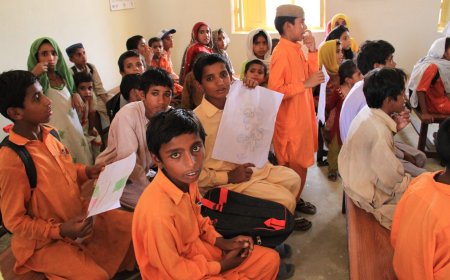
Take the child with you when you go. A head teacher responds differently to a parent and a child standing at the gate than to a phone call, and the child can be put in the right grade instead of a guessed one.
Explain three things: the grade the child had reached, the school they were in, and what happened to the family. If you moved because your home is uninhabitable, say that plainly. Schools near relief camps, and schools in towns hosting displaced families, deal with this every monsoon and usually have a routine for it.
One thing worth knowing before you go. Nepal's school year has traditionally begun around Baisakh, in mid-April, so a flood during the monsoon months means your child is rejoining a session that is already running. Mid-session admission, as it is usually called, simply means the child joins an ongoing class rather than waiting for a fresh intake. Nothing about a disaster makes this unusual, and schools place children this way all the time. Waiting for the next school year costs a child months of class time for no good reason.
Then ask directly: can my child start now, and which documents can I bring later? Many schools take the child first and let the paperwork follow. That is a local decision rather than a national guarantee, so get the answer from the school before you rely on it.
Papers you may be asked for, and what to do when they are gone
The usual list is a birth certificate, the last report card or mark sheet, and a transfer certificate if the child is moving to a different school. Ask whether photocopies are enough for now or whether originals will be needed later. If the old school lost its own records in the flood, the education section at the palika can usually help establish which grade the child had reached.
Once you have any document in your hand, photograph it and keep the image on your phone. It costs nothing, and a second copy is always faster to obtain than the first one was.
Replacing lost school and board documents
Who you approach depends on which paper is missing, and this is where people lose weeks.
School-level records come from the school. Report cards, character certificates, transfer certificates and anything tied to internal school exams fall into this group. The palika is the fallback when the school's own records were destroyed. A duplicate normally comes through the same route as the original.
Board-level records are a different matter. Mark sheets and certificates for the school-leaving examination and for grade 12 are issued by the national examination board, not by the school. Your old school is often the practical channel for reaching the board and will know what the board asks for, but the record itself sits with the board. So if someone tells you a school can simply reissue a lost school-leaving mark sheet on its own, ask again.
Take your citizenship certificate or another photo ID, the child's birth registration if you still have it, and anything that shows the old school or the grade. Expect a wait. Ask for a written note of what you submitted, and when.
What is free, and what families still end up paying
Nepal's constitution makes basic education free and compulsory, and commits the state to free secondary education as well. That is the entitlement. What a school covers in practice, and what a family ends up paying, is not identical everywhere. Uniforms, stationery, examination fees and transport are the items families most often pay for themselves, and after a flood those are exactly the costs that become hard.
So ask what support exists for households hit by the flood, and whether you qualify. Ask at the school and at the palika, because the answers can differ. If you are asked for a payment you do not understand, ask what it covers before you pay anything. And be careful with anyone who promises you a government entitlement they cannot show you in writing.
If a school refuses admission, or asks for money you don't understand
Take it to the palika education section. Local government runs basic and secondary education in its area, which makes it the body that can tell a school what to do. For a birth registration problem, the ward office is the one to see.
Walk in with the details written down: the name of the person you spoke to at the school, the date, and exactly what you were told. If a school says admission is impossible without a document you cannot get right now, ask them to put that in writing, or to name the rule they are following. In practice, a written request routed through the palika gets an answer faster than an argument at the gate.
If one office sends you to another, ask the second office to confirm in writing what the first one said. Keep every slip, receipt and note in one folder, even the ones that look unimportant. And if the obstacle is money rather than documents, say plainly what amount was asked for and what it was for. That question alone often settles it.
If classes are running in a temporary learning centre
When a school building is unusable, teaching often moves into a tent, a community hall or someone's veranda. Ask whether that centre is attached to a formal school or running on its own, because it decides how your child's enrolment and records are handled. If it is attached, your child stays on the school register. If it is not, ask which school will hold the record, and write down that school's name.
Questions to carry, and records to keep
Ask the same things at every gate: which grade will my child join, which documents do you need and which can come later, what will I be asked to pay, and who holds my child's record. Write down the name of whoever you speak to, along with the date and what they told you. Keep those notes in one place, because a month later it is surprisingly hard to remember who said what.
Keep the child's papers together too, in one folder that travels with the family. A birth certificate, the last report card, and any receipt or slip from an office all belong in it. If you had to leave documents behind when you moved, say so when you enrol, and ask what can be reconstructed later rather than trying to gather everything first.
What to expect in the first few weeks
There is a real trade-off running through all of this. Waiting until every paper is in order feels safer, but it costs class time, and a child who stays out for a whole session is harder to bring back than one who is slightly behind. Accepting a place in a temporary centre, or in a school that is not the old one, may feel like a step down. For most families it is the step that keeps the child learning while everything else gets sorted out.
Children get back into a classroom faster than the adults around them expect. It may not be the same building, the certificate may arrive months late, and the routine will feel strange for a while. None of that stops a child from starting again this week.
If you remember only the order of things, remember this. School first, because that is where the decision is made. Palika education section second, when the school cannot answer. Ward office for birth registration, and the examination board for board certificates, with the old school often acting as the channel. Start with the school nearest you, ask the questions above, and let the paperwork catch up while your child is already sitting in class.
What's Your Reaction?