








Birupakshya at Patan Durbar Square: Kirat Legend, the Idol, and What You Actually See
Kirat tradition holds Birupakshya as an ancestor figure carried in the Mundhum, with claims about the image rising and the end of the age treated here as tradition. The article also covers what published accounts document about the stone idol at Patan Durbar Square and what a visitor sees there today, keeping legend and record separate.

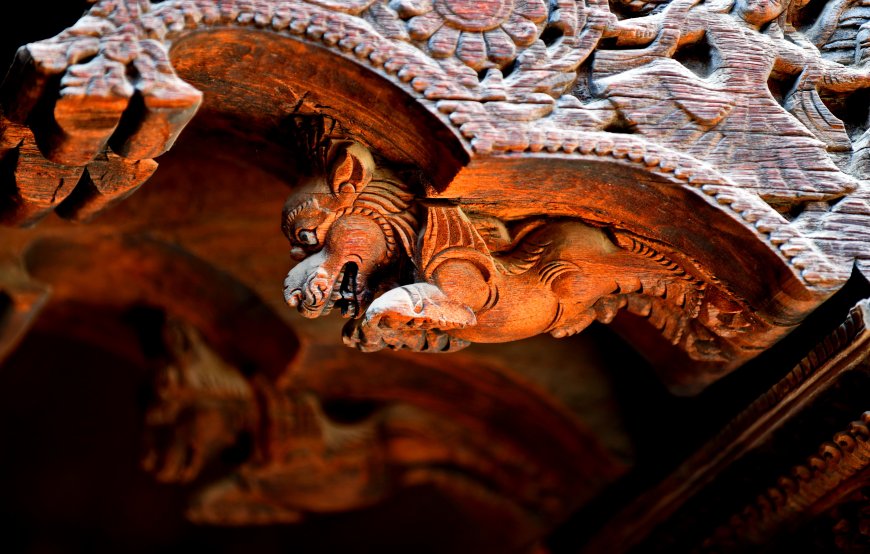
The stone figure people call Birupakshya sits in a sunken pit at the edge of Patan Durbar Square in Lalitpur, low enough that plenty of visitors walk straight past it. Guidebooks give it a line at most. Locals often call the spot by another name entirely. And yet for Kirat communities across eastern Nepal, that image carries a weight which has almost nothing to do with the palace courtyards around it.
That gap is why this piece splits cleanly in two. On one side is what Kirat tradition holds about Birupakshya. On the other is what can actually be documented about the object itself. Blurring the two is how most travel writing about the idol goes wrong, usually by turning a tradition into a site fact.
What Kirat tradition holds about Birupakshya
Everything in this section is tradition. It is attributed to Kirat sources, not stated as a fact about the monument.
Kirat tradition regards Birupakshya as an ancestor figure rather than a temple deity in the ordinary sense. The Mundhum, the body of oral scripture and customary law carried by Kirat communities, is where that memory lives. The image is tied to the long Kirat presence in the Kathmandu Valley, and some accounts link it to the Kirat kings remembered in the Valley's traditional king-lists. Which king, and how firm that identification is, depends on who you ask; published Kirat sources and popular retellings do not all say the same thing. For anyone searching for the Birupakshya legend in English, the honest answer is that the tradition is oral and community-held, and English write-ups of it often flatten that into a single tidy story it never was.
Two claims attached to the image circulate widely, and both are tradition claims. The first is that the figure is slowly rising, or growing, out of the ground. The second is that one day it will emerge fully, and that its emergence is bound up with the end of the present age, the Kali Yuga. Kirat sources hold these things. Nobody has measured them, and this article does not present them as established facts about a stone object.
Ubhauli, Udhauli and the Kirat year
Kirat observance turns on two seasonal festivals. Ubhauli comes with the planting season, Udhauli with the harvest, and their dates shift each year with the lunar calendar. The Nepal Gazette is a public-holiday instrument and does not reliably carry these observance dates, so anyone planning around them should check a notice from an established Kirat cultural organisation or a published lunar calendar for that specific year. Described seasonally, Ubhauli falls in the spring planting period and Udhauli towards the late-autumn harvest.
Patan Durbar Square is not the centre of those observances. The link between Birupakshya and the Kirat year is ancestral rather than festival-driven, which is worth knowing before you turn up expecting a ceremony.
The idol itself, as documented
Documented material on Birupakshya Murti is thinner than the legend. What published accounts describe is a carved stone image set below the level of the surrounding paving, in a small sunken enclosure near the square, with only the upper part of the figure above the ground line. Its condition and the state of the enclosure around it are exactly the sort of detail that changes with conservation work and site management from year to year.
Hindu visitors revere the image too, and some identify it with Vishnu. That reading sits alongside the Kirat one rather than replacing it, which is a useful reminder that one object can carry two religious meanings at once.
One point of honesty. The description above comes from published accounts and reporting, not from a recent site visit by this site. We have not photographed the figure ourselves, and we are not going to fill the gap with an undated stock shot of Patan Durbar Square and label it Birupakshya. If dated photography of the idol, the pit, and any railing or shelter around it becomes available, this section gets rewritten with the date attached.
What a visitor actually sees at Patan Durbar Square
Today the image is one stop among many, and a quiet one. Krishna Mandir, the old royal palace and the museum pull the crowds. The sunken figure sits at the margins of that traffic. How close you can get, whether there is a railing, and whether anyone is tending to it when you arrive are all things that vary. There is no dated published record we can point to that would let us promise daily worship or a priest on hand, so we make no such claim.
Entry to the square is handled separately from anything to do with the image, and ticket prices and opening hours do change. The site's general Patan Durbar Square guide carries the verified ticket and hours figures in one place, so check it close to your visit rather than trusting a number from a travel post, this one included. Foreign visitors are charged, and the square keeps daytime hours, but confirm the specifics before you travel.
Keeping legend and record apart
If you take one thing away, take the split. The Kirat reading of Birupakshya is a living tradition carried by the Mundhum and by communities that have kept it for a very long time. It deserves to be written about in its own voice, labelled as tradition, and attributed to Kirat sources. The object in the pit is a stone image at a heritage site in Lalitpur, subject to archaeology, conservation and site management.
Both of those are real. They are simply not the same kind of claim, and running them together serves nobody, least of all the people whose ancestor the image is held to remember.
What's Your Reaction?