













How Nepal's Digital Identity Program Is Expanding Financial Inclusion and Streamlining Government Services in Province 2
Nepal’s digital identity program is driving financial inclusion and improving government service delivery, especially in Province 2, through expanded ID issuance, mobile‑money adoption, and pilot projects that empower rural women and streamline administrative processes.

National ID Card Issuance and Growth
The Department of Identification and Immigration’s 2023 report shows that 8.2 million national ID cards were issued by March 2024, a 27 % increase from 2021. This rollout gives more people a verified identity for banking, insurance and social schemes, and it strengthens coordination among ministries.
ID Card Numbers
With the ID base expanding, financial institutions can verify customers faster, cutting paperwork and fraud risk. Stronger inter‑ministerial coordination now underpins future digital service integration.
Financial Inclusion Landscape
World Bank Global Findex data indicates that 61 % of Nepali adults owned a formal account in 2021, up from 55 % in 2017 (https://data.worldbank.org/indicator/FS.AST.PRVT.ZS?locations=NP). The upward trend reflects broader acceptance of digital finance, though many remain unbanked, especially in the Terai districts of Province 2.
Bank Account Ownership
Even with more IDs, active account usage lags. Mobile‑money services bridge the gap for people outside major cities, and they increasingly rely on verified digital identities.
Mobile Money Surge
The NRB Financial Inclusion Survey 2022 found that 48 % of adults used mobile‑money services, a 15 % year‑on‑year rise (https://www.nrb.org.np/publications/financial-inclusion-survey-2022.pdf). Telecom data show NPR 1.2 trillion in mobile‑money transactions during 2023, a 22 % increase (https://www.tan.gov.np/reports/mobile-money-2023.pdf).
Mobile Money Transaction Volume
These figures illustrate how mobile money has become the de‑facto banking channel for many Nepalis, particularly in remote districts where branches are scarce, signalling a clear move toward digital financial inclusion.
Digital Identity Pilot in Province 2
A 2024 pilot linking the national digital ID with Ncell’s mobile‑money platform opened 120,000 new accounts for rural women, up from about 92,000 in 2023 – a 30 % increase (MoCIT evaluation, https://www.mocit.gov.np/pilot-2024.pdf).
Impact on Rural Women
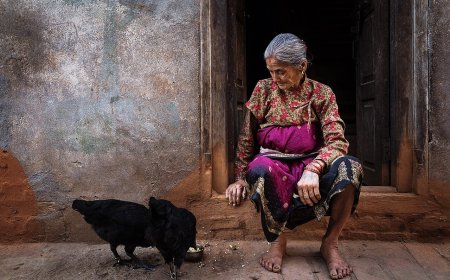
Women in the pilot region reported easier onboarding, lower transaction fees and greater confidence in managing savings. The 30 % rise suggests gender barriers are eroding as identity becomes the gateway to inclusion, highlighting the social benefits of digital ID.
Case Study: Bagmati Province
In Bagmati, integration of digital ID with the e‑Kasari platform cut average service processing time from 15 days to 9 days, a 40 % improvement (https://www.mocit.gov.np/case-studies/digital-identity-bagmati-2023.pdf). Faster processing means quicker access to subsidies, land records and other public services, boosting administrative efficiency.
Conclusion
Overall, Nepal’s digital identity program is a catalyst for financial inclusion and efficient governance. By providing a trusted digital ID, the government and fintech partners lower entry barriers, boost mobile‑money use, and streamline public service delivery – especially visible in Province 2. Continued investment in identity infrastructure will sustain the upward trajectory of inclusion and service efficiency nationwide, and policymakers should prioritize expanding connectivity and awareness campaigns to reach the remaining unbanked populations.
What's Your Reaction?