

12, 14 or 16 Days to Everest Base Camp: What the Extra Days Actually Buy You
A practical comparison of 12, 14 and 16-day Everest Base Camp itineraries, explaining that the difference is mostly acclimatisation nights and weather buffer rather than walking days. Covers where each version stops at Namche and Dingboche, why Lukla flight cancellations make buffer days valuable, the Manthali–Ramechhap flight pattern, the Salleri road alternative, the 2023 licensed-guide rule, permit basics, why exact per-day costs vary, and how to choose given the 2027 trekking windows now that autumn 2026 has passed.

Search any trekking operator's site and you'll find the same route sold three ways: twelve days, fourteen days, sixteen days. The price differs, the day-by-day table differs, and almost nobody explains where the difference actually sits. It isn't in the walking. The trail from Lukla to Everest Base Camp and back is the same trail in all three versions. The gap is acclimatisation nights, weather cushion, and how much of the trip you spend watching the clock.
Here's an honest breakdown of what each number typically means, and how to work out which one fits your leave, your lungs and your tolerance for uncertainty.
First, check what the number is counting
Before you compare anything, ask the operator where day 1 starts and where the last day ends.
Some itineraries count from the day you land in Kathmandu. Others start the count at the Lukla flight and treat Kathmandu as day zero. A few build in a spare Kathmandu day at the end for delayed international connections. This single detail can swing the comparison by two or three days: a 14-day trip that spends two days in Kathmandu before flying often has fewer nights on the mountain than a 12-day trip that starts at Lukla.
So don't compare the headline number. Compare three things instead: how many acclimatisation nights are built in, how many buffer days exist for cancelled flights, and how many walking hours per day the plan assumes. Those are the numbers that decide whether the trek is comfortable or a grind.
The three shapes, roughly
Operators vary, and any good one will adjust for your pace. Still, most itineraries fall into three recognisable patterns.
12 days: the compressed version
Fly to Lukla, walk to Phakding, climb to Namche, take one acclimatisation night there, then push on through Tengboche, Dingboche, Lobuche and Gorak Shep to base camp and Kala Patthar, and descend back to Lukla in two or three long days. The standard version has a single acclimatisation stop and no slack at either end. If a Lukla flight is cancelled or you feel rough above Dingboche, something has to give, and it's usually a mountain day.
14 days: the common middle
Same line, with a second acclimatisation night at Dingboche or Pheriche and usually one spare day at the end for flights. Most of the extra two days are not walking days. That's the point. You spend them sitting still at altitude while your body catches up, or waiting out weather in Lukla with a book.
16 days: slack at both ends
Both acclimatisation stops, plus a spare day at Namche or Lukla, and often room for a side trip such as Chhukhung or Ama Dablam base camp, or a gentler descent. Some operators use the extra days to bolt on the Cho La pass and Gokyo, which turns it into a different trek altogether. If that's what you're being sold, check that the route still includes a proper base camp visit rather than treating it as a detour.
What an acclimatisation day is actually doing
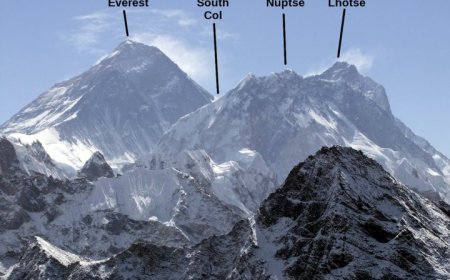
Everest Base Camp sits at 5,364 m and Kala Patthar at 5,545 m. Above roughly 3,000 m the advice is to keep sleeping altitude gains modest and to build in rest days every so often. Namche Bazaar (about 3,440 m) and Dingboche (about 4,410 m) are the two places most itineraries stop, because both are high enough to stress the body and low enough to recover at.
A rest day doesn't make you immune to altitude sickness. It reduces the odds and, just as importantly, it buys you time. If you wake up at Dingboche with a bad headache and nausea, a schedule with a spare day lets you wait and see. A tight schedule pushes you upward because the flight home is already booked, and that's exactly the decision you don't want to be making at 4,400 m. Learn the symptoms of acute mountain sickness before you go. Any guide worth hiring will turn you around, and you should let them.
Where the extra days earn their money: the flight
Lukla flights are cancelled constantly, and not because anyone is careless. The airstrip sits in a valley with its own weather, and cloud, wind or rain can shut it for days.
There's a second complication. During peak spring and autumn seasons in recent years, airlines have shifted Lukla flights to Manthali–Ramechhap airport rather than Kathmandu, which means a long pre-dawn road transfer before you even check in. The pattern has changed from season to season, so confirm with your operator which airport applies to your dates rather than assuming.
A 12-day itinerary that puts the outbound flight on day one and the return flight on the last day has nowhere to hide. Lose a day at Lukla and you're either cutting a mountain day or missing your international connection. The 14 and 16-day versions exist largely to absorb that risk. If your international flight is expensive and hard to move, that spare day is worth more than any view.
The road alternative, briefly
There's a jeep road running from Kathmandu up the Solukhumbu to Salleri and further on rough track towards Surke, from where you can walk in to Lukla and join the trail. It removes the flight gamble entirely and costs you days at the front end plus a lot of comfort. It's a sensible option in a season when flights are falling apart. It is not a way to compress a 12-day schedule.
Guides and permits, in plain terms
Nepal introduced a rule in 2023 requiring foreign trekkers to be accompanied by a licensed guide, and enforcement has varied by route and by year. Check the current position with a licensed agency rather than relying on a blog post, including this one.
On permits, you need the Sagarmatha National Park entry permit and the Khumbu Pasanglhamu Rural Municipality permit. Both are typically arranged in Kathmandu or collected at checkpoints along the trail, and both are paid in Nepali rupees, so carry cash. Fees are revised from time to time. Confirm the current amounts with the Department of National Parks and Wildlife Conservation or your agency before you budget.
Cost, without fake precision
Anyone quoting you an exact per-day figure for the Everest region is guessing. What you can reason about is structure.
Each additional day costs you a teahouse night, three meals, and another day of guide and porter wages. Prices on the trail rise as you climb, because everything above Lukla is carried or flown in, so a night at Gorak Shep costs considerably more than a night at Phakding. Add the possibility of changing a flight date, which is never free.
The shorter trip is cheaper on paper. The honest caveat is that the saving can evaporate the moment altitude or weather forces a helicopter evacuation or a rebooked international ticket. Ask any operator what's included: permits, flights, all meals, insurance for the crew, and what happens to your money if the trip is cut short.
So which one?
If this is your first time at serious altitude, you have fixed dates and a long-haul flight to catch, take the 14-day version. It's the sensible default.
If you've trekked at altitude before, are fit, have flexible onward travel and are genuinely prepared to turn around, a well-run 12-day itinerary can work. Go in knowing the margin is thin.
If this is a once-in-a-lifetime trip, or you're travelling a long way to get here, the 16-day version buys you the ability to enjoy it rather than survive it.
Timing, since it's November 2026
Autumn 2026 is over. The next realistic windows are spring 2027, roughly March into May, and autumn 2027 from late September into November. Spring tends to be colder with more snow high up, autumn tends to be clearer but busier. Shoulder-season departures see more cancelled flights, which is exactly when the buffer days stop being optional.
Book Lukla flights as early as your operator allows, and treat the day count on any itinerary as a question to ask rather than a specification to trust.
What's Your Reaction?