



How Long Does It Take to Reach the Everest Summit? A Segment-by-Segment Timeline
A realistic, segment-by-segment look at how long an Everest climb takes, covering approach, acclimatisation rotations, weather holds and summit day on both the South Col and North Col routes, with estimates clearly labelled as estimates.

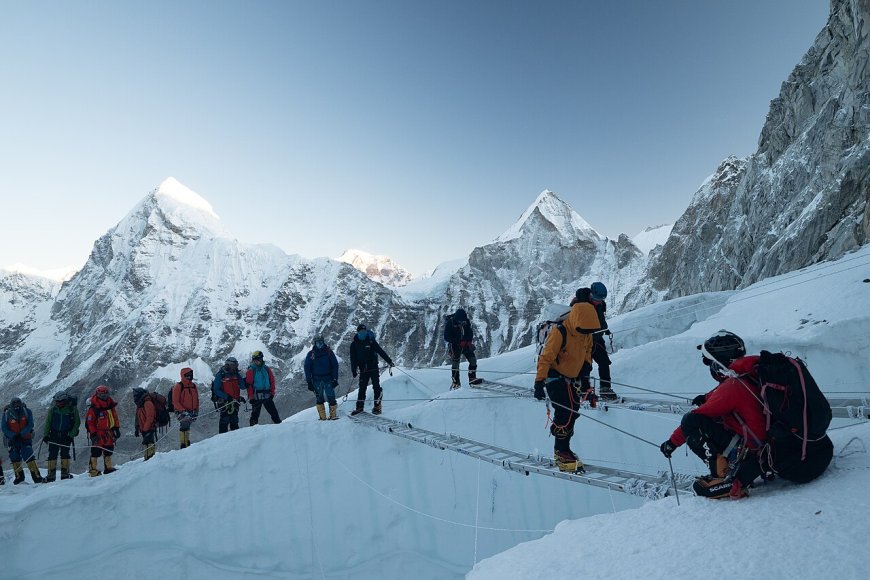
Ask five Everest operators how long the climb takes and you get five answers. None of them are wrong. The number depends on which side of the mountain you're on, how the team handles acclimatisation, and how long the jet stream decides to sit where it shouldn't. So here's a breakdown of where the weeks actually go, rather than one tidy figure.
The short answer, with caveats
Most guided expeditions that start and finish in Kathmandu run somewhere between six and nine weeks. Self-supported climbers with more schedule flexibility, or teams that catch an unusually clean weather window, can compress that. Teams that lose a window stretch it. A three-week Everest trip does exist, but it's a different animal: pre-acclimatised climbers, supplemental oxygen, a fixed schedule and almost no margin for error.
Where a number below isn't tied to a named operator itinerary, it's our own planning estimate and it's labelled as one. Treat it as a way to reason about the trip, not a stopwatch reading.
Where the time actually goes
Split a full expedition into blocks and the shape of it becomes clear:
- Travel and approach. Flights into Kathmandu, then either the Lukla flight or the overland drive, then the walk in to Base Camp. Usually 10 to 14 days on the south side, deliberately slow for acclimatisation.
- Settling in at Base Camp. Gear checks, logistics, the Puja ceremony, and letting your body catch up with where you've just walked to.
- Acclimatisation rotations. At least one trip up through the icefall and the lower camps, often two, each followed by a return to thicker air.
- Rest and weather holds. The block nobody budgets for and everybody uses.
- The summit push. Usually five to seven days from Base Camp to the top and back, assuming the weather cooperates.
That last block is where the "only a week of real climbing" idea comes from. It's our own estimate, and the reasoning is straightforward: subtract 10 to 14 days of approach, roughly another 10 to 14 days of rotations and rest at Base Camp, and the buffer days almost every team burns waiting for wind to drop. What's left is somewhere in the region of one to two weeks of upward movement. Useful framing. Not a measured statistic.
South Col route, segment by segment
Camp elevations below are approximate, drawn from what operators publish in their own schedules. They are not surveyed figures, and different teams site their camps slightly differently.
- Base Camp, roughly 5,364 m
- Camp 1, roughly 6,065 m
- Camp 2, roughly 6,400 m
- Camp 3, roughly 7,162 m
- Camp 4 on the South Col, roughly 7,906 m
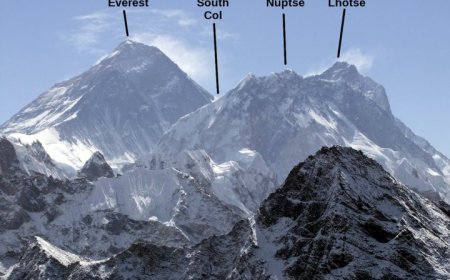
From there it's the summit, which stands at 8,849 m. That figure comes from the joint Nepal–China announcement in 2020, which revised the long-used 8,848 m measurement, so if you see the older number quoted elsewhere it isn't a typo, just older data.
The summit push on the south side typically runs Base Camp to Camp 1 or Camp 2, then Camp 3, then the South Col, then the top, then back down. Call it five to seven days round trip. Below that, the approach from Lukla, the rotations and the waiting make up the bulk of a south-side expedition.
North Col route
The north side starts higher, and that changes the arithmetic. Approximate camps: Base Camp around 5,200 m, Camp 1 around 6,400 m, Camp 2 around 7,000 m, Camp 3 around 7,500 m, high camp around 8,300 m.
The approach is shorter because you can generally drive to base camp from the Kathmandu side via Tibet, which cuts out the trek in. That sounds like a saving, but the acclimatisation still has to happen somewhere. It gets built into rotations instead, and the north side carries its own logistics and paperwork on top. Overall expedition lengths on the north tend to land in a similar range to the south, just distributed differently.
Summit day itself
This is the part everyone asks about. Across operator itineraries, climbers commonly leave high camp in the late evening and take somewhere between 8 and 12 hours to reach the top, then 4 to 6 hours back down to high camp or the Col. Those ranges reflect what teams publish about their own schedules. Individual times swing enormously with weather, congestion on the fixed lines and how the climber is doing on the day. Departure times vary by team and season, so we haven't quoted a specific one here.
Why the weather window decides everything
Everest has two broad windows: pre-monsoon, roughly late April into May, and post-monsoon, roughly late September into October. Most commercial teams on the south side aim for spring. If the jet stream shifts late, the push slips. A buffer of a few days is normal planning practice; delays stretching towards two weeks are within the range of what has happened. That's a planning estimate, not a measured average, and no operator should be promising you otherwise.
Three weeks, six weeks, or nine?
Rough planning estimates, with the reasoning for each:
- Around three weeks. A pre-acclimatised climber on supplemental oxygen, south side, fixed schedule, no weather buffer. Fast, expensive, unforgiving.
- Five to six weeks. A conventional guided south-side expedition with one rotation and a modest buffer.
- Seven to nine weeks. Self-supported, or a slower acclimatisation strategy, or north-side logistics, or a team building in real margin. Some of that time is sitting in a tent listening to wind.
What this article doesn't quote
Permit fees, royalties and insurance costs change, and the body that issues them needs checking against an official notice before anyone budgets. We're not quoting figures here. Verify with the issuing authority directly and don't take a number from a blog, this one included.
Altitude, honestly
None of the timing above matters if you get sick. Altitude illness ends more Everest attempts than lack of fitness does, and being strong at sea level is not a substitute for proper acclimatisation. For guidance, refer to recognised mountaineering and altitude-medicine material, such as that published by the UIAA Medical Commission, and speak to a qualified doctor about your own health before committing to a high-altitude expedition. This article isn't medical advice.
What's Your Reaction?