









Minimum Support Price in Nepal: How to Check the Real Rate
A guide to finding and reading the minimum support price in Nepal without getting misled by the number alone: which crops are actually covered, where the paddy and wheat rates are published, how to reach the Nepal Gazette, when announcements tend to appear, and who the rate really binds.


Every season the same number travels around: a support price for paddy, a support price for wheat. It shows up in news reports, gets repeated in farming groups, and moves through Facebook faster than any correction ever will. What almost never travels with the number is the document it came from. That document decides whether the price is a floor for the whole market or just the rate the government pays when it buys grain.
This page doesn't hand you a figure. It shows where a minimum support price in Nepal gets published and, more usefully, how to read what you find. A price without its instrument is a rumour with a decimal point.
Which crops actually have a support price in Nepal
Start here, because plenty of farmers assume the scheme covers whatever they grow.
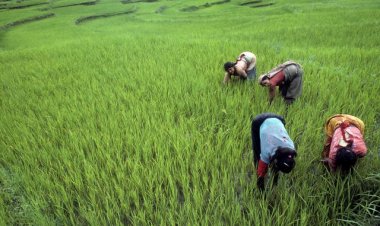
The rates that get announced publicly are mainly for paddy and wheat, and those two are what you'll see quoted side by side, usually per quintal. They're the two worth checking against the ministry's notices. If your crop is neither, the announcement you're hunting for doesn't exist, and no amount of searching will produce it.
Sugarcane runs on a different track. The cane price is settled through a separate process involving the government, growers and the sugar mills, and it gets discussed in different language, so don't use a paddy headline as a template for it. Check the current sugarcane arrangement on its own before quoting anything.
Where the rate is published
Two places matter, and they don't do the same job.
The ministry notice. The Ministry of Agriculture and Livestock Development posts announcements on its own site, moald.gov.np. Look for a notice that names the commodity, the season and the rate. Then read the unit, slowly. Per quintal or per kilogram? Paddy or milled rice? Wheat or flour? A figure printed per quintal and repeated as if it were per kilogram is the most common mistake in coverage of the paddy support price in Nepal.
The Nepal Gazette (Nepal Rajpatra). This is the government's official record, and it is not one tidy searchable database. In practice you reach it two ways. Ministry sites usually post the same notice as a PDF on the day it comes out, which is the fastest route. For the formal text, the Nepal Law Commission's site, lawcommission.gov.np, carries a large amount of gazetted material, including notices, and access is free. Older entries are where this gets painful: archives are uneven, and for a rate from several years back you may end up relying on the ministry's own file or a library that keeps the printed volumes. Portals get redesigned and links rot, so if something 404s, search the title and year of the notice rather than the web address.
A ministry web page tells you what was announced. The Gazette tells you what was formally published. Check both, and if only one of them has it, say which one.
When to start looking
There's no fixed date, so don't wait for one. What you can rely on is the direction: these announcements tend to land ahead of the harvest for the crop in question rather than months after it, because a rate that arrives once the grain has already moved is a rate nobody can use. When planting-season coverage starts, that's your cue to check the ministry's notice page every week or so.
The timing also slips. Which is why a rate from last season stays "last season's" until you've confirmed nothing newer exists.
What makes it binding, and who it binds
An announcement and an obligation are not the same thing. Three questions usually settle which one you're holding: who issued the document and under what power, whether the language is obligatory ("shall be paid") or descriptive ("will be purchased at"), and which buyer, if any, is named.
Most of what gets published names a government buyer. The agency you'll see most often in state procurement is the Food Management and Trading Company Limited, and a notice naming it tells you what the state is offering for grain it buys, in the quantity and season it specifies. Read that notice exactly as written. What you have is a procurement commitment, not a market-wide floor, and one agency's buying programme is not the market.
So what would put a duty on a private mill or a trader at the gate? Something stronger than a press notice. A law, or a rule or order made under a law, formally published in the Nepal Rajpatra, with an enforcement mechanism attached: a penalty, an inspector, a named authority who can act when the price isn't paid. That kind of instrument looks nothing like a one-page announcement. I haven't found one covering paddy purchases by private mills, and I'd rather say that than imply otherwise. If you find one, that's the story. And if the instrument you're reading is silent on private traders, the silence is your finding. Report it as silence.
How to compare without getting fooled
Two comparisons keep a reading honest. First, put the paddy rate and the wheat support price side by side within the same announcement year: same document, same season, same units. Second, put paddy against paddy across two consecutive years. Any change in the rate, in the unit, in whether the figure covers unmilled paddy or milled rice, or in which agency is named, shows up on the page instead of hiding behind a single remembered number.
If the two commodities are treated differently in the same announcement, that difference is a story worth reporting. If the same phrase about buyers appears in both, that's worth reporting too.
Cost of production, and the link nobody documents
Government explanations of the rate usually reach for cost of production. The ministry does publish statistics on the cost of cultivating major crops. Whether the announced rate is actually calculated from those figures, by a formula you can inspect, is a separate question, and the only way to answer it is to find the formula. If you can't find one, write that you couldn't. That sentence is worth more than a confident one you invented.
A short checklist before you quote a number
- Which document is the figure from, and what is its date?
- What unit, and is the commodity paddy or rice, wheat or flour?
- Does the text name a purchasing agency, and does it say anything about anyone else?
- Has a later notice for the same season superseded this one? Search the ministry page for the season, not just the crop.
- Did you find it on the ministry site, in the Gazette, or only in a news report?
- Does the figure you're about to share match the season you're talking about?
The superseded notice is the one that catches people. Governments revise rates, and an older PDF can sit on the same page for years looking perfectly official. If the answer to the last three questions is vague, you have a headline rather than a rate. Wait for the document. It's usually published, and it's usually dull, which is exactly why it settles arguments.
Revised October 2026. This explainer carries no price figure on purpose: any number has to be read against the notice and the Gazette entry for the season concerned, and those change. Ministry and law commission sites get rebuilt from time to time, so if a link has moved, search the notice's title and year instead of the URL.
What's Your Reaction?