



Above 8,000 Metres: What Everest's Death Zone Actually Does to the Body
Above 8,000 metres the body runs a deficit it can't repay. A plain-English look at hypoxia on Everest, how HAPE and HACE develop, why acclimatisation has a ceiling, and what bottled oxygen genuinely does and doesn't fix.

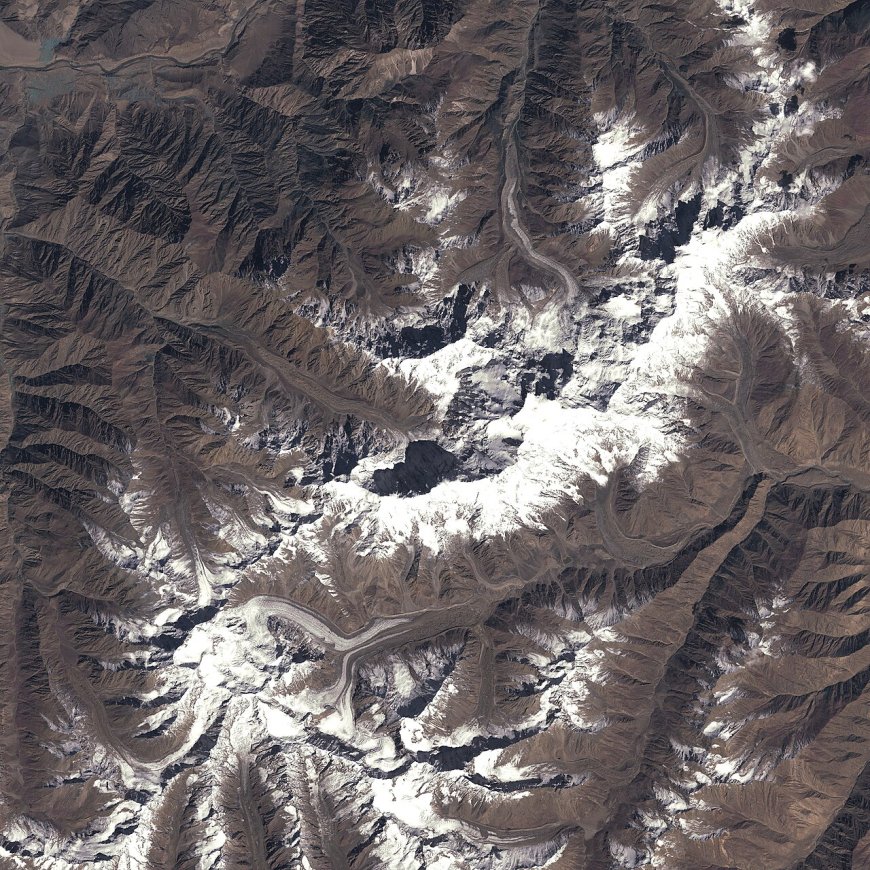
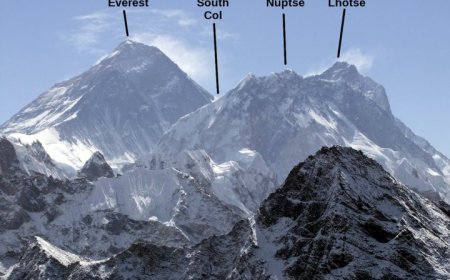
The last stretch to Everest's summit runs through air that will not keep a person alive for long. Not because of the cold, though that doesn't help, and not because of the wind. Because there is too little oxygen pressure to run a human body. Climbers call that band above 8,000 metres the death zone, and the name is less lurid than it sounds. It is a description of physiology.
Everest's summit sits nearly 850 vertical metres above that line. Everything in that space is borrowed time.
Where the phrase comes from
Mountaineering writing has used "death zone" since at least the 1950s. The Swiss physician Edouard Wyss-Dunant is usually credited with it, writing about Everest in that period. Whether or not he coined it, the idea stuck because it matched what climbers kept reporting: above a certain height, the mountain stops being an endurance problem and becomes a physiological one.
The line itself is arbitrary in geology and meaningful in medicine. Nothing physically changes at 8,000 metres. What changes is the arithmetic of every breath.
What thin air actually does
At sea level the lungs have an easy job. Air arrives under enough pressure to push oxygen across the membranes and into the blood, and the blood carries it to tissue without much complaint. Higher up, the same air is spread thinner. The share of oxygen in the atmosphere stays roughly constant, but the pressure driving it into your bloodstream falls away, and that pressure is the thing your cells care about.
The body fights back immediately. Breathing rate and depth climb, which helps oxygen levels but washes out carbon dioxide, leaving the blood more alkaline than it should be. Over the following days the kidneys dump bicarbonate to rebalance things, which is part of why early acclimatisation is so uncomfortable: the body is deliberately making itself slightly acidic to keep the breathing reflex switched on. Heart rate rises. Plasma volume drops as fluid shifts and gets excreted. Red cell production ramps up over weeks, not hours.
All of that has a cost. Sleep at altitude is broken, partly by periodic breathing, where the breathing rhythm waxes and wanes and briefly pauses. Appetite falls away, and the body starts consuming muscle. Thinking slows in ways climbers notice more in hindsight than at the time: small errors, poor judgement, misspelled notes in a journal.
When it goes wrong: HAPE and HACE
Two conditions define the real danger, and both are forms of fluid leaking where it shouldn't.
High-altitude pulmonary oedema (HAPE) is fluid in the lungs. The early signs are breathlessness that doesn't settle at rest, a dry cough, and a sense that you can't get a full breath no matter how hard you try. It can progress quickly and it does not care how fit you are.
High-altitude cerebral oedema (HACE) is the brain swelling. A headache that won't shift, vomiting, unsteadiness on your feet, confusion, and eventually loss of consciousness. The stumbling is the giveaway. HACE is often mistaken for simple exhaustion, which is exactly what makes it lethal.
For both, the reliable treatment is descent. Oxygen and medication buy time, they don't substitute for losing altitude. If someone is deteriorating, the mountain can wait.
Acclimatisation has a ceiling
This is the part people underestimate. Acclimatisation is real, and it can be remarkable. It also has a limit. There is a height above which the deficit keeps accumulating regardless of how well you've adapted, because you can make more red blood cells but you cannot raise the barometric pressure. Above that height, acclimatisation only slows the decline.
Which is why guides run rotations, why climbers go up and back down, why the whole game above base camp is managing a budget rather than building fitness.
What bottled oxygen changes, and what it doesn't
Supplemental oxygen raises the pressure of oxygen reaching the lungs, which restores blood oxygen saturation, sometimes dramatically. It is genuinely protective and it is why summit pushes are possible for people who would otherwise turn around.
It does not acclimatise anyone. It can mask a developing illness, so a climber on oxygen may look better than they are. How much it helps depends on the flow rate, the mask, the regulator and the individual, which is why quoted "equivalent altitude" figures should be treated with suspicion: the same cylinder and the same number on the dial can mean different things on different people.
And running out high on the mountain is worse than never having carried it at all.
Why the term survives
Because it is a useful warning. Turnaround times, weather windows, all of it comes back to the same principle: the longer you spend above 8,000 metres, the more you spend. The death zone isn't a myth invented for drama. It's shorthand for a place where the body runs a deficit it cannot repay.
This is general information about high-altitude physiology, not medical advice. Anyone heading above base camp should be trained and guided by people qualified to make those calls.
What's Your Reaction?