




Do You Need Oxygen to Climb Everest? A Safety-Led Guide for the 2027 Spring Season
Supplemental oxygen isn't required by any Nepali rule we could find, but nearly every guided Everest climb uses it, so the decision belongs with you, your doctor and your operator. This guide explains what bottled oxygen does and doesn't do above 8,000 metres, what actually drives how much a team carries, how to compare operator quotes like for like, and the exact questions to get answered in writing on oxygen supply and insurance before you pay a deposit for spring 2027.

Anyone planning a climb on the south side of Everest ends up asking the same question at some point, usually late at night with a spreadsheet open: do you need oxygen to climb Everest? There is no clean yes or no. Nepal does not appear to require it. Your operator may strongly recommend it. Your body will have an opinion of its own somewhere above 8,000 metres, and that opinion is not negotiable.
This is written for people looking ahead to the 2027 spring season. It is not a cost guide. Fees, operator quotes and oxygen pricing all move, and any figure printed here would be stale before you finished reading. What it does offer is a way to compare quotes like for like when they land in your inbox, plus a decision framework: what supplemental oxygen actually does, who it tends to help, what it does not fix, and the questions worth settling in writing before you pay a deposit.
Do you need oxygen to climb Everest? The short answer
No rule we could find requires a climber to use bottled oxygen, nearly every guided commercial climb on the south side uses it anyway, and the real decision sits between you, your doctor and your operator.
That is a description of what we could find rather than legal advice, and it is not a green light. Rules and operator policies are two different things, and the second one binds you the moment you sign up. If you want the rules from the source instead of from a blog, the expedition permit and royalty schedule lives on the Department of Tourism and Ministry of Culture, Tourism and Civil Aviation pages. Check there before you quote anything you read here back at anyone.
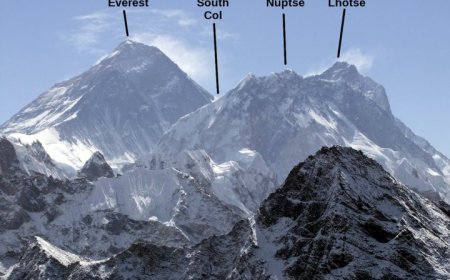
What the rules do not mandate, the mountain still enforces. Above roughly 8,000 metres, the so-called death zone, air pressure is low enough that the amount of oxygen reaching your blood falls sharply even when you are breathing hard. Your body cannot acclimatise to that. It can tolerate it for a limited time, and how long is highly individual.
What bottled oxygen actually does up there
Supplemental oxygen raises the concentration of oxygen in the gas you inhale, which effectively lowers the altitude your body is dealing with. Climbers commonly describe it as dropping a few thousand metres without moving. That is the useful part. It buys margin: clearer thinking, slower fatigue on a long summit day, and more capacity to turn around when something feels wrong.
What oxygen does not do is replace acclimatisation, judgment or fitness. It does not make you safe on its own, and it does not turn a poorly prepared climb into a good one. Flow rates and protocols are set by each operator and their expedition medics, and they vary from company to company. There is no universal setting, so treat any number you hear in a Kathmandu guesthouse as someone's story rather than a standard.
Who it helps and who it does not
Oxygen helps most people who reach the upper mountain, which is why nearly every guided commercial climb builds it into the plan. It helps particularly when things run slower than expected, when weather holds a team high longer than intended, or when a climber is tiring on the descent.
It helps least when it is used to paper over a problem: an untreated illness, a team that started too late, a climber who has not slept or eaten properly for days, or a schedule with no room to wait for a better window. Oxygen is equipment, not a decision-maker.
The medical side deserves care. Symptoms of altitude illness, dosing and treatment belong with a doctor and your operator's medical protocol, not with a blog post. What can be said simply is that descent is the treatment, and that oxygen supports a descent rather than replacing one. Speak to a travel medicine professional before you book, especially if you have any pre-existing condition.
How much oxygen you'll need on Everest: ask your operator, in writing
There is no standard bottle count, and anyone who hands you a typical figure without knowing your operator is guessing. What drives the count is a set of planning choices each company makes. These are the variables worth naming when you ask:
- How many camps above Base Camp the team sleeps at. A plan that sleeps at Camp 3 and again at the South Col burns through far more supply than one that only touches those heights on the way through.
- Where flow starts. Some teams switch climbers on at Camp 3, others not until the South Col. The earlier it starts, the more bottles the climb consumes.
- Sleeping oxygen at the Col. Whether it is standard on summit night or an optional extra changes the arithmetic, and it changes the price.
- Spare bottles cached for the descent. The South Col to summit and back is the longest stretch without resupply. Climbers who run dry on the way down are the ones in trouble.
- Emergency reserves held at fixed points. Ask how many, where they sit, and who is allowed to break into them.
- What each climbing Sherpa carries. Their own supply, a spare for the client, or both. This decision alone can shift the total by a lot.
- Group size and Sherpa ratio. More climbers means more bottles in the plan, but also more ways for the plan to go sideways.
Get the number, the flow plan, the cache plan and the run-out contingency confirmed in writing as part of your booking. While you are at it, put these to your operator too, and keep the replies:
- Who holds the oxygen on the upper mountain, and who controls the flow rate?
- Is the supply included in the quoted price, or billed separately at the end?
- What is the policy if a climber needs oxygen and has not paid for it?
- Which medic or doctor sets the protocol, and what is their altitude experience?
- Where does the team turn around, and who has the authority to call it?
Read the insurance clauses before you pay anyone
Altitude cover is where expeditions quietly fall apart, financially. Rather than trusting a summary line in a brochure, put these questions to your insurer in writing and keep the answers:
- What altitude ceiling applies, and does the policy actually reach the summit?
- Are guided climbs covered? What about unguided ones?
- Is helicopter evacuation included, and from what height does cover stop?
- Do pre-existing conditions need a separate declaration, and what happens if you skip it?
- Does using supplemental oxygen, or clipping into fixed ropes, change anything?
- Are there blanket exclusions above a stated altitude?
If an answer comes back vague, assume the worst case. The cost of a helicopter evacuation is not a number to discover on a mountain.
Comparing quotes like for like
Price matters, but it should not be the lens. When you request quotes, ask each operator to break the total into pieces: the government permit and royalty, their own guiding fee, the oxygen supply, and the insurance they require you to hold. That way a cheap quote that bills oxygen separately stops looking cheap, and an expensive one that includes a generous reserve stops looking extravagant.
Fees payable to the Government of Nepal are revised from time to time. Confirm the current schedule from the official source noted further up rather than from any blog, this one included.
Deciding early for spring 2027
The 2027 spring season is still ahead, which is exactly the right time to settle this. Decide whether you are climbing with supplemental oxygen. Get the bottle and flow plan in writing. Get your insurance answers in writing. Speak to a doctor. None of that commits you to a summit. It just means that when you reach the upper mountain, the only thing left to decide is the weather.
What's Your Reaction?