

Everest Base Camp in Winter: What December to February Actually Looks Like on the Trail
A practical, honest guide to trekking to Everest Base Camp between December and February: what the cold and snow actually feel like above Tengboche, how to confirm a bed before committing to the next village, why Lukla flights are the real weak point of a winter itinerary, what permits you need in the Khumbu, and why you should not assume a staffed clinic at Pheriche.

Most people trek to Everest Base Camp in October or April. The trail is busy, the teahouses are full, and the weather is about as reliable as it gets in the Khumbu. Winter is the other option, and it is a genuinely different trek rather than a colder version of the same one.
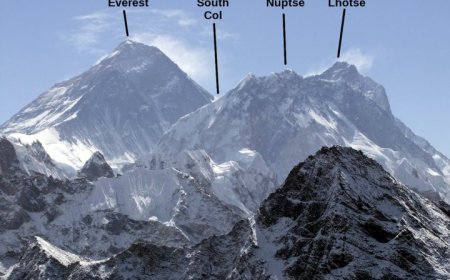
Between December and February the crowds vanish. So does a fair amount of the infrastructure. Some lodges shut. Flights out of Lukla get cancelled for days at a time. The wind above Tengboche is the kind that makes you stop talking mid-sentence. None of that makes winter a bad choice. It makes it a choice you should make with your eyes open.
What quiet actually buys you
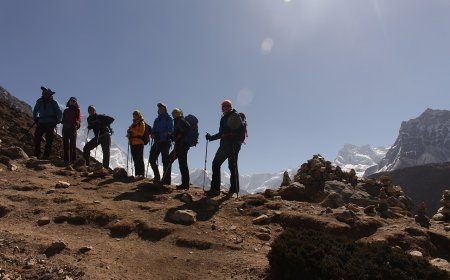
In peak season, Namche and Dingboche feel like small towns with backpacks. In winter you can walk for an hour and see three people. Lodges that are open will usually give you a room without a booking, sometimes the best room, because you are the only guest. The trail is silent in a way it never is in autumn.
The trade-off is that the margin for error shrinks. In October a closed teahouse is an inconvenience. In January it can mean walking further than you planned, in fading light, in cold, with no guarantee the next place is open either.
The weather, honestly
I am not going to give you temperature charts. Numbers pulled from a table do not tell you what it feels like when the sun drops behind a ridge at three in the afternoon and the wind picks up. Expect nights well below freezing above Namche, and expect the daytime to swing hard between pleasant in direct sun and genuinely bitter the moment you are in shade.
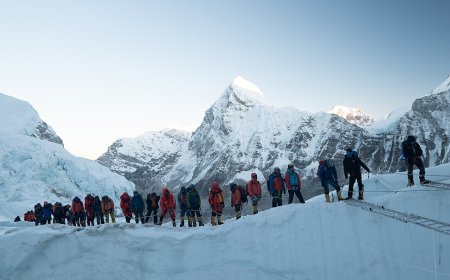
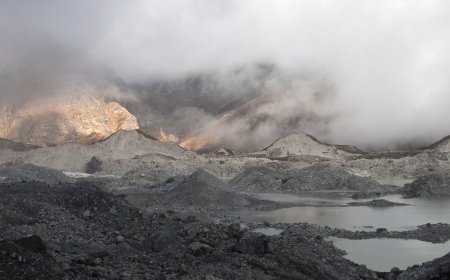
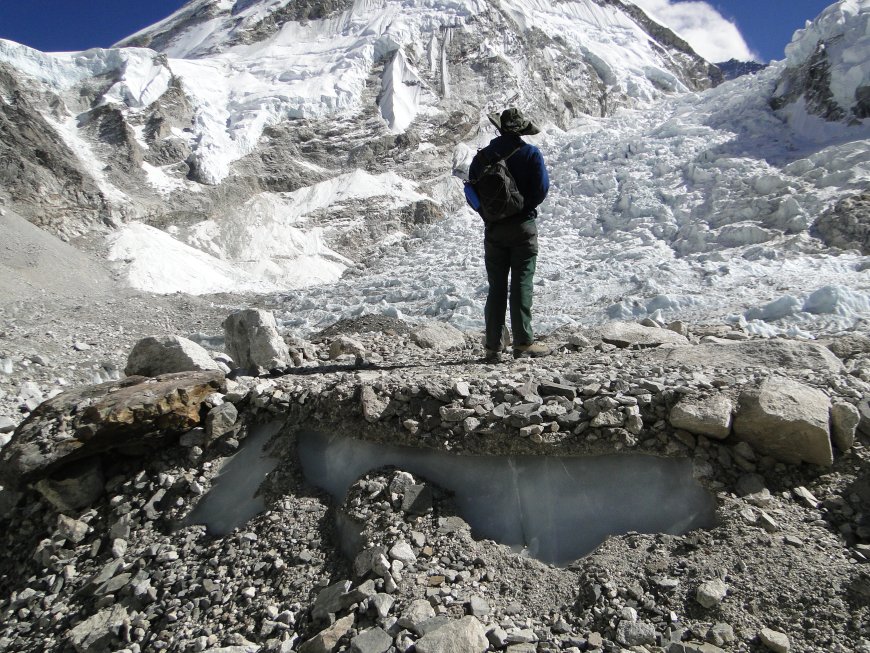
Snow is the bigger variable. The trail itself is usually manageable, but side paths, lodge courtyards and the last stretch to Base Camp can hold snow and ice. Daylight is short. You will be walking in colder hours than you would in spring, and you should plan to be at your teahouse well before dark rather than pushing on.
One more thing worth knowing: the Khumbu gets clearer skies in winter than in the summer monsoon months, but weather systems still roll through and can shut the Lukla runway for days.
Where the trail changes: above Tengboche
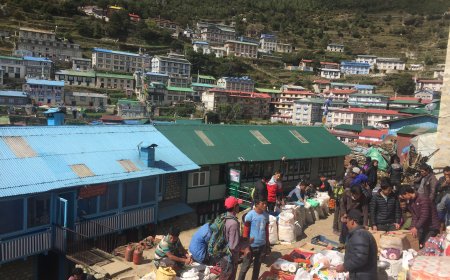
Below Tengboche the winter trek looks broadly like the autumn one. Namche is still a working town with shops and bakeries, and there is enough traffic that services keep running.
Above Tengboche it thins out fast. Pangboche, Dingboche, Pheriche, Lobuche and Gorak Shep have fewer open lodges, fewer trekkers and less margin. Some settlements operate a reduced winter roster, with one or two families keeping a lodge open while the rest of the village moves down. Which lodges those are changes from year to year, and no website reliably tracks it.
So the practical rule is this: do not assume a bed exists at the next village. Ask at the lodge you are leaving. Ask the guide or porter you meet coming down. Ask at the checkpoints. Word travels quickly on the trail and it is more current than anything you will read online.
How to confirm a bed before you commit to the next day's walk
It is not complicated, but it does take discipline.
Start the day knowing your target village and a fallback one rung lower. If you are heading to Pheriche, know that Dingboche or even Pangboche is your bail-out. When you stop for lunch, ask whether anyone knows the status of the lodges ahead. If the answer is vague, adjust while you still have daylight and warmth.
Carrying a sleeping bag rated well below the temperatures you expect is not optional in winter. Many lodges provide blankets, but do not build your plan around blankets. Carry cash, too. Card and ATM access is limited above Namche at the best of times and worse in winter.
Lukla flights in winter
This is the part that ruins winter itineraries more often than cold or snow on the trail. Lukla flights are weather-dependent year round, but in winter the frequency of cancellation goes up and the recovery time stretches out, because fewer aircraft and fewer seats are moving through the sector.
Two things to check before you book, and then check again closer to departure. First, whether flights are operating out of Kathmandu or out of Manthali. Airlines have shifted operations between the two in busy periods in recent years, and which arrangement applies to your dates is a question for the airline, not for a blog post. Second, what your ticket's rules are on weather cancellations, rebooking and refunds. Read them properly. Winter is exactly when those clauses get used.
Build slack into both ends of the trip. If you have a fixed international flight home, give yourself several spare days after your planned return from Lukla. Walking out to Salleri or Jiri is possible but adds days and is a serious undertaking in winter, not a casual plan B.
Permits
For the standard Khumbu trek you need two permits: the Sagarmatha National Park entry permit, and the local permit issued by Khumbu Pasanglhamu Rural Municipality. The Khumbu is not a TIMS area; the municipality issues its own permit instead, and has done since 2018.
Fees change, and I am not going to print a figure that may be out of date by the time you read this. Check the Department of National Parks and Wildlife Conservation site for the park permit, and confirm the municipality permit arrangement with the rural municipality office or your trekking agency before you fly to Lukla. Bring passport photos and cash, as counters may not take cards.
Also confirm whether a guide is currently required for your route. Rules on guided trekking in Nepal's protected areas have been adjusted more than once in recent years, and enforcement is a live question rather than settled fact.
Health, altitude and evacuation
Winter does not change the altitude profile of this trek. It does make getting help harder, because fewer people are around and some services scale back.
The Himalayan Rescue Association runs clinics in the Khumbu, including at Pheriche. In past winters that presence has been reduced or closed outside the main trekking seasons. Do not build your safety plan around a staffed clinic at Pheriche. Confirm directly with HRA what is operating this winter, and assume that your last reliable point of care below Pheriche may be Namche or further down.
That makes the usual altitude advice more important, not less. Ascend slowly, take rest days, and treat a headache that will not shift, nausea or breathlessness at rest as a reason to descend rather than to sleep on it. In winter, turning around early is often the correct decision and there is no one up there to talk you out of it.
Insurance needs checking with the same suspicion. Read your own policy wording for three things: the altitude ceiling it covers, whether helicopter evacuation requires prior authorisation from the insurer, and whether there are exclusions for trekking in winter, on closed routes or in poor weather. I am not recommending a specific insurer. I am telling you that the gap between what people assume their policy covers and what it actually covers is where winter rescues become very expensive.
Gear, without the listicle
You do not need a radical winter kit list. You need layers that work when wet, a shell that blocks wind, boots with grip on ice, warm gloves, a hat you can sleep in, and a sleeping bag you trust. Add microspikes if you are going above Pheriche and there has been snow. Add a headtorch with spare batteries, because the short days catch people out.
The single most useful item is a thermos. Hot water in the lodge costs money; hot water you carry costs nothing after the first fill.
Who winter suits, and who it does not
Winter suits experienced trekkers who can read a weather window, carry some self-sufficiency, and are relaxed about a few days of delay on either end. It suits people who want solitude more than they want certainty.
It does not suit a first big trek with a tight itinerary and a non-refundable flight home. It does not suit anyone who needs a staffed medical post within a day's walk. And it does not suit a budget that depends on everything running to plan.
If you go, go with time to spare and a willingness to turn around. The Khumbu in winter is one of the most striking places in the Himalaya, and it is also a place that does not negotiate.
What's Your Reaction?