





Altitude Sickness on the Annapurna Base Camp Trek: What It Feels Like and When to Turn Back
Altitude sickness is the most common reason an Annapurna Base Camp trek ends early, and the route's fast gain from low farmland to a base camp above 4,100 metres is the reason. This guide covers what mild symptoms feel like, the two severe conditions that mean immediate descent, how to pace the climb and use the lower villages for acclimatisation, what to sort out with a doctor before flying, and why a companion who knows you is worth more than any gadget in your pack.

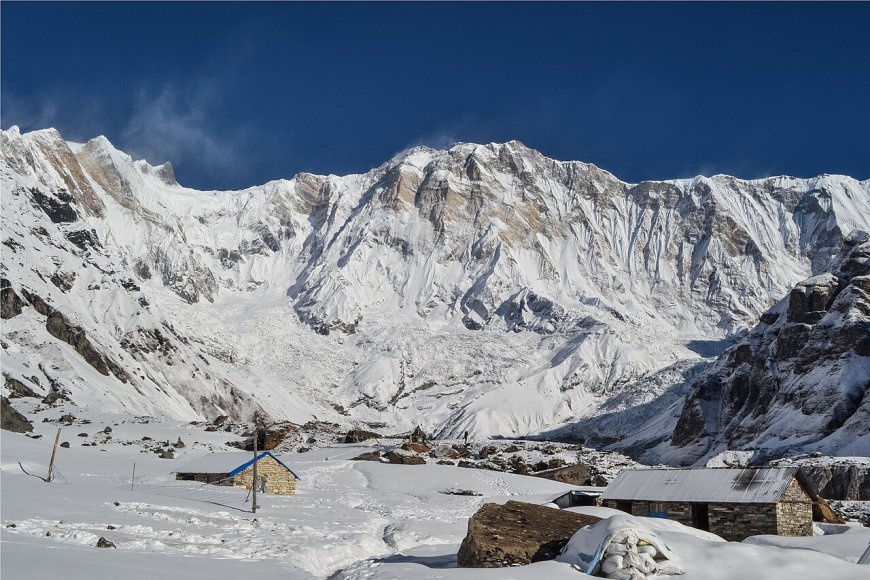
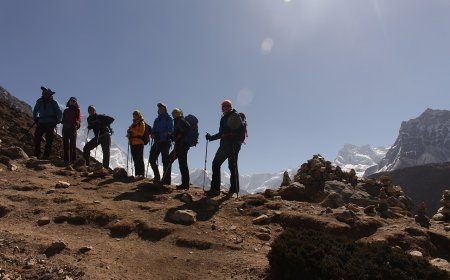
Annapurna Base Camp sits a little above 4,100 metres, in a ring of rock and ice that includes Annapurna I and Machhapuchhre. The walk in usually starts below 1,200 metres, among terraced fields and bamboo forest. That gap between where you begin and where you sleep is the whole story. You can gain around 3,000 metres of height in less than a week of walking, and your body has no say in the schedule unless you give it one.
Altitude sickness on the Annapurna Base Camp trek isn't a rare misfortune that happens to unlucky people. It's the ordinary, well-understood result of going up too fast, and it's the most common reason a trek here ends early. Guides and lodge owners in the Modi Khola valley see it constantly and recognise it in about ten seconds.
Why this route catches people out
Compared with the Everest region, the Annapurna Base Camp trek feels short. There are no flights into a high airstrip, no weeks of build-up. You start near Pokhara in warm air, walk through rhododendron, and reach base camp in days. That compactness is exactly what makes it deceptive. Trekkers treat a seven-day itinerary as a gentle warm-up and push the last two days hard, which is when the trouble usually starts.
The other factor is where you sleep. On this route your sleeping altitude is whatever lodge you stopped at, so a decision made over lunch becomes a night at 3,000 metres or more. There's no shuttle down, no oxygen tent in the next village, and the walk out is always uphill from the wrong direction.
What mild altitude sickness actually feels like
The first signs are unglamorous. A headache that doesn't shift with water or paracetamol. Nausea, or no appetite at all when dinner arrives. A tiredness out of proportion to the day's walking. Dizziness when you stand, and a night of broken sleep. Lots of people describe it as feeling like a hangover that won't lift.
That stage is uncomfortable but manageable. Stop climbing. Rest. Drink. If you don't improve, go down. Ignoring it is how the mild version becomes the dangerous one.
The signs that mean go down now
Two conditions turn altitude sickness from a nuisance into an emergency, and both can develop within hours.
- HACE (high altitude cerebral edema): confusion, clumsiness, an inability to walk in a straight line, unusual drowsiness, or behaviour that doesn't fit the person. Asking someone to walk heel to toe along a straight line is a crude test that works.
- HAPE (high altitude pulmonary edema): breathlessness while sitting still, a persistent dry cough or one producing frothy fluid, gurgling sounds when breathing, blue-tinged lips, and a weakness that gets dramatically worse at night.
Neither of these is a wait-and-see situation. Descent is the treatment. Do not go to sleep hoping to feel better in the morning, and do not descend alone if you can avoid it.
Pace is the one thing you fully control
Most published itineraries take somewhere between a week and nine days of walking to reach base camp, depending on where you start and how many rest days are built in. Whatever yours says, the cheapest insurance you can buy is an extra day low down near Chhomrong or Sinuwa rather than an extra push high up.
On the final stretch, from Bamboo through Dovan, Himalaya and Deurali towards Machhapuchhre Base Camp and then ABC, walk slowly enough to hold a conversation. If you're too breathless to talk, you're going too fast, and it's costing you more than it's gaining. Arriving at ABC exhausted and breathless is not a summit achievement. It's a risk factor.
One useful habit: never move to a higher lodge on a day you feel unwell. Stay where you are, give it a night, and reassess in the morning. A wasted day at 2,500 metres is far better than a bad night at 3,500.
Sleeping low, walking high, on this specific route
The old rule of climbing high and sleeping low works beautifully in places with side valleys and day hikes. The Annapurna sanctuary is not really one of them. Once you're past Deurali the options thin out, and the nearest lower bed is hours downhill.
What you can do is front-load the acclimatisation. Take the short days. Spend the afternoon at Chhomrong walking up to the viewpoint and coming back down to sleep. Treat the days before the valley as part of the climb rather than as transport. By the time the altitude really begins to bite, you want a body that has already spent two or three nights above 2,000 metres.
Medication: sort it out before you fly
Acetazolamide, sold as Diamox, is the drug most trekkers ask about. In many countries it's prescription-only, and it isn't right for everyone. It also isn't a substitute for a sensible ascent, and it can hide the early symptoms you'd otherwise notice.
Talk to a travel medicine doctor four to six weeks before you go. That's the same conversation where you should raise any existing heart, lung or circulation condition. Whether you can buy acetazolamide over the counter in Kathmandu changes from year to year and varies between pharmacies, so don't build a plan around picking it up on arrival. Bring what you and your doctor decided on, with a copy of the prescription.
Two more things worth knowing. Alcohol at altitude worsens dehydration and sleep, and sleeping tablets can mask a worsening headache or confusion. Neither belongs in your altitude strategy.
Oxygen, evacuation and insurance
Some trekking agencies carry oxygen cylinders and pulse oximeters, and some guides are trained to use them. Ask yours directly what will be carried, who operates it, and what happens if someone in the group becomes unwell at Deurali. Don't assume the lodge will have a cylinder, and don't assume a cylinder solves the problem. Oxygen buys time; descent fixes it.
Helicopter evacuation from the sanctuary is weather-dependent and expensive. Before you leave home, check that your policy explicitly covers trekking to above 4,000 metres and helicopter rescue, and read the exclusions around altitude and unguided travel. A policy that covers the trip but excludes the altitude you're actually going to is a common and expensive surprise.
The person walking next to you matters more than your gear
Altitude illness quietly damages judgement. The person with a worsening headache is often the last to accept it, and will insist they're fine while walking badly and answering slowly. This is where a companion earns their place. Someone who knows how you normally talk, walk and joke can spot the change before you can.
Agree on the rules before you start. Anyone in the group can call a descent, and nobody argues about it in the moment. Decide that at breakfast in Pokhara, not at dusk above Deurali when everyone is tired and no one wants to be the one who ruined the trip.
Turning around is not failure
Most people who descend early from the Annapurna sanctuary feel noticeably better within a few hundred metres of losing height. That's the system working. If symptoms don't ease after descending, or if breathing problems continue, get to a clinic in Pokhara rather than back to your hotel.
Base camp is a spectacular place, and the view of the south face at sunrise is worth the cold. But the trek is a holiday, and the summit of the itinerary isn't worth a night of HAPE. Plenty of experienced trekkers have turned around here and gone back a year later, better paced and better prepared.
A short checklist before you leave Pokhara
- Add one acclimatisation day if your itinerary doesn't already have one.
- Ask your agency what medical kit, oxygen and communications they carry.
- Check your insurance covers trekking above 4,000 metres and helicopter evacuation.
- Carry a written list of your medications and any allergies.
- Know the two severe symptoms, and know that descent is the answer.
- Agree with your companion that either of you can call it off, no debate.
Permits for the Annapurna Conservation Area are required, and the paperwork side has been moving online in recent years. Check the current process and fees with the Nepal Tourism Board or your agency close to your departure date rather than relying on a blog post, including this one.
What's Your Reaction?