


Winter Annapurna Base Camp Trek: Conditions, Teahouse Status & Turnaround Decisions
A decision-focused guide to winter trekking on the Annapurna Base Camp route: real teahouse status, permit and guide requirements, elevation facts, avalanche context, gear specifics, and clear turnaround criteria. Written November 2026 — verify permits, lodge openings and weather before departure.

Most trekkers hit Annapurna Base Camp between March and May, or again in October. January and February are a different proposition — colder, quieter, and with a shorter margin for error. This guide walks through what changes in winter, which questions to settle before you leave Pokhara, and where the conditions usually force a turnaround. Written November 2026; permit fees, lodge openings and trail conditions shift seasonally, so verify the specifics close to your dates.
What winter actually means on the ground
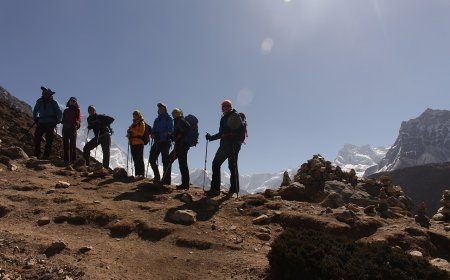
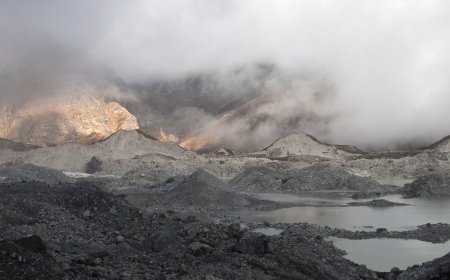
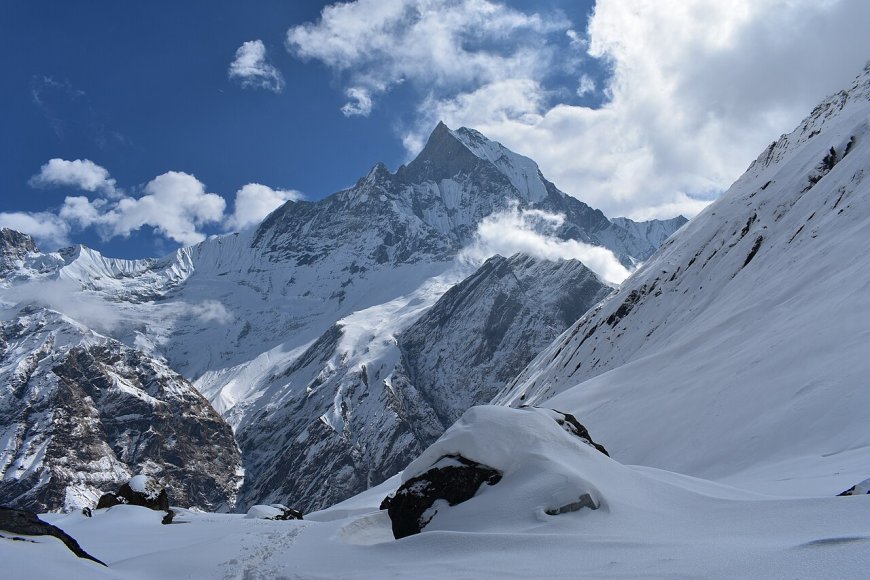
Snow on the approach to Machhapuchhre Base Camp (MBC) and Annapurna Base Camp (ABC) is normal from late December through February. Daytime temperatures at ABC often sit between -5 °C and 5 °C; nights routinely drop to -15 °C or lower. The trail from Deurali upward spends weeks packed down by porters and trekkers, but fresh falls can bury the route in a few hours. Avalanche terrain exists on the slopes above the Hinku Valley and the final bowl into ABC — this is not a place to guess conditions.
Teahouse reality above Deurali
Lodges at Deurali, MBC and ABC do not all stay open through January. Some close entirely; others run with a skeleton crew and limited menus (dal bhat, noodles, tea). Blankets are usually available but heating in common rooms is not guaranteed. The only reliable way to know what’s running is to call the lodge owners directly or check with a Pokhara-based agency the week you depart. Do not assume the 2024–25 season pattern repeats.
Permits, TIMS and the guide rule
Two permits are required: the Annapurna Conservation Area Permit (ACAP) issued by NTNC, and the Trekkers’ Information Management System (TIMS) card. Fees and issue points (Kathmandu, Pokhara, or entry checkpoints) are updated by the authorities each fiscal year. As of this writing, a licensed guide is mandatory for foreign trekkers on the ABC route — confirm the current regulation at the NTNC counter or via the Department of Tourism before budgeting. Carry printed copies and digital backups; checkpoint staff occasionally request both.
Elevation and why it matters in winter
Annapurna Base Camp sits at 4,130 m (13,550 ft) — a figure cited by the Department of National Parks and Wildlife Conservation and repeated in survey-based trekking maps. At that altitude, overnight hypoxia risk is real even for acclimatised walkers. Winter adds cold stress and shorter daylight; plan at least one rest day between Chomrong and ABC, and be prepared to sleep at MBC (3,700 m) if the final push looks unsafe.
The October 2014 benchmark
Mid-October 2014 brought the remnants of Cyclone Hudhud into the Annapurna region. Heavy snow and high winds trapped hundreds of trekkers between Deurali and ABC; more than 40 people died. The event reshaped how agencies and lodges manage early-winter groups. It remains the reference point for “too early, too deep” conditions — if snow is already waist-high at Deurali in late October, the winter window has effectively opened early.
Gear decisions that differ from autumn
A four-season sleeping bag (comfort rating -15 °C or lower), insulated mat, and genuine down jacket are non-negotiable. Microspikes or lightweight crampons save hours on the packed ice between Deurali and MBC. Gaiters keep snow out of boots on the final bowl. A satellite messenger or PLB is sensible — phone signal disappears above Sinuwa. Pack a stove-compatible windscreen; melting snow for water becomes a daily chore at MBC and ABC.
Reading the turnaround signals
Turn around if: fresh snow above the ankle on the Deurali–MBC stretch with no recent foot traffic; avalanche debris visible on the slopes above the trail; whiteout conditions persisting past 10 a.m.; lodge owners at Deurali advising against continuing; any member of your party showing persistent headache, nausea or ataxia that does not improve with descent. Summit fever has no place here — ABC will still be there next season.
Insurance clauses to check
Standard travel policies often exclude trekking above 4,000 m or require a specific adventure-sport rider. Verify that helicopter evacuation from ABC is covered without a “medical necessity” loophole that delays dispatch. Carry the policy number and emergency contact on your person, not just in your pack.
Final checklist before leaving Pokhara
- ACAP and TIMS in hand (or confirmed obtainable at Birethanti checkpoint)
- Guide arrangement confirmed with licence number
- Lodge status at Deurali, MBC, ABC verified by phone
- Weather window: at least three clear days forecast for the push from Chomrong
- Satellite device charged and tested
- Cash for lodge meals and emergency porter hire — cards don’t work above Chhomrong
The mountains don’t negotiate. Winter ABC is doable, beautiful, and often solitary — but only when the conditions, the team, and the logistics line up. If they don’t, the teahouses in Jhinu Danda have hot springs and cold beer.
What's Your Reaction?