



Nepal's Everest Record Holders, and How Their Records Actually Get Checked
A dated look at Nepal's Everest record holders, from the 1953 first ascent to Kami Rita Sherpa's summit count and Phunjo Lama's speed record, plus how climbs are verified and which claims remain disputed.

Every spring, when the summit window opens on Everest, a fresh batch of record headlines comes with it. A Sherpa climber adds another summit to a total that already sounds impossible. Someone goes faster, or older, or with less gear. Most of those stories are true, and most of them vanish from the news cycle within a day.
That is a pity, because the records are more interesting than the headlines. They sit where Nepali mountaineering labour meets a permit system run out of Kathmandu and an archive that has been checking climbers' claims for decades. So here is the useful version: what is documented, what is dated, and what people still argue about on the trail.
1953, and the problem with the word "first"
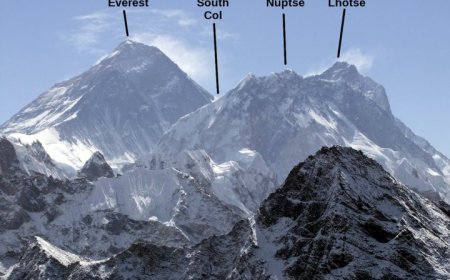
Tenzing Norgay and Edmund Hillary reached the summit on 29 May 1953, on the South Col route, as part of a British expedition. That much is not in dispute. Who stepped onto the top first is. Both men called it a team effort, and Tenzing's own account placed Hillary in front. Modern writers mostly leave it there, which is the honest position: the snow does not record footsteps.
Tenzing's story also shows how slippery mountaineering identity can be. Born in Tibet, based in Darjeeling, climbing for a British team, he is claimed by Nepal, by India, and most of all by the Sherpa community. Records rarely fit inside one passport.
How a summit gets verified in the first place
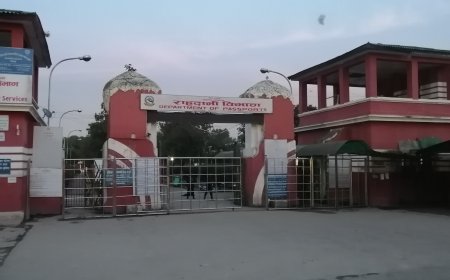
Nepal's Department of Tourism issues the climbing permit, and expedition leaders are expected to report back on what their teams did. Those reports, plus summit photographs, GPS tracks, oxygen logs and the testimony of other climbers, feed the Himalayan Database, the archive begun in Kathmandu by Elizabeth Hawley and still the reference point for serious Everest history. The Nepal Mountaineering Association, which handles permits for the country's trekking peaks, keeps its own records for those mountains.
None of this is a laboratory. Older ascents rest on expedition dispatches and memory. A summit photo can be taken below the top. A GPS file can stop early. This is why the archive distinguishes between a claim and a confirmed ascent, and why a serious record claim is dated and sourced rather than announced.
The records worth knowing, with dates attached
| Record | Climber | Figure | As of |
|---|---|---|---|
| First confirmed ascent | Tenzing Norgay and Edmund Hillary | Summit reached 29 May 1953, South Col route | 1953 |
| First Nepali woman to summit | Pasang Lhamu Sherpa | Summit reached 22 April 1993; she died on the descent | 1993 |
| First person recorded summiting twice | Nawang Gombu | Summits in 1963 and 1965 | As recorded in expedition reports |
| Most Everest summits by one climber | Kami Rita Sherpa | 30 summits | May 2024 |
| The record Kami Rita passed | Apa Sherpa | 21 summits | 2011 |
| Fastest recorded ascent by a woman | Phunjo Lama | About 14 hours 31 minutes, Base Camp to summit | May 2024 |
| Fastest 14 eight-thousanders | Nirmal Purja | 6 months 6 days, Project Possible | October 2019 |
| Longest recorded stay on the summit | Babu Chiri Sherpa | Roughly 21 hours | 1999 in most accounts, 2000 in others |
Two notes on that table. Kami Rita's figure is the count that stood as of May 2024; later seasons may have added to it, and the Himalayan Database is the place to settle the number rather than a press release. And Lhakpa Sherpa holds the highest recorded summit count for a woman, a record that has moved more than once.
What is confirmed, what is dated, what is disputed
Confirmed, more or less. The 1953 ascent, Pasang Lhamu Sherpa's 1993 summit, Purja's 2019 run through the fourteen 8000ers, Kami Rita's 30 summits and Phunjo Lama's time are all supported by institutional records or contemporaneous documentation.
Dated. Any summit count is a snapshot. Numbers change every May, which is why this article prints the month and year instead of saying "currently."
Disputed or fuzzy. Babu Chiri Sherpa's long stay on the summit is dated 1999 in most retellings and 2000 in others, and the two cannot both be right. Speed records depend on where the clock starts: Base Camp, the Icefall, Camp II. Pre-1970s ascents lean heavily on expedition accounts, since summit proof was thinner then. None of this is scandal; it is just what happens when you keep score on a mountain.
Why the Nepali names matter more than the numbers
Sherpa climbers fix the ropes, carry the loads, cut the trail through the Icefall and staff the camps that make every commercial expedition possible. The record holders are the visible tip of that workforce, and their achievements changed how the guiding industry sees itself and how young climbers in Solukhumbu see their own futures. A climbing season supports guiding work, equipment, lodges and helicopter logistics across the Khumbu, and the permit system that governs it is set by the Department of Tourism. The royalty charged to foreign climbers changed in 2025; the department's own schedule is the only figure worth quoting, and any number printed without a date is a guess.
How to read the next record headline
Four questions do most of the work. What is the date? Who verified it? Where did the clock start and stop? And was supplementary oxygen used, since that separates one category of record from another? A claim that survives those questions is worth remembering. The rest is a good story from Base Camp.
What's Your Reaction?