

Everest Base Camp Trek 2027: Route, Altitude and What to Reconfirm Before You Book
A practical 2027 Everest Base Camp trek guide covering route order, acclimatisation days, Base Camp versus Kala Patthar, permits, Lukla flights and what to reconfirm a month before you fly.

This is not a price list. Permit fees, Lukla airfares and teahouse rates move every season, and any number I hand you now will be wrong by the time you actually fly. What doesn't shift much is the shape of the walk itself, the way your body copes with the altitude, and the small set of decisions you can make today that make everything else easier.
So that's what this covers. Route order, where the rest days belong, how to handle Base Camp and Kala Patthar without wrecking yourself, and the things worth double-checking a month before departure.
The route, in the order you walk it
Almost everyone starts at Lukla, roughly 2,860 m, and the first two days are gentler than the drama of the flight suggests. Phakding sits lower than Lukla, which surprises people who expect to climb every single day.
- Lukla to Phakding, about 2,610 m
- Phakding to Namche Bazaar, 3,440 m, via the Hillary suspension bridge and the long climb up the far side of the Dudh Koshi
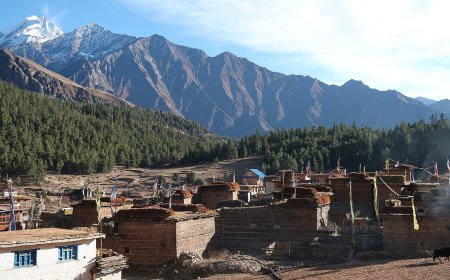
- Namche to Tengboche, around 3,860 m, with the monastery on the ridge
- Tengboche to Dingboche, about 4,410 m, once the tree line starts thinning out
- Dingboche to Lobuche, roughly 4,940 m
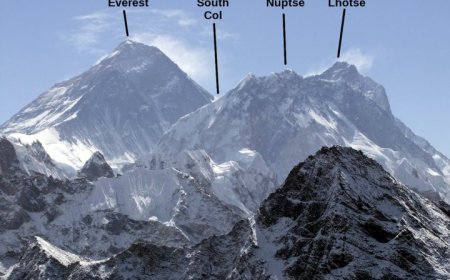
- Lobuche to Gorak Shep, 5,164 m, and then Base Camp at 5,364 m
Most schedules land somewhere between twelve and fourteen walking days between Lukla and Lukla. Shorter itineraries exist. They usually work right up until they don't.
There is also the walk-in option. You can drive from Kathmandu towards Jiri or Salleri and trek the last stretch into the Khumbu over several days, which cuts out the flight entirely. It adds time and a lot of road, but if the idea of being stranded at Lukla for three days makes you twitchy, it is a real alternative rather than a purist's fantasy.
Where the rest days go, and why there
Two acclimatisation days is the standard shape. The first lands at Namche, and people either love it or waste it. Walking up to Khumjung or Khunde on the rest day is worth the effort. Sitting in the bakery all afternoon is also a valid choice, but a short climb high and a return to sleep low does more for you.
The second sits at Dingboche or Pheriche. This one matters more than the first, because you are above 4,000 m now and the margin for error is thinner. A short walk up towards Nangkartshang, then back down to sleep, is the usual pattern.
The reason is simple. You gain altitude faster than your body makes the adjustments that let you function at it. The rest days are not lazy days; they are the part of the itinerary doing the actual work.
Base Camp and Kala Patthar are two different mornings
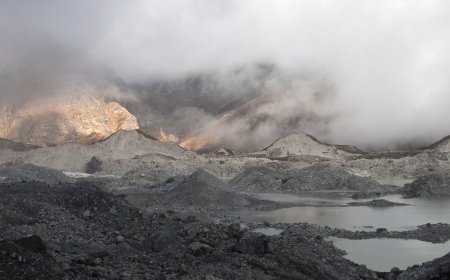
Both are done from Gorak Shep, and cramming them into one day is how people end up miserable and, occasionally, in trouble. Base Camp is a there-and-back along the glacier moraine, and outside climbing season it is a quiet, grey, strangely anticlimactic place. During expedition season it is a small city of tents.
Kala Patthar is the sunrise climb, and it is the better view. It is also higher, colder and darker when you start. Do Base Camp on one day, sleep, then climb Kala Patthar before dawn the next morning.
On the height of Kala Patthar, sources genuinely disagree. You will see figures from about 5,545 m to 5,644 m in circulation, and handheld GPS readings vary too. It is a viewpoint rather than a summit, and the difference between those numbers does not change your morning.
Altitude, plainly
The usual guidance is not to raise your sleeping altitude by more than around 500 m a day once you are above 3,000 m, with a rest day roughly every 1,000 m of gain. That is the rule of thumb most trekking doctors work from, and the itineraries above are built around it.
Headache, nausea, dizziness, poor sleep and breathlessness at rest are the early signs. Mild symptoms usually settle with a rest day and hydration. Symptoms that get worse rather than better mean going down, not pushing on. The two things that kill people up here are fluid on the lungs and swelling in the brain, and both announce themselves first as a bad headache, confusion or breathlessness while sitting still.
Acetazolamide, sold as Diamox, is prescription-only and worth discussing with a travel doctor before you leave rather than improvising at 4,500 m. The dry air also gives most people a persistent cough by the second week. Drink more than feels reasonable, and treat your own deterioration as data rather than weakness.
Permits: what they are, not what they cost
You need a Sagarmatha National Park entry permit and a Khumbu Pasanglhamu rural municipality fee. Whether the TIMS card also applies in the Khumbu has changed more than once, so ask the park office or your trekking agency for the current position rather than trusting a blog post, including this one.
On guides: Nepal has revised its rules on trekking without one more than once in recent years. In the Khumbu you should assume a registered guide is expected, and confirm the present requirement when you book. Fees are set by the park and the municipality and are revised from time to time. Your agency will have the current rates, and the permit office in Kathmandu or at Monjo can confirm them too.
Getting to Lukla
Lukla flights are short, spectacular and hostage to weather. Delays are measured in days, not hours, and the sensible plan is to have a buffer at the start and, more importantly, at the end so you don't miss an international connection.
In some peak seasons, flights have been shifted away from Kathmandu to Ramechhap, a long pre-dawn road transfer away. Check which airport your ticket actually departs from before you book your Kathmandu hotel.
When to go
Spring, roughly March to May, and autumn, from late September into November, are the classic windows. Autumn is generally the clearer of the two.
Winter is quiet and cold, and some lodges higher up close. Kala Patthar at dawn in January is a serious undertaking. The monsoon months bring cloud, unsettled flights and leeches lower down, though the valleys are green and the crowds are gone.
If you are timing a trip around Mani Rimdu at Tengboche, note that the festival follows the Tibetan lunar calendar, so the dates move each year. It has fallen in October or November in recent years. Lodges fill, so check the announced dates for your year before you fix your itinerary.
Small things that catch people out
Namche is the last place with ATMs, and they are not reliable. Carry cash from Kathmandu. Insurance needs to explicitly cover high-altitude trekking and helicopter evacuation, because evacuation is expensive and a policy that excludes it is not really insurance. Wi-Fi and charging are sold as cards in lodges and get pricier the higher you go.
Single-use plastic bottles have been banned in the Khumbu for several years now. Bring a filter bottle or purification tablets. Waste rules in the park have tightened over time, and carrying out what you carry in is both the rule and the obvious thing to do.
Thirty days before you fly
- Confirm the current permit list and whether a guide is required
- Check which airport your Lukla flight leaves from
- Read your insurance policy's altitude clause properly
- Book lodges for the peak-season sections, or accept that you'll be flexible
- Look at your itinerary's rest days and ask why they're where they are
- Check that your operator is registered with the trekking agencies' association
- Look up festival dates that might empty or fill the lodges you're counting on
None of that is glamorous. All of it is what separates a trip that works from one that becomes a story about the week you spent waiting in Lukla.
What's Your Reaction?