




Mahottari District: Where the Plains Meet the Hills
A grounded guide to Mahottari District in Madhesh Province, covering Jaleshwar's administrative and religious center, Bardibas as a highway junction transforming the local economy, the district's 15 local-level units, Maithili cultural life, agriculture and remittance patterns, transport realities, and practical travel notes for the few visitors who venture beyond the highway.

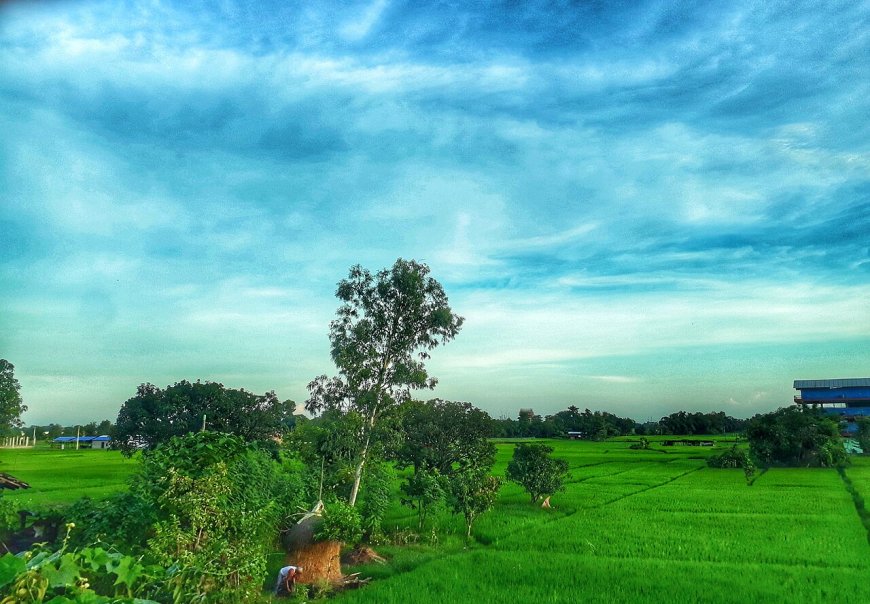
Drive south from Kathmandu along the BP Koirala Highway and the landscape shifts gradually. The middle hills fall away, the air thickens, and soon you're on the Tarai flatlands where Mahottari District spreads out toward the Indian border. It's a place that doesn't announce itself with grand monuments. Instead, it reveals itself in weekly haat bazaars, in the rhythm of maize and rice cycles, and in the steady flow of traffic through Bardibas junction — the southern anchor of the highway that changed everything.
Geography and setting
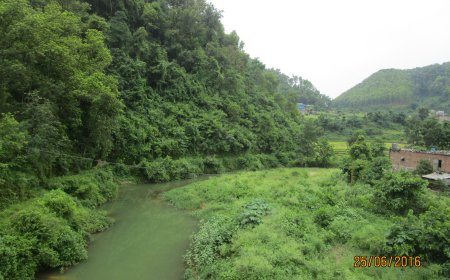
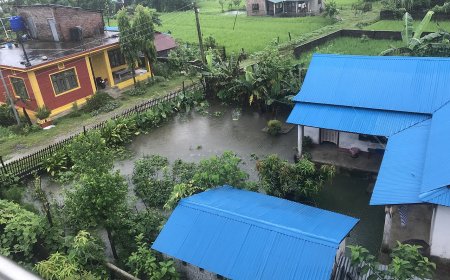
Mahottari sits in Madhesh Province, bordered by Dhanusha to the east, Sarlahi to the west, and the Chure hills to the north. The district headquarters, Jaleshwar, lies about 15 kilometres north of the border crossing at Matihani. Most of the land is flat, fertile plain, crossed by rivers that swell dramatically during monsoon — the Rato, the Jangha, the Bahadura. Northward, the terrain rises into the Chure range, where sal forests and seasonal streams mark the transition to the hills.
The East-West Highway (Mahendra Highway) clips the northern edge of the district, while the BP Koirala Highway cuts south from Sindhuli, terminating at Bardibas. That junction turned a quiet market town into a logistics node almost overnight. Trucks bound for Kathmandu, buses headed to Janakpur, and tractors hauling sugarcane all converge here.
Jaleshwar: the administrative heart
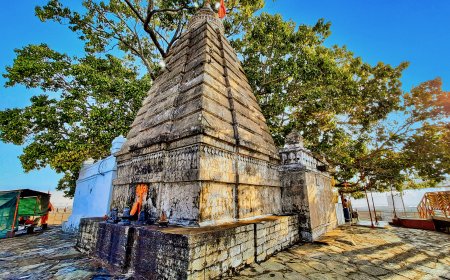
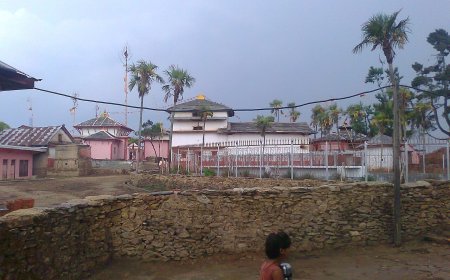
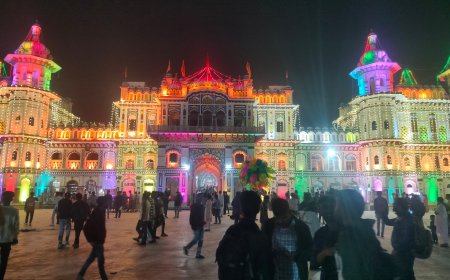
Jaleshwar doesn't feel like a typical district headquarters. The government offices cluster around a central chowk, but the town's pulse beats around the Jaleshwar Mahadev temple — an old Shiva shrine that draws pilgrims year-round, especially during Shivaratri. The name itself comes from "Jal" (water) and "Ishwar" (lord), referencing the sacred pond beside the temple. Mondays see a steady stream of devotees; the rest of the week, the town runs on bureaucratic rhythm and agricultural trade.
Streets radiate from the temple area into neighborhoods where Maithili dominates daily conversation. You'll hear it in the vegetable market, in the tea stalls, in the arguments over land boundaries. Hindi and Nepali function as bridge languages, but Maithili is the mother tongue for the majority, and its literary tradition runs deep — Vidyapati's songs still surface at weddings and cultural programs.
Bardibas: the highway junction
If Jaleshwar is the seat of authority, Bardibas is the engine of movement. The BP Koirala Highway's completion (the final stretch opened in stages, with the last section becoming fully operational in the early 2020s) cut travel time to Kathmandu from a grueling ten-plus hours on the old East-West route to roughly six. That reshaped the local economy. Hotels, mechanic workshops, and dhabas line the highway approaches. Cold storage facilities have appeared, serving vegetable farmers who can now reach Kathmandu markets before dawn.
The junction itself is a study in organized chaos. Buses to Janakpur, Birgunj, and Kathmandu jostle for space. Share-jeeps wait for seven passengers before departing. The weekday morning rush brings commuters from surrounding villages heading to work in Janakpur or the industrial corridor along the border.
Administrative structure
Following the 2017 restructuring, Mahottari comprises 15 local-level units: four municipalities and eleven rural municipalities. Jaleshwar, Bardibas, Gaushala, and Matihani are the urban municipalities. The rural municipalities — names like Aurahi, Balawa, Bhangaha, Ekdara, and others — cover the village clusters where most of the district's population lives. Each has its own ward structure, typically five to nine wards per unit. The current gazette from the Ministry of Federal Affairs and General Administration holds the definitive list; the 2017 orders are outdated.
Agriculture and livelihoods
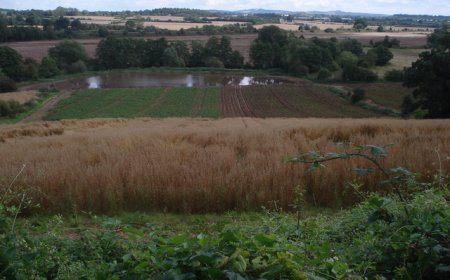
Rice, wheat, maize, and sugarcane dominate the cropping pattern. The monsoon harvest determines household income for a majority of families. Sugarcane feeds the mills in neighboring districts; the cash crop cycle creates a rhythm of planting, harvesting, and off-season migration. In recent years, vegetable farming has expanded near highway corridors — cauliflower, tomato, bitter gourd — driven by the Kathmandu market access. Fish ponds have appeared in low-lying areas where water holds year-round.
Remittances play a quiet but massive role. Young men (and increasingly women) work in Gulf countries, Malaysia, and India. The money builds concrete houses, funds weddings, buys motorcycles. You see it in the architecture: traditional mud-and-thatch giving way to two-story brick structures with remittance-funded solar panels on the roof.
Culture and language
Maithili culture is the district's backbone. The language has its own script (Tirhuta, though Devanagari is more common now), its own literary canon, and a vibrant folk tradition. Festivals follow the Maithili calendar: Chhath at the river ghats, Jhijhiya dance during Dashain, Sama Chakeva celebrating sibling bonds. Marriage ceremonies can last days, with specific rituals for each stage — the barber's visit, the turmeric application, the symbolic ploughing.
Muslim communities, concentrated in certain wards and municipalities, add another layer. Eid gatherings at the Eidgah, the call to prayer mixing with temple bells. The intermingling isn't always seamless — land disputes, water rights, and political representation sometimes flare — but daily life proceeds with a practical coexistence shaped by generations of shared space.
Transport reality
The BP Koirala Highway is the game-changer, but it has limits. Landslides in the Chure section during monsoon can close it for days. The East-West Highway remains the backup, longer but more reliable. Within the district, gravel roads connect most wards; they turn treacherous after heavy rain. Cycle-rickshaws still serve short hops in town centers. Electric three-wheelers have started appearing, quieter and cheaper to run.
Indian border crossings at Matihani and Samsi handle pedestrian and light vehicle traffic. The rail line from Jainagar (India) to Janakpur stops just short of Mahottari; extension talks have circulated for years without concrete progress.
Health and education
Jaleshwar hosts the district hospital, though staffing and equipment gaps persist. Primary health centers dot the rural municipalities; their functionality varies. Private clinics and pharmacies fill gaps, especially in Bardibas and Gaushala. For specialized care, people travel to Janakpur or Kathmandu.
School enrollment has improved, but quality remains uneven. Government schools teach in Nepali with Maithili as a subject; private English-medium schools cluster in urban areas. A few campuses offer bachelor's levels — Jaleshwar Multiple Campus is the largest — but many students migrate for higher education.
What visitors miss
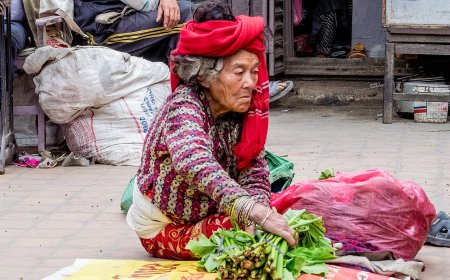
Tourists rarely linger in Mahottari. They pass through on the highway or stop at Janakpur's temples. But the district rewards slowness. A morning at Jaleshwar's pond watching elderly men practice yoga. An evening at a Bardibas dhaba eating dal-bhat with truck drivers who know every pothole between here and Hetauda. A haat day in a village where women sell turmeric, garlic, and handwoven mats from baskets balanced on hips.
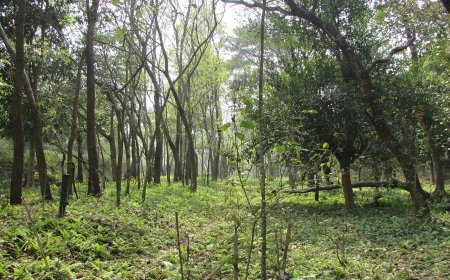
The Chure foothills hold community forests where sal timber and medicinal plants are managed by user groups. Birdwatchers know the wetlands near the Rato River for wintering waterfowl. None of this is signposted. You find it by asking, by taking a wrong turn, by accepting tea from a stranger who insists.
Practical notes
- Best season: October to March. Monsoon (June–September) brings flooding on low-lying roads.
- Getting there: Bus from Kathmandu (6–7 hours via BP Highway), from Birgunj (2 hours), or from Janakpur (45 minutes). Share-jeeps run frequently on all routes.
- Stay: Bardibas has the most highway-oriented lodging. Jaleshwar has basic guesthouses near the bus park. Homestays exist in some rural municipalities but need advance arrangement.
- Language: Maithili, Nepali, Hindi. English works in government offices and highway businesses.
Mahottari doesn't perform for visitors. It works. It plants, harvests, negotiates, prays, and endures. The highway brought speed, but the district moves at its own pace — measured in crop cycles, in wedding seasons, in the slow transformation of mud walls to concrete. That's the story worth staying for.
What's Your Reaction?