

Shah Dynasty Timeline Nepal: From Unification (1768) to Republic (2008) — A Verifiable Outline
A concise, source‑linked outline of the Shah dynasty from Prithvi Narayan Shah's 1768 capture of Kathmandu to the 2008 declaration of a republic, with corrected custodian information and verified dates.

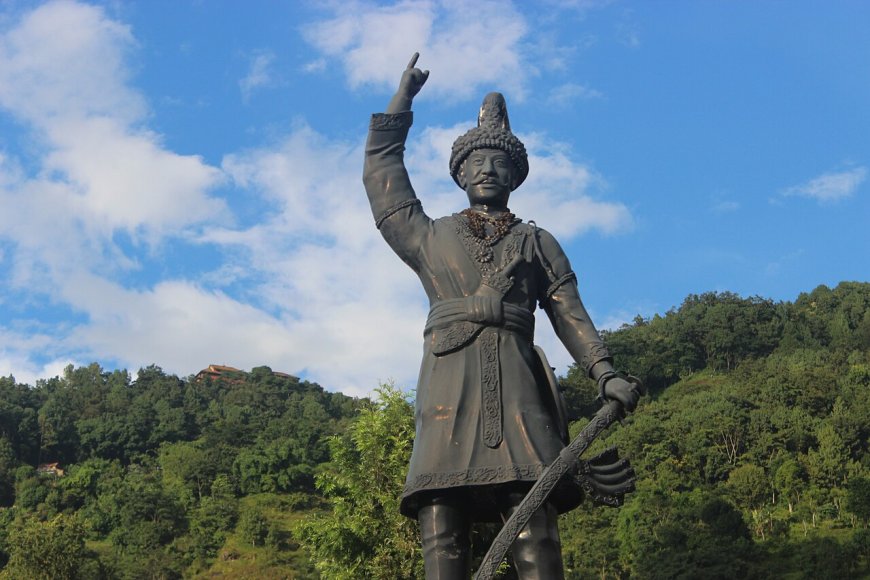
The Shah dynasty ruled Nepal for roughly 240 years, from Prithvi Narayan Shah's capture of Kathmandu on 25 September 1768 to the formal abolition of the monarchy on 28 May 2008. This outline follows that arc reign by reign, treaty by treaty, and constitutional shift by constitutional shift, linking each dated claim to an official record or the present‑day custodian of that record.
Unification and the early kings, 1768–1816
Prithvi Narayan Shah entered the Kathmandu Valley in late September 1768, consolidating the valley principalities into a single kingdom centred on Gorkha. The succession — Pratap Singh Shah (1775–1777), Rana Bahadur Shah (1777–1799, with regencies), Girvan Yuddha Bikram Shah (1799–1816) — appears in the Gorkha Vamsavali and later palace chronologies. No digitised Gazette notices from the period survive; the current custodian of Shah‑era manuscripts is the National Archives, Kathmandu, which operates under the Ministry of Culture, Tourism and Civil Aviation. Catalogue requests can be made on site.
The Treaty of Sugauli, 1816
Signed 4 March 1816 and ratified 8 March 1816, the treaty fixed Nepal's western border at the Mahakali River and ceded the Tarai between the Kali and Rapti to the East India Company. Period spellings include Segauli and Segowlee; the Government of Nepal's treaty series uses Sugauli. The full text is reproduced in A Collection of Treaties, Engagements and Sanads (Aitchison, 1929 edition, Vol. XIV). That volume is held by the British Library (IOR/L/PS/20) and the National Archives of India; a digital surrogate is available through the Digital South Asia Library. For the Nepali government's authenticated text, apply to the Ministry of Foreign Affairs, Treaty Section, Singha Durbar.
Rana oligarchy and the Shah throne, 1846–1951
After the Kot massacre (September 1846), Jung Bahadur Rana made the prime ministership hereditary and reduced the king to a ceremonial role. Surendra (1847–1881), Trailokya (crown prince, died 1878), Prithvi (1881–1911), and Tribhuvan (1911–1955) all reigned under Rana control. The 1950–51 revolution ended the Rana regime. King Tribhuvan's return from Delhi (February 1951) and the proclamation of a coalition government are recorded in the Nepal Gazette (Vol. 1, No. 1, 1951) and in correspondence between the Rana prime minister and the Indian ambassador, archived at the National Archives of India. The Gazette is not online; the Department of Information and Broadcasting, Kathmandu, holds the physical run.
Restoration, panchayat, and the 1990 constitution
Mahendra (1955–1972) dissolved the first elected parliament in 1960 and introduced the partyless panchayat system. Birendra (1972–2001) oversaw the 1990 Jana Andolan and promulgated the Constitution of the Kingdom of Nepal, 1990 (2047 BS). That text is published on the website of the Constitutional Bench, Supreme Court of Nepal, and in the Nepal Gazette (Supplement, 9 November 1990). The constitution retained the king as head of state but vested executive power in a council of ministers responsible to parliament.
2001 massacre, Gyanendra, and the 2006 movement
The palace killings of 1 June 2001 eliminated Birendra and most of his line; Gyanendra succeeded. He dismissed the Deuba government in October 2002 and assumed direct rule in February 2005. The second Jana Andolan (April 2006) forced the restoration of parliament. The reinstated House of Representatives proclaimed Nepal a secular state and stripped the king of executive authority on 18 May 2006. That proclamation appears in the Nepal Gazette (Extraordinary, 19 May 2006), held by the Office of the Prime Minister and Council of Ministers; requests go through the Right to Information desk at Singha Durbar.
Interim Constitution, the December 2007 amendment, and abolition, May 2008
Two distinct events are often conflated. The Interim Constitution, 2007 (2063 BS) was promulgated 15 January 2007. Its Fourth Amendment — passed by the interim legislature on 23 December 2007 — declared Nepal a federal democratic republic in principle, subject to the first meeting of the Constituent Assembly. The formal abolition occurred on 28 May 2008, when the first Constituent Assembly voted 560–4 to end the monarchy and declared Nepal a republic. The Fourth Amendment text is archived by the Constituent Assembly Secretariat (now part of the Parliament Secretariat). The 28 May 2008 resolution appears in the CA proceedings, Vol. 1, archived at the Parliament Secretariat, Singh Durbar.
The 2015 Constitution and the constitutional position in 2026
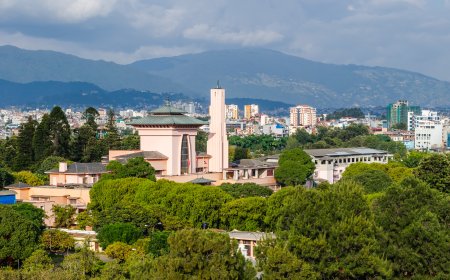
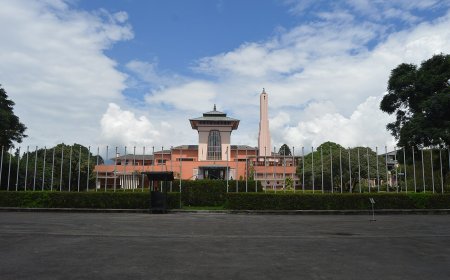
The Constitution of Nepal, 2015 (2072 BS), promulgated 20 September 2015, establishes Nepal as a federal democratic republican state (Article 4). The word "monarchy" does not appear. The president is head of state (Article 61). The former king, Gyanendra Shah, holds no constitutional office. His private residence at Maharajgunj and the former royal palace at Narayanhiti — now a museum under the Ministry of Culture, Tourism and Civil Aviation — are state property administered by the Guthi Corporation and the same ministry respectively. Government statements in 2023 indicated that all former crown lands remain vested in the Government of Nepal, and no subsequent legislation has altered that position as of October 2026.
Sources (current custodians)
- Constitution of Nepal 2015 (official English text) — Supreme Court of Nepal
- Interim Constitution 2007 and Fourth Amendment — Parliament Secretariat (Constituent Assembly archive)
- Constituent Assembly proceedings, 28 May 2008 — Parliament Secretariat, Singh Durbar
- Treaty of Sugauli (Aitchison Vol. XIV) — British Library / Digital South Asia Library
- Nepal Gazette extraordinary, 19 May 2006 — Office of the Prime Minister and Council of Ministers
- Nepal Gazette supplement, 9 November 1990 — Supreme Court of Nepal / Department of Information and Broadcasting
- National Archives, Kathmandu (Shah‑era manuscripts) — Ministry of Culture, Tourism and Civil Aviation
- Narayanhiti Palace Museum — Ministry of Culture, Tourism and Civil Aviation
Related pages on this site
What's Your Reaction?