

The Shah Dynasty: Nepal's Kings From Gorkha to the End of the Monarchy
A reader-facing history of Nepal's Shah dynasty, from its origins as the ruling house of Gorkha through Prithvi Narayan Shah's unification, the Rana century, the 1990 constitutional change, and the abolition of the monarchy in 2008, plus a careful look at the 'Greater Nepal' map claim and a note on why reign dates differ between sources.

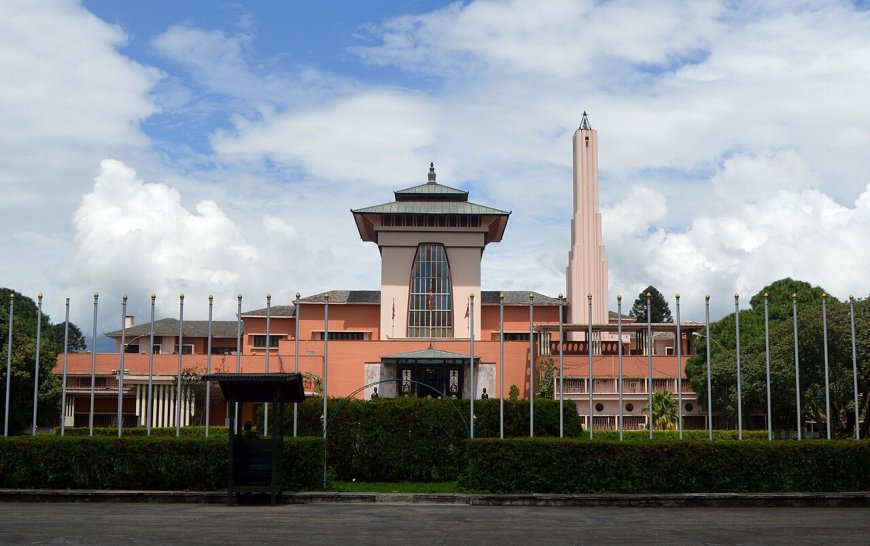
The Shah dynasty ran Nepal for roughly two and a half centuries, first as the ruling house of a small hill principality called Gorkha, then as the kings of a unified Nepal, and finally as constitutional monarchs who lost the throne altogether in 2008. Few royal lines anywhere in South Asia have gone through that full arc. What follows is a king-by-king walk through the line, plus a look at the legacy that outlasted the crown and a short examination of the so-called Greater Nepal map that keeps circulating online.
Before the kings: Gorkha and the early Shah line
Gorkha sits in the hills west of Kathmandu, and in the sixteenth century it was one of dozens of small principalities squeezed between larger neighbours. Traditional accounts credit Drabya Shah with seizing control of Gorkha and founding the line that would eventually take the name Shah. Some family histories push the origin further back, tracing the dynasty to Rajput nobles who fled north after the Delhi Sultanate's campaigns. That claim is repeated often in popular writing, but the evidence for it is thin and most historians treat it as origin myth rather than documented fact.
The ruler most fondly remembered before unification is Ram Shah, who governed Gorkha in the early seventeenth century. He is credited with standardising weights and measures, settling disputes through a formal court, and building the kind of administrative routine that let Gorkha punch above its weight. Nepali schoolchildren still learn his name alongside the old saying that justice could be found in Gorkha.
Prithvi Narayan Shah and the making of Nepal
Born in 1723 and crowned king of Gorkha in 1743, Prithvi Narayan Shah is the central figure of the dynasty. He spent most of his reign on campaign, taking the hill routes and trade passes one by one, cutting off the Kathmandu Valley before moving in. Nuwakot fell to him in the 1740s. The three Malla kingdoms of the valley, Kathmandu, Patan and Bhaktapur, held out for years but fell in 1768 and 1769. After that his armies pushed east and west.
He died in 1775, leaving a kingdom far larger than the one he inherited and a set of political maxims later compiled as the Divya Upadesh. That text is worth reading, not because it is a constitution, but because it shows how he thought about the country: a hill state squeezed between two large empires, India to the south and Tibet to the north, which had to trade with both and be governed by neither.
The Shah dynasty timeline
Reign dates below are the ones most commonly given in English-language sources. Nepali chronicles often record years in Bikram Sambat, so converted dates can differ by a year depending on the source.
| Ruler | Reign (approx.) | What the period is known for |
|---|---|---|
| Drabya Shah | 16th century | Traditional founder of Shah rule at Gorkha |
| Ram Shah | Early 17th century | Legal and administrative reforms |
| Nara Bhupal Shah | Early 18th century | Prithvi Narayan's father |
| Prithvi Narayan Shah | 1743 to 1775 | Unification; capture of Kathmandu Valley |
| Pratap Singh Shah | 1775 to 1777 | Short reign, court consolidation |
| Rana Bahadur Shah | 1777 to 1799 | Child accession, regency politics, abdication, violent death in 1806 |
| Girvan Yuddha Bikram Shah | 1799 to 1816 | Anglo-Nepal War and the Sugauli Treaty |
| Rajendra Bikram Shah | 1816 to 1847 | Rise of the Ranas; Kot massacre of 1846 |
| Surendra Bikram Shah | 1847 to 1881 | Monarchy reduced to a figurehead role |
| Prithvi Bir Bikram Shah | 1881 to 1911 | Rana prime ministers hold real power |
| Tribhuvan Bir Bikram Shah | 1911 to 1955 (with exile in 1950 to 1951) | Overthrow of Rana rule; opening to democracy |
| Mahendra Bir Bikram Shah | 1955 to 1972 | Royal takeover of 1960; Panchayat system |
| Birendra Bir Bikram Shah | 1972 to 2001 | 1990 people's movement; constitutional monarchy; Maoist insurgency; palace killings |
| Dipendra Bir Bikram Shah | 2001 | Declared king while in a coma; died days later |
| Gyanendra Bir Bikram Shah | 2001 to 2008 | Royal coup of 2005; abolition of the monarchy in 2008 |
From Prithvi Narayan to the Anglo-Nepal War
Pratap Singh Shah inherited a kingdom still being consolidated and died within a couple of years. His son Rana Bahadur Shah was an infant, so the court ran on regency politics for years. Rana Bahadur eventually abdicated, kept meddling anyway, and was killed in 1806 during the palace turmoil remembered as the Bhandarkhal episode.
His son Girvan Yuddha Bikram Shah was a child when Nepal went to war with the British East India Company, roughly 1814 to 1816. The campaign went badly. The resulting Sugauli Treaty forced Nepal to give up significant territory in the west and the east, including hill country that is now part of India, and to accept a British resident in Kathmandu. It is one of the most consequential documents in Nepali history, and the source of the borders you see today.
Kings without power: the Rana century
Rajendra Bikram Shah ruled while rival factions fought at court. That ended in 1846 with the Kot massacre, after which Jung Bahadur Rana took control as prime minister and made the office hereditary. From then on the Ranas governed and the Shah kings reigned. Surendra Bikram Shah and Prithvi Bir Bikram Shah were respected, sometimes revered, but politically sidelined.
The arrangement held for about a century, and it is the reason the dynasty survived as long as it did. Ranas kept the crown around because they needed its legitimacy. Kings stayed because they had no army of their own.
Tribhuvan and the 1950 to 1951 revolution
Tribhuvan is the Shah king who actually broke the arrangement. In 1950, with the Ranas tightening their grip, he left the palace for the Indian embassy and then for Delhi, throwing his support behind the movement against Rana rule. The pressure worked. Rana power collapsed in 1951 and the king returned to Kathmandu to a very different political landscape.
He died in 1955, and Nepal spent the next few years experimenting with parties and elections that never quite took hold.
Mahendra and the Panchayat years
Mahendra Bir Bikram Shah suspended parliamentary politics in December 1960, jailed many party leaders, and built the partyless Panchayat system, formalised in a new constitution in 1962. For nearly three decades Nepal was governed through a hierarchical tier of local and national councils under the crown, with parties banned. It produced stability of a sort, along with corruption, and a long queue of young people leaving for work in India.
Mahendra died in 1972 and is remembered, depending on whom you ask, either as the king who gave Nepal a national language, a national highway, and a functioning state, or as the man who shut the door on democracy.
Birendra, the 1990 movement and the royal massacre
Birendra inherited the Panchayat system and, in 1980, held a referendum on whether to keep it. It survived, but not for long. In 1990, mass protests in Kathmandu forced a new constitution, multiparty elections and a genuinely constitutional monarchy. Birendra respected the change and largely stayed out of daily politics.
Then came the Maoist insurgency from 1996 and the bloodshed that followed. In June 2001, at a family gathering at Narayanhiti Palace, Birendra and several members of the royal family were shot; the official investigation blamed the crown prince, Dipendra, who was himself declared king while critically injured and died a few days later. Conspiracy theories have never gone away, and the deaths remain one of the most-debated events in modern Nepal.
Gyanendra and the end of the monarchy
Gyanendra Bir Bikram Shah succeeded after those deaths and quickly ran into trouble. In February 2005 he dismissed the government, suspended civil liberties and took direct executive power, arguing that the state had failed to defeat the insurgency. It did not go well. In April 2006, weeks of protest brought millions onto the streets, and he handed power back to the parties.
The parties and the Maoists then signed a peace agreement, and in May 2008 the first meeting of the Constituent Assembly voted to abolish the monarchy. Gyanendra vacated Narayanhiti Palace and left, and the building became a museum.
What the Shah dynasty left behind
The country itself, for a start. Nepal as a single state with Kathmandu at its centre is the work of Prithvi Narayan Shah and the generals who kept going after him. Alongside the borders came a political culture built around the palace, hill-language dominance in administration, and the concept of a Hindu state, which was formally dropped by parliament in 2006 and confirmed as secular in the republic.
The visual memories are everywhere too. Gorkha Durbar, the Dashain processions, the old royal palaces turned into museums, street names, and the Gorkha regiments that served Britain and India and made the name known far beyond the hills.
About the 'Greater Nepal' map
Every so often a map circulates on social media showing a much larger Nepal, stretching well into what is now India, with a caption invoking a lost golden age. It is worth being precise about what can and cannot be verified.
What is documented is the Sugauli Treaty of 1816 and the territory Nepal ceded to the British East India Company under it. What is not documented is a single historically authoritative map of a defined 'Greater Nepal' that could simply be restored. The idea surfaced politically in the 1990s, driven by disputes over the 1816 treaty and later by the Kalapani boundary question, and it is best understood as an argument rather than a record.
Treat it as a talking point. It is not evidence of a previous state called Greater Nepal, and no Nepali government of the modern era has formally pursued the claim.
A note on the dates
Reign dates for the earlier Shah kings are not perfectly standardised. Nepali chronicles use Bikram Sambat, different historians convert years differently, and where a king was crowned in one year and took real power in another it can be genuinely ambiguous. The years in the table above are the widely cited Gregorian equivalents. If you are checking a single reign against an academic source, expect small differences and do not assume one is a mistake.
For readers who want more, the two areas worth digging into are the Sugauli Treaty and its boundary commissions, and the transition period of 2005 to 2008, when a dynasty that had survived the Ranas, the Panchayat years and a decade of civil war ended in a single vote.
What's Your Reaction?