



Everest Helicopter Flights: Who Flies, Where They Land, and What Your Insurance Actually Covers
A reader-facing guide to how Everest helicopter flights actually work in 2026: who holds the operating certificate, how weather and payload rules shape the schedule, how landing sites get approved, what drives charter pricing, and where evacuation insurance quietly fails. Deliberately quotes no fares or fee figures, and points to the authorities that publish them instead.

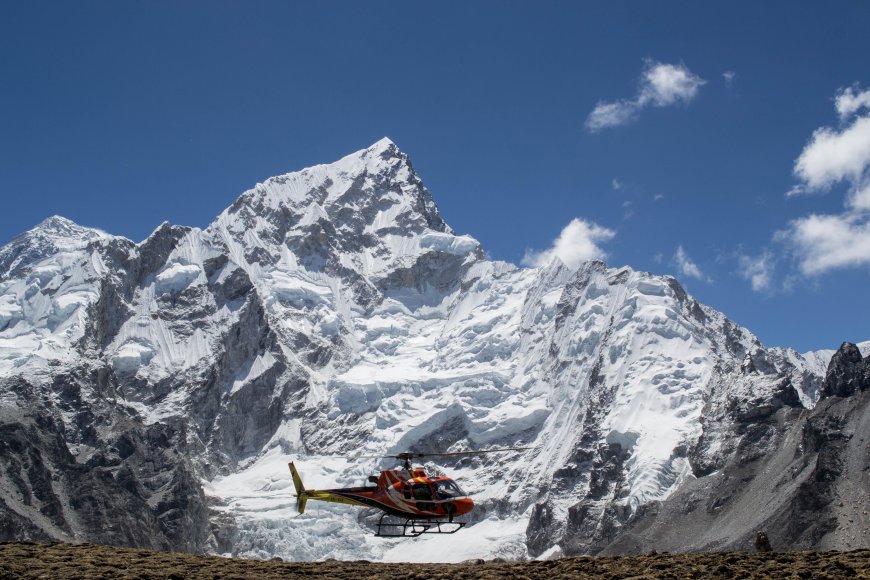
Almost every question I get about Everest helicopter flights comes down to one of four things. Who is allowed to fly you. Where the aircraft can actually touch down. What the trip should cost. And whether your insurance will pay if something goes badly wrong high in the Khumbu. This piece takes them in that order.
One thing up front. I am not printing a fare table or a fee schedule here, because those numbers move and a stale figure is worse than no figure at all. Where money comes up, I will tell you who publishes the current number and what to ask for. That is more use to you than a price that was correct two seasons ago.
Who is actually allowed to fly you
Commercial helicopter work in Nepal sits under the Civil Aviation Authority of Nepal. An operator needs an air operator certificate for the kind of flying it is selling, and the pilots need the hours and the mountain time signed off for it. That is the theory, anyway.
In practice most travellers never deal with a certificate holder. They book through a trekking agency, a hotel desk in Kathmandu, or an online reseller, and the aircraft belongs to somebody else entirely. That is not automatically a problem. It becomes one when nobody in the chain can tell you which company is flying.
So ask. Get the operator's name as it appears on its certificate, not the trade name on the website, and get the AOC number with it. Then confirm it with CAAN, because the authority's licensing records are the only list that counts. Ten minutes of work. If the agency gets vague, or annoyed that you asked, you have your answer.
The rules that shape the flight, whatever you booked
Helicopter flying in the Khumbu is visual flight rules work. The pilot flies by looking outside rather than running an instrument approach into cloud. In a valley where the cloud can close in by mid-morning, that one fact drives most of the operational reality: early departures, weather holds, and flights that turn back with your money spent and your morning gone.
Then there is altitude and payload. A helicopter lifting out of Lukla or a high pad in thin air carries far less than the same machine at sea level, and the limits tighten as you climb. That is why baggage allowances on these flights are strict, and why a cheap quote sometimes quietly assumes a lighter group than the one you are bringing.
Permissions sit on top of all that. Landings need the relevant park and local authority approvals, not just the operator's own paperwork, and those approvals are not the sort of thing a pilot sorts out on the radio.
Where the helicopter can land
Landing sites in the Khumbu are not chosen by the pilot on the day. The pads in commercial use are established ones, and using them involves permissions that sit with the park authorities and the local municipality as much as with the operator. The practical list is narrower than the map suggests.
Which brings up the Everest Base Camp question. Plenty of itineraries advertise a landing 'at Everest Base Camp'. Before you pay, ask exactly which landing site your itinerary uses and where it actually sits. Some products land at a viewpoint or a lower pad and call the whole morning an Everest flight, which is fair enough as marketing and a bit less fair as a description. The difference matters a lot if the landing is the thing you are buying.
What it costs, and why nobody quotes a fixed price
Helicopter charters get priced on flight hours plus positioning, not off a menu. The aircraft has to reach you, fly the route, wait, and come back, and you are paying for all of that. What moves the number:
- Weight and numbers. High-altitude payload limits mean a full aircraft is not always a full aircraft.
- Where you start. A Kathmandu departure means a long transit leg. Most Everest itineraries stage through Lukla or a lower pad, partly for fuel and partly so the mountain leg stays short.
- Season. Peak season demand does what peak season demand does.
- Landing and permit fees, which the operator passes through and which get revised from time to time.
- Whether you bought a seat on a scheduled tour or the whole machine.
Ask for a written quote that itemises flight time, positioning, landing and permit fees, and cancellation terms. Then ask what happens to your money if the weather shuts the valley for three days. The answer separates a real operator from a broker with a phone and a good website.
For the official side of the fees, meaning national park entry, local area permits and any CAAN charges that apply, go to the Department of National Parks and Wildlife Conservation, the rural municipality and CAAN, and ask for the schedule in force this season. Rates get revised. As of late 2026, that is the only honest way to put a number on any of it.
Rescue, evacuation, and the insurance question
Two different things get called helicopter rescue. One is a genuine emergency, where someone is evacuated for injury or altitude illness and the decision sits with the treating doctor, the operator and the insurer's assistance desk. The other is a paid flight out because a trekker has had enough or a fixed-wing connection collapsed. Both cost real money. Only one is usually covered.
The insurance half is where people get caught out.
Many travel policies cover helicopter evacuation only up to a stated altitude, and the caps vary widely between insurers, and even between policies from the same insurer. A policy that looks generous on the Annapurna circuit can be close to useless above Pheriche. Read the altitude clause before you buy, not from a hospital bed.
Second trap: guarantee of payment. Operators and their insurers often want confirmation from an assistance company before they launch a non-emergency flight, and mobile coverage up the valley is patchy at best. Carry your insurer's emergency number and your policy number somewhere that does not depend on a charged phone.
Third: activity exclusions. Trekking to Base Camp, climbing, and anything involving ropes or crampons get treated very differently by different insurers, and 'mountaineering' is defined more broadly in the fine print than most people expect. If your trip includes a climb, say so when you buy the policy.
Permits and paperwork that apply either way
Sagarmatha National Park entry and the local rural municipality permit turn up on almost every Khumbu itinerary, whether you walk in or fly part of the way. Treks also involve the trekker registration card; short helicopter tours may not, depending on route and operator. Ask which permits your quote includes and which you buy at the counter, and then carry the paperwork, because checkpoints appear where you least expect them.
A short checklist before you pay
- Operator's legal name and AOC number, confirmed with CAAN.
- Which specific landing site your itinerary uses.
- Written quote itemising flight time, positioning, fees and cancellation terms.
- Weather cancellation policy in writing.
- Insurance altitude cap, evacuation clause and activity exclusions, read before booking.
- Baggage limit per person, confirmed in kilos.
What this piece deliberately leaves out
Fares, fee amounts, and any claim about which pads are currently approved for commercial landings. All three change, and none of them can be verified honestly from a desk in Kathmandu in November. If you need them this week, your operator, the park office and CAAN are the sources. The rest of what is above is the part that stays put.
What's Your Reaction?