


Best Time to Visit Dhaulagiri: Choosing Your Season by What You Want to Do
A season-by-season guide to the Dhaulagiri region of Nepal, sorted by what you actually want to do: clear views from Poon Hill, Khopra or Sarangkot, the full camping circuit from Darbang over the French and Dhampus passes, or the teahouse-supported lower approach. Covers post-monsoon, spring, winter and monsoon, including the Kali Gandaki rain shadow, plus permits and acclimatisation before you book.

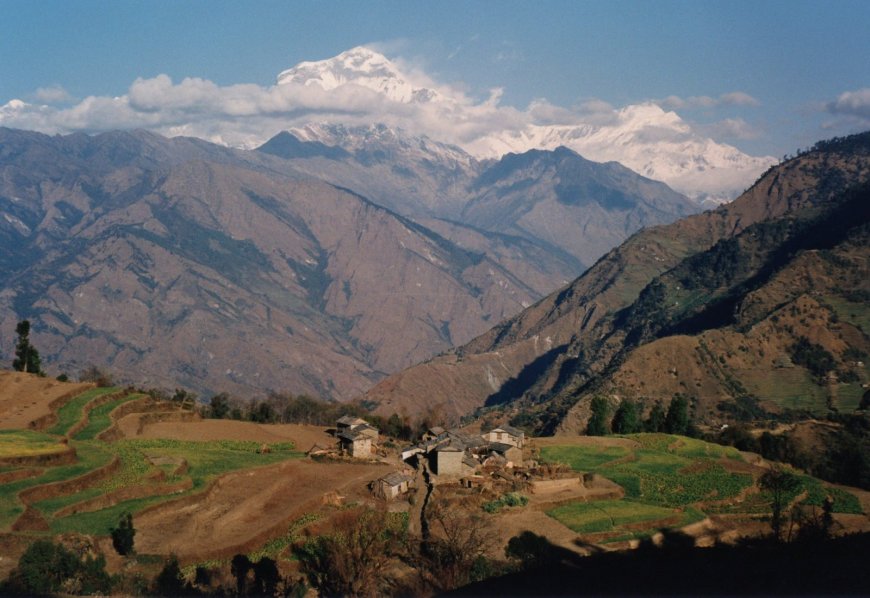
Ask five trekkers when to go to Dhaulagiri and you will get five answers, mostly because they are quietly answering five different questions. Someone who wants a dawn view of the massif from a ridge above Pokhara is optimising for clear air. Someone committing to a long camping route that loops right around the mountain in Nepal is optimising for stable ground, open passes and a guide who will say yes. Those are not the same season, and the overlap is narrower than most packing lists suggest.
So start with the objective, not the calendar.
The short answer, by objective
| What you want | Best window | Main trade-off |
|---|---|---|
| Sharp, clean views of the mountain | Mid-October to late November; March to April mornings | Spring haze builds through the day |
| The full Dhaulagiri Circuit | October to November, then April to early May | Early snow in late autumn; afternoon cloud in May |
| Quiet trails and lower costs | December to February | Genuine cold, and the high passes effectively out of reach |
| Warmer days at lower altitudes | March to May | Haze, and thunderstorms that build after lunch |
| Avoiding both extremes | Late September to October; April | Transition weather changes fast |
Post-monsoon on the Dhaulagiri routes
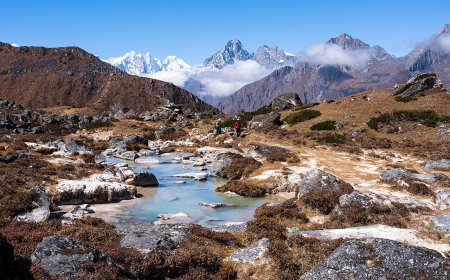
Once the monsoon withdraws, which usually happens somewhere between late September and early October, the Nepal Himalaya settles into its most reliable stretch of weather. Skies clear, humidity drops, and the mountain looks the way the postcards promised. October is the month everyone wants, and prices and lodge pressure reflect that.
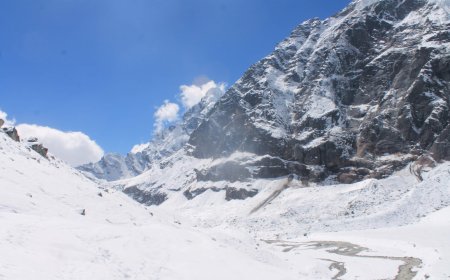
November is the connoisseur's choice: still clear, noticeably colder, quieter. Days are shorter though, so if your route needs long walking days, the light goes earlier than you expect. On the circuit, this is the month when the French Pass and Dhampus Pass start collecting snow, and the first serious dump of the season can change a route's character overnight.
Pre-monsoon: warmer, hazier, more variable
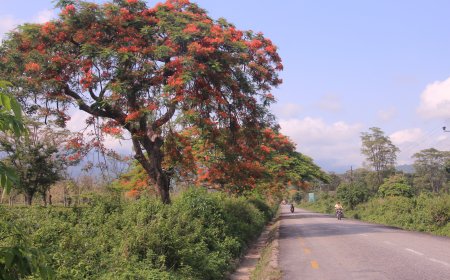
March to May brings warmth back to the lower trails and colour to the rhododendron forests between Darbang and Muri. It also brings haze, which flattens distant views, and a pattern of clear mornings followed by cloud building through the afternoon. By May, pre-monsoon thunderstorms are a real afternoon feature, and the odd shower can reach surprisingly high.
Early March still behaves like winter on high ground. Treat March as a shoulder month rather than a warm one, and expect to carry more insulation than the valley temperatures suggest.
Winter on the mountain: tents, not lodges
December to February offers the sharpest air of the year and almost no crowds, and the villages on the approach, Darbang, Takam, Muri and Dharapani, stay inhabited through the cold months. People live there; they do not decamp. What changes is everything above them. The high camps on the circuit are tents anyway, so no lodge closure decides your season. The passes decide it.
The French Pass and the traverse down to Dhampus Pass hold snow through winter and their steeper sections are loaded, avalanche-exposed slopes. Add roughly ten hours of daylight, hard frost at camp, and the fact that almost no operator in Nepal runs the full Dhaulagiri Circuit between December and February, and the picture is clear. Winter is a fine time for the lower approach and for viewpoint walks. It is not a season you can improvise on the circuit.
Monsoon, and the dry valley that ignores it
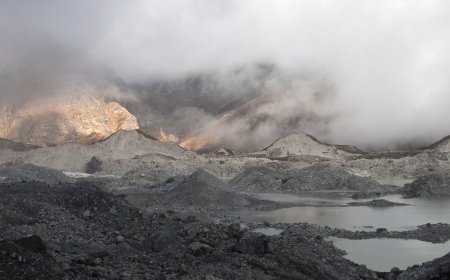
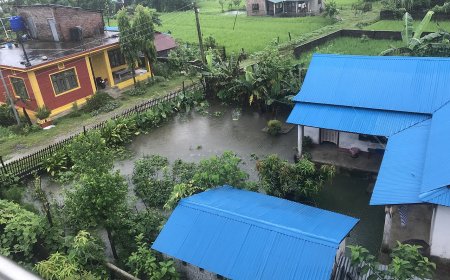
June to September is wet, cloudy and landslide-prone on the hill roads, and domestic flights are frequently delayed. Views are unreliable and the mountain itself often hides for days. If your reason for coming is Dhaulagiri, the monsoon is the season to schedule around rather than inside.
The exception sits north of the massif. The Kali Gandaki valley, from Marpha up through Jomsom and Kagbeni, lies in the rain shadow and stays comparatively dry right through the monsoon. It is trekked in July and August, though you are looking at the north face through a good deal of passing cloud. Useful to know, but it is a different trip from the circuit.
Viewpoint seasons are not trekking seasons
If your plan is a short viewpoint walk rather than a long route, your tolerance for weather is much higher. A cloudy week on a two-week trek is a disaster; a cloudy morning on a three-day ridge walk is an inconvenience you can wait out. Poon Hill above Ghorepani, Khopra Ridge, and Sarangkot outside Pokhara all give you a Dhaulagiri horizon, and all of them are at their best in the clear post-monsoon weeks. Late autumn and early spring both work well for a short trip.
The circuit and the approach are two different seasons
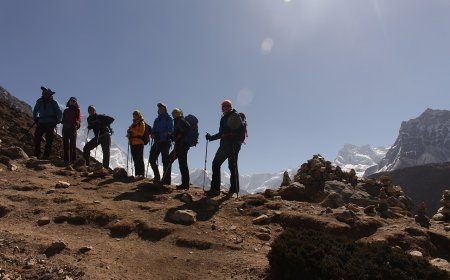
The Dhaulagiri Circuit, the full loop from Darbang up through Muri and Dharapani to Italian Base Camp, over the French Pass into Hidden Valley, then over Dhampus Pass and down to Marpha, is a camping route of roughly two weeks with nights above 4,000 m and two crossings over 5,000 m. It needs the most stable window you can give it and the most conservative margin. That means October to November, or April to early May, with contingency days built in.
The lower approach, Darbang to Dharapani, and the exit at the Kali Gandaki end, Marpha and Jomsom, are teahouse country and far more forgiving. They can absorb a shoulder-month forecast and a day of rain. The ridges around Ghorepani and Khopra are more forgiving again. The mistake is choosing a month first and then picking a route to fit it. Decide the route, then ask what that route needs.
Before you commit to dates
- Sort permits first. The circuit sits inside the Annapurna Conservation Area, so you need an ACAP permit, and you should confirm at the time of booking whether a TIMS card is required for your specific route; the rules have changed more than once.
- Ask which sections of your route stay open in your chosen month, and get the answer in writing.
- Confirm the operator is licensed and that their guides are insured, and ask what the guide insurance actually covers.
- Check your own travel insurance covers trekking to your highest planned point, not just trekking in general.
- Ask about acclimatisation: how many nights above 4,000 m, what the highest sleeping altitude is, and what the plan is if someone in the group does not adjust.
- Ask what happens if weather closes the route, or if a flight is cancelled for days.
- Ask how many contingency nights are built into the itinerary, and whether they are charged separately.
Get those answers and the season question mostly answers itself. The people who have a miserable time in the Dhaulagiri region are rarely the ones who picked the wrong month. They are the ones who picked a month their route could not tolerate, and found out on the trail.
What's Your Reaction?